Showing posts with label colonization. Show all posts

Sunday, February 28, 2021

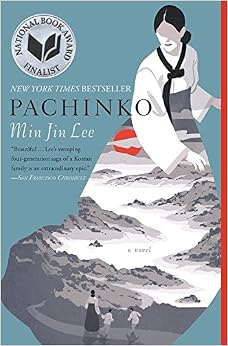
Pachinko - Min Jin Lee

Our March bookclub book was Pachinko, and WOW, it was fantastic!! The best book I've read in a long time. It tells the story of one Korean family across 4 generations, from their roots in Korea in 1883, to their lives in Japan up through 1989. 

Before reading this novel, I was ignorant of Japan's occupation of Korea, and the way Japan oppressed Korean expats after the war. (I had been aware of the shameful history of conscripted "comfort women," but not the broader context of colonization,  oppression, and forced assimilation). This ugly history is not exactly the center of this story, but it is its pervasive backdrop, and influences all of the major events in the family's lives.

The story is beautiful and heartfelt, and although parts are truly heartbreaking, it was a pleasure to read, because of the fascinating characters and their resiliency and even success, despite the many hard years of their lives. The author is clearly a brilliant observer of human nature, as her character studies read so true. The character Sunja is perhaps the central figure, as the story follows her life from young girl to septuagenarian grandmother, and her clear-eyed view of the world is deeply compelling. I would strongly recommend this book to all!

Thursday, August 22, 2019

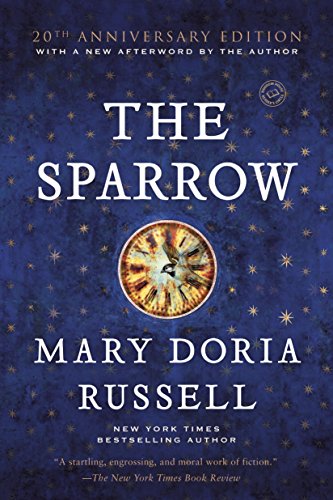
The Sparrow - Mary Doria Russell

I read The Sparrow on a recommendation from Mark's sister, Kelly, who said it is her favorite book. WOW! It is a masterpiece. Totally brutal without being vulgar, and wholly fresh and unexpected.

The story is told from both ends - an idealistic Jesuit monk bonding with his close-knit group of friends, and this same monk, broken almost beyond recognition, after his return from a first-contact mission gone horribly awry.

I don't want to say too much lest I spoil anything, but this is definitely a first-rate book, which I highly recommend! It is rough but very powerful and poignant.

Jesse's review here
Dad's review here

Thursday, August 16, 2018

Astoria - Peter Stark

Our May bookclub book was Astoria: John Jacob Astor and Thomas Jefferson's Lost Pacific Empire: A Story of Wealth, Ambition, and Survival, by Peter Stark. Nate recommended this one, and I really enjoyed it!

Astoria is a remarkable true tale of ambition, wilderness exploration, and hardship, recounting John Jacob Astor's efforts to establish the first American outpost in the Pacific Northwest, as a means of building a hugely profitable global trading empire. Astor was a friend of Thomas Jefferson's, and undertook the mission with his support.

While Astor remained comfortably lodged at home in his mansion in New York, he sent two parties, an overland and an oversea party, to try to forge a path through the wilderness, and meet up in present-day Astoria, Oregon (about a 2 hour drive northeast of Portland, on the Columbia River and coast of the Pacific Ocean). The story covers the 3 years of their expedition, from 1810-1813.

Astor was an incredibly far-seeing and enterprising person, and he did his utmost to select the very best men and equipment for his missions. Even still, the journeys were incredibly brutal, owing in part to the roughness of the unknown terrain, physical hardship and starvation, and constant stress from fear of Native American attack, and in part due to interpersonal conflicts and ignorance among the party members themselves.

A fascinating story! Definitely recommend, especially for Pacific Northwest enthusiasts.

Friday, June 16, 2017

Childhood's End - Arthur C. Clarke

In Childhood's End, futuristic alien spaceships suddenly appear over major cities all over the world. Although the alien "Overlords" do not exit the ships, they issue a few dictates to humanity (such as the prohibition on harming animals), and allow a single human representative, UN Secretary Stormgren, to board the ship every few weeks and talk to their Alien "Supervisor," Karellen, through a voice apparatus. Mostly through gentle guidance, the aliens reshape earth's civilization entirely - there is no more crime or violence, everyone's basic needs are met, and the populace is free to live a life of idle pleasures. However, this has deleterious effects on human culture - the arts stagnate, and intellectual pursuits are cramped. Some members of human society want to rebel against the overlords, and especially, to at least SEE one of them.

This book is written in a charmingly writerly style evoking the time in which it was written (1953), but the ideas are entirely original, and some of the technology and concepts still feel futuristic today.

Would recommend!

Sunday, February 19, 2017

The Dispossessed - Ursula K. LeGuin

For Bookclub this month, we are reading two sci-fi novels by female authors: The Dispossessed (1974), by Ursula K. LeGuin, and Kindred (1979), by Octavia Butler. Both are tremendous!

The Dispossessed is the story of Shevek, a brilliant physicist and revolutionary from Anarres, a moon isolated from its homeworld, Urras, since its settlement by anarchist colonists 179 years ago. Although Anarresti society still largely lives by the teachings of its founder, Odo, Shevek and his friends progressively observe how their freedom has become cramped by bureaucracy and social constraints. Shevek ultimately determines that the only way to achieve his physics masterwork and heal his society is to make an unprecedented journey to Urras, to share his science and reunite the two worlds. 

I really enjoyed Shevek's character, and his zeal for the Odonian way of thinking. Many of Odo's quotes have great attraction for me, as well. For example:

"A child free from the guilt of ownership and the burden of economic competition will grow up with the will to do what needs doing and the capacity for joy in doing it. It is useless work that darkens the heart. The delight of the nursing mother, of the scholar, of the successful hunter, of the good cook, of the skilful maker, of anyone doing needed work and doing it well, - this durable joy is perhaps the deepest source of human affection and of sociality as a whole."

All in all, a fascinating, surprising, and gripping tale. 

Wednesday, August 24, 2016

Aurora - Kim Stanley Robinson

Aurora is KSR's latest novel, published in summer 2015, and the only other book of his that I have read, other than the genius Mars trilogy. Aurora is just as delightful, and satisfyingly familiar in tone, with its hyper-detailed yet highly readable descriptions of technology, and the incisive and compelling character depictions, which elevate the book from tech porn to high literature.

Aurora is the story of a generation of families born on a spaceship in the middle of a 159+ year colonizing trip to Tau Ceti, led at this point in their journey by brilliant yet troubled scientist Devi, who keeps their aging vessel in working order through hundreds of daily repairs. Unlike Mars, with its numerous protagonists, this novel focuses primarily on Devi and her daughter, Freya. In a unique and engaging narrative twist, the tale's chronicler is the ship itself, an AI called simply "ship."

The action begins in Freya's youth and young adulthood, in the final years of the journey to Tau Ceti. A deeply interesting and moving tale, which I highly recommend to all sci-fi enthusiasts!

Monday, April 18, 2016

Red Rising - Pierce Brown

My bookclub's April pick is Pierce Brown's Red Rising (see our full calendar here). When I first picked up this book, I was turned off by the clunky, dialect-heavy feel of the dystopian Mars mining colony - it reminded me a bit of the feral children's irritating ramblings in Mad Max Beyond Thunderdome about "tomorrow-morrow land."

"I's looking behind us now, into history back."
However, the book's scope explodes beyond this point, and I became very engrossed in its exploration of the themes of social control, exploitation, and revolution.

Personally, I thought the movie Hunger Games was insipid, but I would recommend this book to HG fans, and any other survival enthusiasts.

Monday, November 1, 2010

Kim Stanley Robinson's Mars Trilogy


Wow! Many thanks to Colin for recommending this fascinating, compelling science fiction novel (the first of a trilogy) describing the colonization of Mars.
Many significant Earth-bound themes are thrown into sharp relief, accentuated by the open possibilities for establishing a new (?) world order on Mars. Some of these issues are represented by key members of the First Hundred to settle on the planet: Idealism (John Boone) versus political manipulation (Frank Chalmers), eco-preservation (Ann Clayborne) versus aggressive terraforming (Sax Russell), and revolutionary democratic forms of government (Arkady Bogdanov) vs. control by transnational corporations (Phylis Boyle). The characters are interesting individuals and Mars is depicted in astonishing and deeply-researched detail as hostile, extraordinarily strange, and awe-inspiringly beautiful.

Friday, August 21, 2009

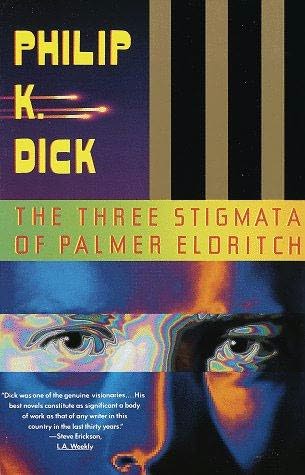
The Three Stigmata of Palmer Eldritch

"The Three Stigmata of Palmer Eldritch" (1965) was the last Philip K. Dick novel I read this summer, and I liked it the most.

I will paraphrase excerpts from the wikipedia page's "Plot introduction":

The setting is some time in the 21st century. Global climatic disruption has rendered Earth inhabitable and to cope with this humans have colonized throughout the solar system. No one wants to be a colonist since it's hard and boring so the UN has to draft people to become colonists. Colonists entertain themselves by playing with "Perky Pat" dolls and accessories manufactured by P.P. Layouts. The real attraction of Perky Pat is using the layouts with Can-D, an illegal hallucinogen that allows the user to "translate" into Perky Pat (if the user is female) or her boyfriend Walt (if male), allowing colonists to experience an idealized version of life on Earth in a collective unconscious hallucination. P.P. Layouts employs several "precogs" to determine if new Perky Pat accessories will be popular. Barney Mayerson, a precog, is the protagonist of this novel.

The plot gets a bit bizarre towards the end of the book, and a few parts are unconvincing, but on the whole I really enjoyed this book.