Showing posts with label Japan. Show all posts

Sunday, February 28, 2021

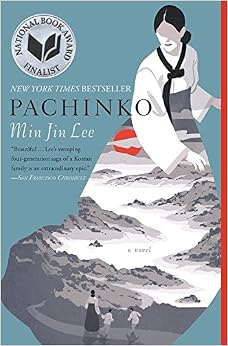
Pachinko - Min Jin Lee

Our March bookclub book was Pachinko, and WOW, it was fantastic!! The best book I've read in a long time. It tells the story of one Korean family across 4 generations, from their roots in Korea in 1883, to their lives in Japan up through 1989. 

Before reading this novel, I was ignorant of Japan's occupation of Korea, and the way Japan oppressed Korean expats after the war. (I had been aware of the shameful history of conscripted "comfort women," but not the broader context of colonization,  oppression, and forced assimilation). This ugly history is not exactly the center of this story, but it is its pervasive backdrop, and influences all of the major events in the family's lives.

The story is beautiful and heartfelt, and although parts are truly heartbreaking, it was a pleasure to read, because of the fascinating characters and their resiliency and even success, despite the many hard years of their lives. The author is clearly a brilliant observer of human nature, as her character studies read so true. The character Sunja is perhaps the central figure, as the story follows her life from young girl to septuagenarian grandmother, and her clear-eyed view of the world is deeply compelling. I would strongly recommend this book to all!

Saturday, March 7, 2020

But the ships are sailing....sailing..... by Chiyono Sugimoto Kiyooka


A Daughter of the Samurai, originally recommended by Lauren, was reviewed here previously – it’s a fascinating and charming book by Etsu Inagaki Sugimoto, who describes her upbringing in a strict Samurai family in the late 19th century and then her experiences in America, after moving here to join her husband.  Two daughters were born here and attended schools in Cincinnati and, later, The Horace Mann school in New York.  The younger daughter, then called Chiyo, also lived for many years in both America and Japan.  She became an English-Japanese translator after World War II, working for the Occupation Authorities. 

But the Ships are Sailing…Sailing… is Chiyono Sugimoto Kiyooka’s personal account of the devastating effect of World War II on Japan and also describes many interactions between Japanese and Americans – it has a quaint feel, but is thoughtful and interesting in contrasting the two cultures.  Especially inspiring is the spirit that motivated her family, over almost a century, during peacetime and wartime, to promote understanding between these two very different ways of life.


Saturday, July 27, 2019

One Hundred Poems from the Japanese


Kenneth Rexroth was a highly-regarded poet and influential leader of the San Francisco School of poets in the 1950’s (but he pleaded innocent to the suggestion that he was a Beat Poet!)  In One Hundred Poems from the Japanese, he offers a history of Japanese poetry from the significant period of the 700s to the late 1100s, through translations of the works of major figures.  All of the poems are short, characteristic of Japanese poetry; haikus were a later form that Rexroth did not value as highly, and he offers only a few famous examples in an appendix). 

Many of the poems, read alone, are strikingly lovely and/or thoughtful:
When I left my girl
In her grave on Mount Hikite
And walked down the mountain path,
I felt as though I were dead.
The meaning and significance of the poems is immensely enhanced by Rexroth’s introduction and by notes on many of the poems, discreetly located at the end of the book.  I had been unaware of some important themes and devices that, when explained by Rexroth, opened entirely new perspectives on what had seemed to me to be beautiful but simple moments in nature:
Though the purity
Of the moonlight has silenced
Both nightingale and
Cricket, the cuckoo alone
Sings all the white night
In a note, Rexroth briefly explains the significance of the different birds in Japanese literature; for example, the cuckoo “is also supposed to be a spirit from Hell, and, again, symbolizes the pleasures of the flesh, courtesans and prostitutes, sacred and profane”.  He suggests that this poem could mean “The salvation of Buddha has enraptured both the householder and the monk or nun, but the prostitute worships in her own way, all through the night.”

A very rewarding book.

Tuesday, June 18, 2019

Daughter of the Samurai

My thanks to Lauren, who, several years ago,  recommended this unusual, interesting, and charming book!  Etsu Inagaki Sugimoto was born in a small Japanese village in 1874, just twenty years after Mathew Perry and "the black ships" forced Japan to open to the world.  Etsu's father had once been a high samurai official and she was brought up in the stringent and severe samurai tradition.   She was disciplined and courageous, yet she also proved to be flexible, open-minded and surprisingly thoughtful and sweet.  In Daughter of the Samurai, Etsu relates and reflects on her early experiences in traditional Japan and her later life in America.

When still very young, Etsu was betrothed to Matsuo, a friend of her brother.  Before she ever met Matsuo, however, he moved to America to set up a business. Her family then allowed Etsu to move to Tokyo so that she could receive a "western education" that would prepare her for her new life - in Cincinnati!   Etsu and Matsuo had two daughters, but after Matsuo died, she returned to Japan for several years.  Later, they moved back to America, where Etsu eventually taught Japanese language and culture at Columbia University and authored several books. I discovered that her youngest daughter, Chiyo, also became an author; one of her books had a title,  "But the ships are sailing -- sailing," which puzzled me until I read the concluding paragraphs of Daughter of the Samurai:
"I wonder why they were called "black ships." Do you know, Honourable Grandmother?" 
"Because far out on the waters they looked like clouds of black smoke rolling nearer and nearer, and they had long, black guns that roared. The red barbarians cared nothing for beauty. They laughed at the Japanese boats, whose sails were made of rich brocade and their oars of carved wood, inlaid with coral and mother-of-pearl. They talked like tradesmen and did not want to learn the hearts of the children of the gods." 
The grandmother stopped and slowly shook her head. 
"And after that?" asked the eager little voice. "And after that, Honourable Grandmother?" 
"The black ships and the rude barbarians sailed away," she concluded, with a deep sigh. "But they sailed back many times. They are always sailing. And now the people of our sacred land talk like tradesmen and no longer are peaceful and content." 
"Will they never be peaceful and content again?" asked the little girl, with anxious eyes. "The honourable teacher said that sailing ships bring lands nearer to each other." 
"Listen!" said the grandmother, holding herself very straight. "Little Granddaughter, unless the red barbarians and the children of the gods learn each other's hearts, the ships may sail and sail, but the two lands will never be nearer." 
Years passed, and Etsu-bo, the little girl who had listened to the story of the black ships and the red barbarians, herself went sailing on a black ship that moved without sails, to a new home in the distant land of the red barbarians. There she learned that hearts are the same on both sides of the world; but this is a secret hidden from the people of the West. That makes another chapter to my grandmother's tale - another chapter, but not the last.  The red barbarians and the children of the gods have not yet learned each other's hearts; to them the secret is still unknown, but the ships are sailing---sailing----

Saturday, October 4, 2014

The Wind-Up Bird Chronicle

This book by Haruki Murakami was highly recommended by Lauren and was completely absorbing and very rich.  Simple writing, but compelling – parts were very funny, or horrifying, or terribly sad, or sexually stimulating, or thought-provoking.  The simplicity of the writing seemed to imply or even emphasize the normalcy of life – but this was strongly contradicted by the strangeness of some of the characters, the mysterious relationships between different plot lines, the magical nature of many key events, and some deeply embedded philosophical issues.


I was captivated by the book, but found it hard to “understand”.  For example, take the title – the wind-up bird is something that the protagonist, Toru Okada, hears, but never sees – a “bird” apparently, that lives somewhere in the trees near his home, and often makes a strange call or noise that sounds like a mechanical wind-up bird.  Mr. Okada frequently comments that the bird winds up, or starts, the day, so the world can go on.  But the bird is sometimes described not as an actual flesh-and-blood animal but like a strictly mechanical contrivance that has no emotions, no goals, no remorse.  And, importantly, but mysteriously, Mr. Okada’s neighbor begins referring to him as Mr. Wind-Up Bird – and this nickname seems a little edgy… that he is a bit of a character and a little mechanical himself.  And, indeed, Mr. Okada is extremely emotionless and seems rather passive, yet eventually turns out to have extraordinary powers – powers that seem really to wind-up or change the world.  So, does the wind-up bird represent “fate” versus “free will”?

Very captivating and very thought-provoking…..and perhaps, like Shakespeare, doesn’t provide clear answers or conclusions!  

Sunday, June 15, 2014

1Q84 - Murakami

At my suggestion, our bookclub's most recent selection is Murakami's 1Q84. An interesting factoid from Wikipedia: "The title is a play on the Japanese pronunciation of the year 1984 and a reference to George Orwell's Nineteen Eighty-Four. The letter Q and the Japanese number 9 (typically romanized as "kyū", but as "kew" on the book's Japanese cover) are homophones, which are often used in Japanese wordplay."

It has been a while since I've read Murakami (previously: Kafka on the Shore; The Windup Bird Chronicle), and as always, I was struck by the believability of his characters, whose inner monologues are powerfully, resonantly realistic, and the vividness of his imagery despite his relatively sparse prose (at least in the translation!). This one was a little surreal and overly sentimental for my taste at times, but I still really enjoyed it for the reasons previously mentioned. I also LOVED the Town of Cats story told within the novel:

In the story, a young man is travelling alone with no particular destination in mind. He rides the train and gets off at any stop that arouses his interest. He takes a room, sees the sights, and stays for as long as he likes. When he has had enough, he boards another train. He spends every vacation this way. 
One day, he sees a lovely river from the train window. Gentle green hills line the meandering stream, and below them lies a pretty little town with an old stone bridge. The train stops at the town’s station, and the young man steps down with his bag. No one else gets off, and, as soon as he alights, the train departs. 
No workers man the station, which must see very little activity. The young man crosses the bridge and walks into the town. All the shops are shuttered, the town hall deserted. No one occupies the desk at the town’s only hotel. The place seems totally uninhabited. Perhaps all the people are off napping somewhere. But it is only ten-thirty in the morning, far too early for that. Perhaps something has caused all the people to abandon the town. In any case, the next train will not come until the following morning, so he has no choice but to spend the night here. He wanders around the town to kill time. 
In fact, this is a town of cats. When the sun starts to go down, many cats come trooping across the bridge—cats of all different kinds and colors. They are much larger than ordinary cats, but they are still cats. The young man is shocked by this sight. He rushes into the bell tower in the center of town and climbs to the top to hide. The cats go about their business, raising the shop shutters or seating themselves at their desks to start their day’s work. Soon, more cats come, crossing the bridge into town like the others. They enter the shops to buy things or go to the town hall to handle administrative matters or eat a meal at the hotel restaurant or drink beer at the tavern and sing lively cat songs. Because cats can see in the dark, they need almost no lights, but that particular night the glow of the full moon floods the town, enabling the young man to see every detail from his perch in the bell tower. When dawn approaches, the cats finish their work, close up the shops, and swarm back across the bridge. 
By the time the sun comes up, the cats are gone, and the town is deserted again. The young man climbs down, picks one of the hotel beds for himself, and goes to sleep. When he gets hungry, he eats some bread and fish that have been left in the hotel kitchen. When darkness approaches, he hides in the bell tower again and observes the cats’ activities until dawn. Trains stop at the station before noon and in the late afternoon. No passengers alight, and no one boards, either. Still, the trains stop at the station for exactly one minute, then pull out again. He could take one of these trains and leave the creepy cat town behind. But he doesn’t. Being young, he has a lively curiosity and is ready for adventure. He wants to see more of this strange spectacle. If possible, he wants to find out when and how this place became a town of cats. 
On his third night, a hubbub breaks out in the square below the bell tower. “Hey, do you smell something human?” one of the cats says. “Now that you mention it, I thought there was a funny smell the past few days,” another chimes in, twitching his nose. “Me, too,” yet another cat says. “That’s weird. There shouldn’t be any humans here,” someone adds. “No, of course not. There’s no way a human could get into this town of cats.” “But that smell is definitely here.” 
The cats form groups and begin to search the town like bands of vigilantes. It takes them very little time to discover that the bell tower is the source of the smell. The young man hears their soft paws padding up the stairs. That’s it, they’ve got me! he thinks. His smell seems to have roused the cats to anger. Humans are not supposed to set foot in this town. The cats have big, sharp claws and white fangs. He has no idea what terrible fate awaits him if he is discovered, but he is sure that they will not let him leave the town alive. 
Three cats climb to the top of the bell tower and sniff the air. “Strange,” one cat says, twitching his whiskers, “I smell a human, but there’s no one here.” 
“It is strange,” a second cat says. “But there really isn’t anyone here. Let’s go and look somewhere else.” 
The cats cock their heads, puzzled, then retreat down the stairs. The young man hears their footsteps fading into the dark of night. He breathes a sigh of relief, but he doesn’t understand what just happened. There was no way they could have missed him. But for some reason they didn’t see him. In any case, he decides that when morning comes he will go to the station and take the train out of this town. His luck can’t last forever. 
The next morning, however, the train does not stop at the station. He watches it pass by without slowing down. The afternoon train does the same. He can see the engineer seated at the controls. But the train shows no sign of stopping. It is as though no one can see the young man waiting for a train—or even see the station itself. Once the afternoon train disappears down the track, the place grows quieter than ever. The sun begins to sink. It is time for the cats to come. The young man knows that he is irretrievably lost. This is no town of cats, he finally realizes. It is the place where he is meant to be lost. It is another world, which has been prepared especially for him. And never again, for all eternity, will the train stop at this station to take him back to the world he came from.

It sort of reminds me of what happens to the girl's parents in Spirited Away, except that there is no possibility for redemption in this world.

Friday, May 30, 2014

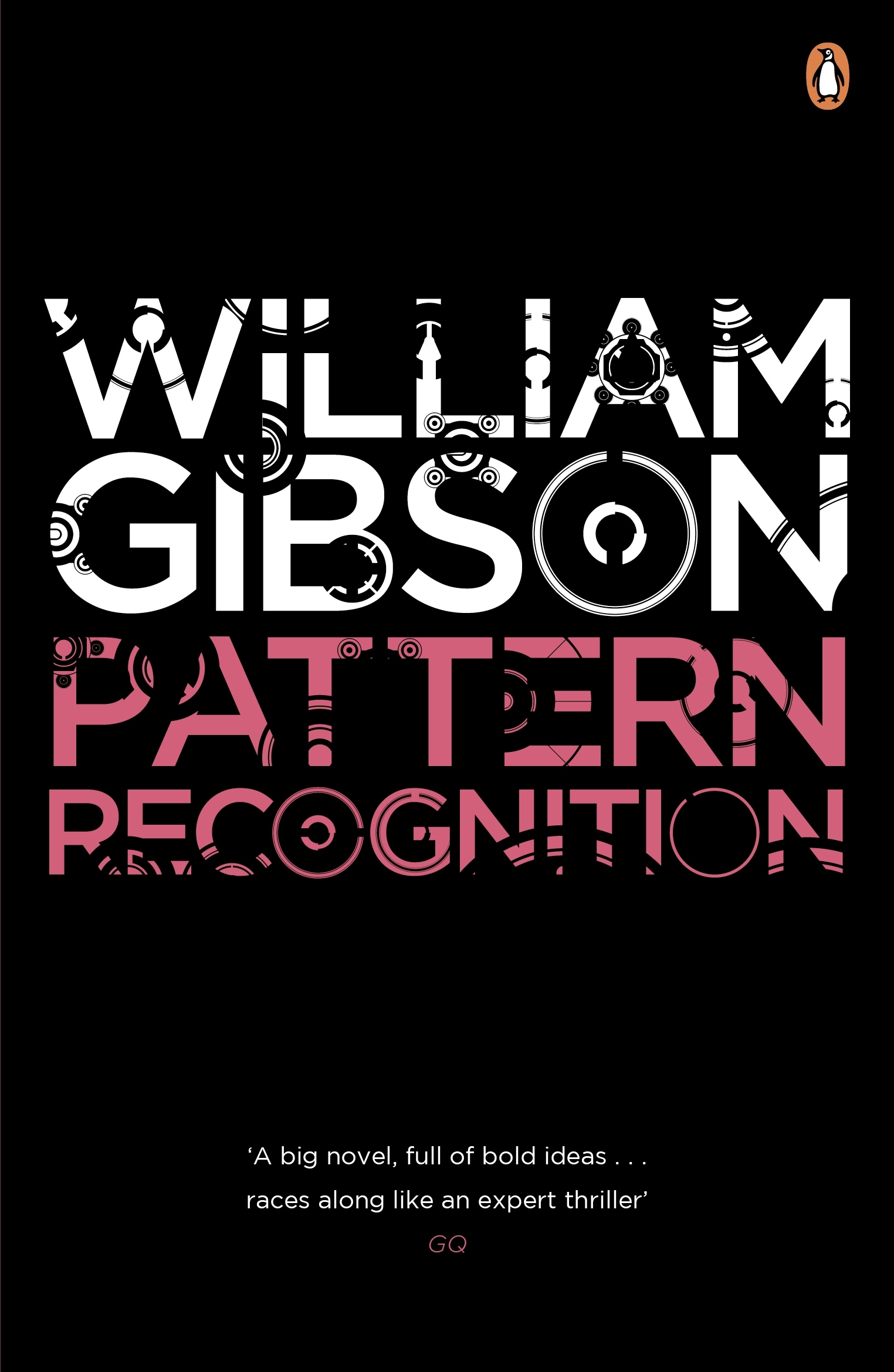
Pattern Recognition - William Gibson

Another brilliant book by Gibson, and the first in the Blue Ant/Hubertus Bigend trilogy. The likable but neurotic protgagonist, Cayce (pronounced "Case"), is a coolhunter - a precog who uses her sensitivity to brands and logos to serve as a consultant to major franchises, helping them make branding choices based on what she senses will become trendy or not. In her spare time, Cayce and her online otaku friends obsess over "the footage" - segments of breathtaking, unearthly films scattered across the net, discovered a fragment at a time. Cayce's life changes when an exceptionally powerful employer hires her for a special consulting job, and draws her into a web of intrigue, Soviet mafia, and mystery...

I also really identified with Cayce, and many of her reflections resonated with me, such as, "Does she feel liminal, now, or simply directionless?"

Gibson's 3 Trilogies:

The Sprawl Trilogy:
The Bridge Trilogy:
The Bigend Books:

Monday, February 27, 2012

Ryu Mitsuse - 10 Billion Days & 100 Billion Nights


This book is utterly insane, and operates under the principle that sufficiently advanced technology is indistinguishable from magic, mystical experience, or a really incredible psychedelic voyage.

At one point, Jesus of Nazareth and Siddhartha Guatama the Buddha, who are cyborgs, fight a laser battle amidst the fortieth-century ruins of Tokyo.  I feel like that should be recommendation enough.  If dream narratives aren't your thing, though, you might find the book frustrating.

The story is a sort of metaphysical space-opera with Dickian gnostic overtones, featuring Plato, Jesus, Buddha, and the goddess Asura.  The translation is excellent and highly poetic; the original Japanese must be pretty amazing.  

Thursday, September 8, 2011

William Gibson's Neuromancer


Gibson's Neuromancer is his first book ever, and the second book of his that I have read. I previously read Idoru (out of order). Neuromancer is good - far from as excellent as Idoru; you can really tell he is an amateur writer. The narrative is choppy and often confusing and the dialogue feels false in various places. However, the ideas are still really interesting and at times purely brilliant. The book is famous as a seminal sci-fi work rather than on its own merits, so I would still suggest reading it, especially since it lays out some of the characters for the later works (e.g., Case, Molly). I'm looking forward to reading Count Zero.

Gibson's 3 Trilogies:

The Sprawl Trilogy:
The Bridge Trilogy:
The Bigend Books:

Monday, June 27, 2011

Three Californias


Three Californias is a trilogy by Kim Stanley Robinson written prior to the Mars cycle. Each of the three novels, The Gold Coast, the Wild Shore, and the Pacific Edge, posits a radically different future taking place in Orange County. I've just finished the Wild Shore, read the Gold Coast over spring break, and will be picking up the final one soon. The Gold Coast takes place in a total-sprawl landscape of designer drugs and party lifestyle, the Wild Shore takes place in a post-nuclear America quarantined by Japanese ships off the coast, and I'm not entirely sure what the other one is about.

While these novels don't quite stand up to the magnum opus that is Red Mars, and are not as dense in ideas and sheer brilliance, they are definitely worth checking out even if only as a prelude to his later work.

William Gibson's Idoru

In this utterly wild and brilliant book by William Gibson, two characters' narratives intersect to reveal the story of a famous rockstar - Rez of the band Lo/Rez - who is determined to marry an idoru, or virtual celebrity, despite the objections of his P.R. team and devoted, massive, scarred bodyguard Blackwell. Set in the near (but technologically greatly advanced) future, the intersecting narratives are from the perspectives of Chia, a fourteen-year-old Lo/Rez fan and skilled hacker from Seattle, and Laney, a hacker with an uncanny ability to detect "nodal points" in data. The theme of emergence is evidenced at the meta- as well as macro-level, wherein the individual stories interact to create a totality which far exceeds the sum of its parts. The tale is a true page-turner, and rife with crazy characters and novel ideas. Definitely worth reading!!

**Update**

Helpful info from Colin: Gibson's 3 Trilogies (turns out this is book 2 of one of them - oops)

Gibson's 3 Trilogies:

The Sprawl Trilogy:

The Bridge Trilogy:
The Bigend Books: