Showing posts with label magic. Show all posts

Wednesday, July 27, 2022

The City of Brass - S.A. Chakraborty

The City of Brass grew on me as I went along. In the beginning of this story, scrappy polyglot Nahri is living in Cairo, where she uses her street smarts and unique magical healing abilities to swindle wealthy merchants. She dreams of saving enough money to become a legitimate physician, but these plans are turned on their head when she accidentally summons a mysterious djinn warrior. The rest of the novel is an romance/adventure set in the fantastical realm of Daevabad. 

Some of the writing felt a bit clunky to me, particularly the romantic bits, and I found it difficult to keep track of the byzantine djinn tribal histories. However, the Middle Eastern setting was beautifully realized, and a nice change of pace from the Euro-centric fantasy I'm used to reading. The action also heated up as the story progressed, and there were some thrilling fight scenes. Alizayd, the king's spartan and idealistic son, was my favorite character - if I continue with the next books in the trilogy, I hope we see more of him. 

Sunday, February 7, 2021

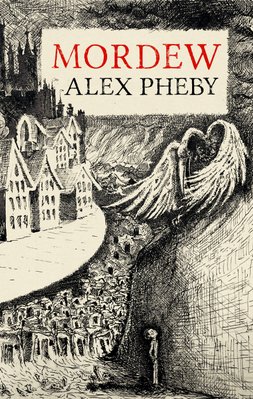
Mordew - Alex Pheby

As my contribution to our 2021 bookclub schedule, I nominated Mordew, by Alex Pheby. It appeared on a top books of 2020 list somewhere. I would describe it as grotesque fantasy, about the struggles of a slum boy named Nathan, in a city ruled by the magic of the Master. It was quite long at 617 pages, but I enjoyed it. The writing style is an interesting mix of snappy and florid, and the ideas are very creative. I love the fantasy genre, but don't often find new adult fantasy that I really enjoy. Ultimately, I did not find the plot wholly satisfying, and my attention waivered a bit toward the end, but there were lots of interesting ideas in this book. Would recommend.

Wednesday, January 16, 2019

The Case of the Man Who Died Laughing AND The Case of the Missing Servant

Tarquin Hall's mystery is light, comical and very entertaining.  Distinguished scientist and Guru Buster, Dr. Suresh Jha, receives a very specific death threat. The next morning, the committed rationalist attends his regular exercise/self-improvement group, the Rajpath Laughing Group, at a public park.

Suddenly, while Professor Pandey is telling a knock-knock joke that convulses the group members, a mist begins to form around their ankles and rises to their shins, and then higher.  The sky darkens, dogs bark, and then, appearing out of the mist, high above the ground, is the hideous face of Kali, the Indian goddess of time, creation, destruction and power, the destroyer of evil forces.  Facing Dr. Jha, she screams "You who have dared to insult me! You who have dared to mock my power!You will taste blood!", and thrusts a sword deep into his chest.
Kali

A video, taken by a passing French tourist, is broadcast on the all major news stations and the impossibility of any material explanation for these startling events convinces millions that Kali has miraculously appeared and wreaked vengeance on Dr. Jha.

Later that day, Most Private Investigator Vish Puri is visited by Inspector Singh, who asks for his help in investigating the circumstances of Dr. Jha's death.  Most Private Investigator Puri kicks into action, with frequent food breaks for his favorite Punjabi dishes; thanks to a glossary at the end of the book, this provides a valuable catalog of Indian snacks.

A very entertaining mystery, with a couple amusing side-plots, lots of colorful characters, and whimsical commentary on life in India - a quick and diverting read!

Just ran across another Vish Puri mystery on our library's Staff Picks shelf...once again, I thought the story was lively and very amusing - and I enjoyed The Case of the Missing Servant even more than the first one I read.  These are wonderful, light reads - highly recommended!

Monday, January 11, 2016

One Weird Trick (Sex Criminals Volume 1)

When Mark and I visited Arizona over the holiday break, we hung out with his friend Jordan, who works at a comic book store in Tempe. He recommended this smart, fresh, graphic novel to me. One Weird Trick is about a young woman who wants to save her library from foreclosure, her unusual superpower, and her sexcapades with a likeminded young man she meets at a party. A fun and flirty caper with nice illustrations, this is my bookclub's February pick (along with The Picture of Dorian Gray), if anyone wants to read along!

Sunday, June 15, 2014

1Q84 - Murakami

At my suggestion, our bookclub's most recent selection is Murakami's 1Q84. An interesting factoid from Wikipedia: "The title is a play on the Japanese pronunciation of the year 1984 and a reference to George Orwell's Nineteen Eighty-Four. The letter Q and the Japanese number 9 (typically romanized as "kyū", but as "kew" on the book's Japanese cover) are homophones, which are often used in Japanese wordplay."

It has been a while since I've read Murakami (previously: Kafka on the Shore; The Windup Bird Chronicle), and as always, I was struck by the believability of his characters, whose inner monologues are powerfully, resonantly realistic, and the vividness of his imagery despite his relatively sparse prose (at least in the translation!). This one was a little surreal and overly sentimental for my taste at times, but I still really enjoyed it for the reasons previously mentioned. I also LOVED the Town of Cats story told within the novel:

In the story, a young man is travelling alone with no particular destination in mind. He rides the train and gets off at any stop that arouses his interest. He takes a room, sees the sights, and stays for as long as he likes. When he has had enough, he boards another train. He spends every vacation this way. 
One day, he sees a lovely river from the train window. Gentle green hills line the meandering stream, and below them lies a pretty little town with an old stone bridge. The train stops at the town’s station, and the young man steps down with his bag. No one else gets off, and, as soon as he alights, the train departs. 
No workers man the station, which must see very little activity. The young man crosses the bridge and walks into the town. All the shops are shuttered, the town hall deserted. No one occupies the desk at the town’s only hotel. The place seems totally uninhabited. Perhaps all the people are off napping somewhere. But it is only ten-thirty in the morning, far too early for that. Perhaps something has caused all the people to abandon the town. In any case, the next train will not come until the following morning, so he has no choice but to spend the night here. He wanders around the town to kill time. 
In fact, this is a town of cats. When the sun starts to go down, many cats come trooping across the bridge—cats of all different kinds and colors. They are much larger than ordinary cats, but they are still cats. The young man is shocked by this sight. He rushes into the bell tower in the center of town and climbs to the top to hide. The cats go about their business, raising the shop shutters or seating themselves at their desks to start their day’s work. Soon, more cats come, crossing the bridge into town like the others. They enter the shops to buy things or go to the town hall to handle administrative matters or eat a meal at the hotel restaurant or drink beer at the tavern and sing lively cat songs. Because cats can see in the dark, they need almost no lights, but that particular night the glow of the full moon floods the town, enabling the young man to see every detail from his perch in the bell tower. When dawn approaches, the cats finish their work, close up the shops, and swarm back across the bridge. 
By the time the sun comes up, the cats are gone, and the town is deserted again. The young man climbs down, picks one of the hotel beds for himself, and goes to sleep. When he gets hungry, he eats some bread and fish that have been left in the hotel kitchen. When darkness approaches, he hides in the bell tower again and observes the cats’ activities until dawn. Trains stop at the station before noon and in the late afternoon. No passengers alight, and no one boards, either. Still, the trains stop at the station for exactly one minute, then pull out again. He could take one of these trains and leave the creepy cat town behind. But he doesn’t. Being young, he has a lively curiosity and is ready for adventure. He wants to see more of this strange spectacle. If possible, he wants to find out when and how this place became a town of cats. 
On his third night, a hubbub breaks out in the square below the bell tower. “Hey, do you smell something human?” one of the cats says. “Now that you mention it, I thought there was a funny smell the past few days,” another chimes in, twitching his nose. “Me, too,” yet another cat says. “That’s weird. There shouldn’t be any humans here,” someone adds. “No, of course not. There’s no way a human could get into this town of cats.” “But that smell is definitely here.” 
The cats form groups and begin to search the town like bands of vigilantes. It takes them very little time to discover that the bell tower is the source of the smell. The young man hears their soft paws padding up the stairs. That’s it, they’ve got me! he thinks. His smell seems to have roused the cats to anger. Humans are not supposed to set foot in this town. The cats have big, sharp claws and white fangs. He has no idea what terrible fate awaits him if he is discovered, but he is sure that they will not let him leave the town alive. 
Three cats climb to the top of the bell tower and sniff the air. “Strange,” one cat says, twitching his whiskers, “I smell a human, but there’s no one here.” 
“It is strange,” a second cat says. “But there really isn’t anyone here. Let’s go and look somewhere else.” 
The cats cock their heads, puzzled, then retreat down the stairs. The young man hears their footsteps fading into the dark of night. He breathes a sigh of relief, but he doesn’t understand what just happened. There was no way they could have missed him. But for some reason they didn’t see him. In any case, he decides that when morning comes he will go to the station and take the train out of this town. His luck can’t last forever. 
The next morning, however, the train does not stop at the station. He watches it pass by without slowing down. The afternoon train does the same. He can see the engineer seated at the controls. But the train shows no sign of stopping. It is as though no one can see the young man waiting for a train—or even see the station itself. Once the afternoon train disappears down the track, the place grows quieter than ever. The sun begins to sink. It is time for the cats to come. The young man knows that he is irretrievably lost. This is no town of cats, he finally realizes. It is the place where he is meant to be lost. It is another world, which has been prepared especially for him. And never again, for all eternity, will the train stop at this station to take him back to the world he came from.

It sort of reminds me of what happens to the girl's parents in Spirited Away, except that there is no possibility for redemption in this world.

Sunday, January 19, 2014

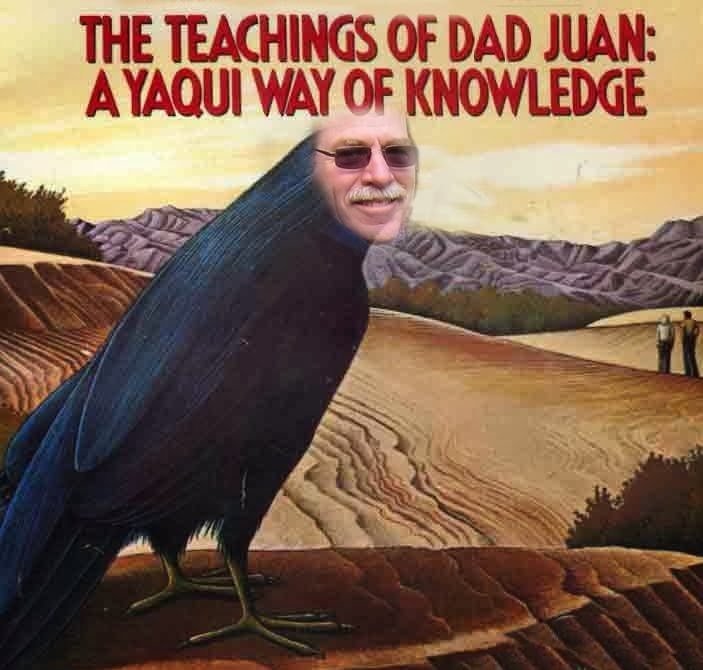
The Teachings of Don Juan - Carlos Castaneda

Tonight I read Carlos Castaneda's "The Teachings of Don Juan" in a single sitting (I skipped part 2, his structural analysis of the teachings, which does not interest me). I became interested in this book in a sort of roundabout way - one part of Levack's Witch-Hunt that keenly aroused my interest was the offhand reference to the hallucinogenic "flying unguents" purportedly used by medieval witches, which may (in some cases) have inspired the visions of flying to the witches' sabbath. These ointments contained plants such as atropa belladona and datura, and in my online research into their effects, I came across the following passage from Castaneda:
"There was a question I wanted to ask him. I knew he was going to evade it, so I waited for him to mention the subject. I waited all day. Finally, before I left that evening, I had to ask him, "Did I really fly?," don Juan?"

"That is what you told me. Didn't you?"

"I know, don Juan. I mean, did my body fly? Did I take off like a bird?"

"You always ask me questions I cannot answer. You flew. That is what the second portion of the devil's weed is for. As you take more of it, you will learn how to fly perfectly. It is not a simple matter. A man flies with the help of the second portion of the devil's weed. That is all I can tell you. What you want to know makes no sense. Birds fly like birds and a man who has taken the devil's weed flies as such [el enyerbado vuela asi]."

"As birds do? [Asi como los pajaros?]."

"No, he flies as a man who has taken the weed [No, asi como los enyerbados]."

"Then I didn't really fly, don Juan. I flew in my imagination, in my mind alone. Where was my body?"

"In the bushes," he replied cuttingly, but immediately broke into laughter again. "The trouble with you is that you understand things in only one way. You don't think a man flies; and yet a brujo can move a thousand miles in one second to see what is going on. He can deliver a blow to his enemies long distances away. So, does he or doesn't he fly?"
Although I am disappointed that Don Juan the man appears to have been a fiction, I still find this passage very powerful, and am still intrigued by some of the arguments Castaneda attributes to him, such as his rejection of there being only one way to understand our physical relationship with the world.

Regardless of whether you want to take it or leave it as spiritually valid, certainly no one could deny that Castaneda is a powerful storyteller, and the concluding episode was so wild and gripping I forgot I was even reading a book until it was over. A powerful "state of nonordinary reality" induced by reading!

The wise Dad Juan

The Witch-Hunt in Early Modern Europe - Brian P. Levack

Levack's work is a overview of the legal, political, economic, religious, and epidemic circumstances which he argues enabled the great witch-hunts of early modern Europe. Although witches have been a lifelong interest for me, and I was eagerly anticipating reading this book, I found it kind of disappointing, to be honest.

The scope feels too broad - Levack seldom dives deeply into the particulars of any given hunt, preferring to treat the issue in very general terms. The book is surprisingly dry and even boring, which seems nearly impossible, treating as it does the lurid topics of torture, naked dancing, and burning at the stake, which in this book are described in the most clinical, repetitious passages. Levack also almost never includes direct quotes from contemporaries, which would have spiced it up considerably.

I did learn a few things, but the book could have been a third as long and 10 times more exciting. Especially on the heals of Erickson's riveting historical drama about Mary Tudor, this was pretty dull. Would not recommend.

Monday, January 13, 2014

The Box of Delights

The Box of Delights is a sequel to The Midnight Folk (reviewed earlier) by John Masefield, the longtime poet laureate of England (I must go down to the seas again, to the lonely sea and the sky...)   Kay Harker is older now and returning home from school for the Christmas holidays.   He encounters an old, and rather odd, Punch and Judy man, who warns him that The Wolves are Running.  Commanding the Wolves and other servants of evil is Kay's old enemy, the wizard Abner Brown.  The illustrations in this lovely Folio edition are magical - and some of the story is also quite nice, though, like most sequels, this is not equal to the original in charm and adventure, though the language is still a pleasure.  Here's one nice quote, describing some truly odious pirates:
all bronzed with tropical suns, purple with drink, scarlet with battle, and bloated from evil living

Monday, February 27, 2012

Ryu Mitsuse - 10 Billion Days & 100 Billion Nights


This book is utterly insane, and operates under the principle that sufficiently advanced technology is indistinguishable from magic, mystical experience, or a really incredible psychedelic voyage.

At one point, Jesus of Nazareth and Siddhartha Guatama the Buddha, who are cyborgs, fight a laser battle amidst the fortieth-century ruins of Tokyo.  I feel like that should be recommendation enough.  If dream narratives aren't your thing, though, you might find the book frustrating.

The story is a sort of metaphysical space-opera with Dickian gnostic overtones, featuring Plato, Jesus, Buddha, and the goddess Asura.  The translation is excellent and highly poetic; the original Japanese must be pretty amazing.  

Saturday, February 18, 2012

The Anubis Gates

... Wow. Where to begin with this book?

Okay, this is a book in the fantasy genre that, in some circles, I believe, has been sourced as an inspiration for steampunk novels, which I have yet to read. Honestly, I'm not sure why, because it had little to do with steampunk, but it had a sort of science fiction element in regards to time travel, and the rest is just straight fantasy.

"Just straight fantasy", however, can barely begin to describe the scope of this book. The story is so masterful and creative that it blew my mind. The basic idea is that a bunch of Egyptian warlocks are using their magic to change the past, thereby assuring Egypt's supremacy in the world. Our hero is Brendan Doyle, a modern expert on Coleridge, who travels to the past so as to attend one of Coleridge's lectures, but by the screwy nature of fate, he gets captured and is stuck in the past. The stories collide, and all hell breaks loose.

Again, I cannot describe just how awesome the story is. The plot devices are magnificent, the writing is great, the characters are amusing and engaging, and the extranormal aspets of the story are explained well and keep consistent with themselves throughout.

I highly recommend this book to anyone who is at all interested in fantasy, or history, or even a little science fiction. Seriously. READ IT!


Wednesday, September 7, 2011

Witchblade: Origins Volume 1

Just finished reading Witchblade: Origins Volume 1, my first comic book ever. I asked the guy in the comic book stand at Dragon*Con to recommend me something that:

1. Has a strong plot (not stupid or silly)
2. Has interesting character development
3. Is visually cool
4. Has cool costumes

I would say this largely fits the bill. The plot is definitely intriguing and it is visually awesome. It remains to be seen whether the characters will develop in the next volume, although I will check them out and see. As far as costumes go, this girl wears next to nothing all the time, so there isn't much to speak of there. The Witchblade itself is pretty sweet though (pictured on the cover), so I could definitely do a costume with her wearing it with one of her many miniscule dresses.

At first it was hard for me to get used to reading all the different speech bubbles, and the intermittent (and seemingly arbitrary) bolding of words was annoying, but I got over that.

Would recommend.

Saturday, July 18, 2009

I got over it


Family members know that I really like Philip Pullman and loved The Golden Compass.....right up to the very end, when I was infuriated by the actions of Lord Asriel. It has taken me a couple years, but I finally "got over it" and read The Subtle Knife and The Amber Spyglass. Pullman is a wonderful storyteller, with an astounding imagination. There were many vivid and wholly likable or admirable characters - let's vote! Here are my rankings of favorite (well, I included some that would be more accurately characterized as "most vivid") characters:

1. Iorek Bynison
2. Lee Scoresby
3. Serafina Pekkala
4. Will Parry
5. The Golden Monkey (elected "Most Hateful Character in All Literature" six years running!)

Also, apart from the irresistible story, near the end of The Amber Spyglass, I was powerfully affected emotionally by the caring shown by the older, wise advisors, toward the young Lyra and Will.

Sunday, June 7, 2009

The Master and Margarita

A while ago I read Mikhail Bulgakov's The Master and Margarita, which is great. A wild caper in which the devil and his friends come to Moscow and wreak havoc. The protagonist, the Master, is thought by most to be largely autobiographical.

Bulgakov worked on the book from 1928 until his death in 1940. In 1930, after a campaign denouncing him as anti-Soviet, Bulgakov burnt the first manuscript. He later returned to the novel, although he did not live to see it published. The uncensored version of the novel was not published in the Soviet Union until 1973.

It is a fantastic work, and many quotes are famous in Russia even today (according to my Russian lit prof, Zhenya Bershtein). I highly recommend it!!

Sunday, January 25, 2009

Harry Potter!


It is time to revive this blog. I've made the last 3 posts, and there's a total of just one post from nuclear family readers Noah, Will, Lauren, & Eileen.

So I'm turning to the most popular reading topic of all: Harry Potter.

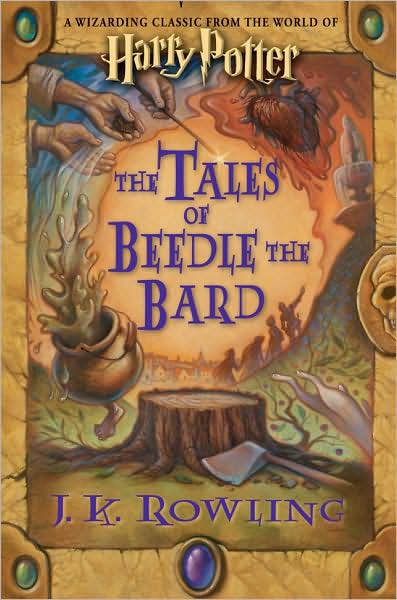
I just finished Tales of Beetle the Bard. It is very short, but quite fun. Dumbledore's "commentary" is full of his witty asides. And since profits from the book go to charity, it doesn't feel like JKR is just mining old material. Strong rec to read.

Here's the prompt for blog participation:

How do you rank the Harry Potter books?

My ranking:
Azkaban (3)
Half-Blood Prince (6)
Deathly Hallows (7)
Goblet of Fire (4)
Order of the Phoenix (5)
Sorcerer's Stone (1)
Chamber of Secrets (2)

Let the debate begin.