 For whatever reason, I was never required to read this book in high school, so I read it now for the first time as an adult. It's really a masterful work, very emotionally powerful and heartbreaking. The grotesque plight of the disenfranchised Oklahoma tenant farmers is told through the eyes of the Joad family. The story recounts their struggles as they are forced to leave their land and seek work in California, where they experience the cruelty of poverty and the futility of hard work and hope in the face of an oppressive system. I am not surprised the book was so controversial in its day, the politics are very progressive and pro-labor. The book can be graphically disturbing but it is an important story that remains very relevant today.
Showing posts with label power. Show all posts
Showing posts with label power. Show all posts
Wednesday, April 16, 2014
The Grapes of Wrath - Steinbeck
For whatever reason, I was never required to read this book in high school, so I read it now for the first time as an adult. It's really a masterful work, very emotionally powerful and heartbreaking. The grotesque plight of the disenfranchised Oklahoma tenant farmers is told through the eyes of the Joad family. The story recounts their struggles as they are forced to leave their land and seek work in California, where they experience the cruelty of poverty and the futility of hard work and hope in the face of an oppressive system. I am not surprised the book was so controversial in its day, the politics are very progressive and pro-labor. The book can be graphically disturbing but it is an important story that remains very relevant today.

Wednesday, April 9, 2014
Great Harry - Carrolly Erickson
 Another tremendous biography by Ms. Erickson. Like Bloody Mary, Great Harry is a vibrant, engaging portrait of life in 1500s England, both the intrigue and lavish splendor of the court, and the violence, ignorance, and squalor of the poor. Ms. Erickson is a master storyteller - King Henry VIII is convincing portrayed as a highly intelligent and ambitious (though flawed) ruler, who is here shown in all his facets and stages - charismatic, handsome, idealistic and beloved in his youth, irascible, peevish, and self-important in his old age, always majestic and awe-inspiring. Hundreds upon hundreds of contemporary quotes are seamlessly woven into this tale, giving it a very rich and authentic flavor of the period and of "Great Harry," as he was called by his adoring subjects in the early years of his reign. A brilliant work, and I can't wait to read more Erickson!
Thursday, January 9, 2014
Bloody Mary: The Life of Mary Tudor

Carolly Erickson's Bloody Mary is a history that reads like an action adventure. This book was thoroughly engaging and immensely interesting.
Adored and publicly admired by her father as a young child, Mary's peaceful home life was destroyed when her father, always flirtatious, suddenly decided to pursue his love affair with Anne Boleyn beyond the bedroom, and with cold indifference and evident scorn cast aside his former wife, daughter, and religion. Mary was stripped of the title "Princess" and of all her fine clothes and possessions, tormented by Anne and her courtiers, denied medical treatment when sick, and kept for years as a veritable prisoner in a run-down and drafty old house.
Although Mary rose above seemingly insurmountable obstacles to become Queen, and was an impressive scholar who spoke excellent Latin and ruled with wisdom and moderation, and even compassion and clemency (by the standards of the day), she was never accorded the respect she deserved while she was alive, due to the "imbecility of her sex," and was later condemned in the public memory as a bloody tyrant.
This book illustrates the flavor of life during the period very colorfully, and portrays Queen Mary with perhaps greater subtlety and nuance than has been accorded her in the past.
Highly recommend!
Thursday, January 2, 2014
Understanding Power - Noam Chomsky
 My book group's most recent selection (at my suggestion) was Chomsky's "Understanding Power." My friend Dan had urged me to read this book many times and I kept putting it off, thinking it would be boring and difficult. Nothing could be farther from the truth! This gripping book, although shocking and disturbing at times, was extremely interesting and readable. It is an edited transcript of Chomsky's various talks, and his style is clear and persuasive. I found this book to be profoundly eye-opening and unsettling regarding American politics and media censorship, and while I felt very disillusioned, it was important for me to have a better understanding of power and oppression in our nation. A must-read for everyone, I think!
Footnotes to the text are available here.
Saturday, August 18, 2012
The Years of Lyndon Johnson: The Passage of Power
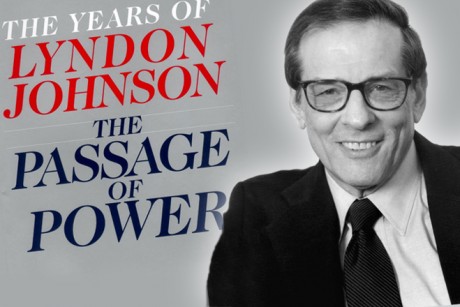
Caro originally conceived this biography as three books - now four are out, with numbers five or, even, six in the works. I used to say that I hoped Caro (now 77) would live long enough to finish the series. Now I say that I hope I live long enough to finish reading the series!
Caro's invariable subject is power. His first book, The Power Broker, about Robert Moses, was a detailed study of the most powerful man in New York State for several decades. And power is the explicit subject of the Johnson series. The third volume, Master of the Senate, spent ~150 pages describing the history of the US Senate, convincingly demonstrating how the dictates of the Constitution, the historical traditions of the Senate, and the powerful and monolithic Southern Bloc of Senators made it impossible for any single man to wield power in that body - all to set the stage for the astonishing consolidation, almost creation, of power by the junior Senator from Texas. Johnson himself is quoted saying,
I do understand power, whatever else may be said about me. I know where to look for it, and how to use it."The Passage of Power describes a new chapter in Johnson's search for power, describing how he failed to capture the Democratic Presidential nomination for the 1960 election and then decided to accept the Vice-Presidential nomination, strongly against the advice of his best friends and advisors, who argued forcefully that the Vice Presidency is a ludicrous, powerless office. Johnson believed he could alter that situation, telling one friend, "Power is where power goes." But he was wrong. He had misread and badly underestimated Jack Kennedy, who sidelined him completely. Johnson was regarded by the Kennedy inner circle ("the Harvards", as he called them) as a rube ("Uncle Cornpone" or "Rufus") and was personally snubbed and administratively excluded. In the absence of any meaningful role, with no opportunity to groom himself to replace Kennedy at the conclusion of his term, Johnson literally wasted away, physically and mentally.
The gripping part of this volume is the shocking assassination of Kennedy and the immediate transformation in Johnson; he came alive, overcoming enormous obstacles, to seize the reins of power and wield them with astonishing effectiveness. For example, the description of how he managed to steer a civil rights act through Congress is exceptionally impressive. Caro lauds Johnson's achievement in the highest terms:
The 1965 Act would be passed after another titanic struggle, in which, with men and women (and children, many children) being beaten in Selma on their way to the Edmund Pettus Bridge, singing "We Shall Overcome" as they marched into tear gas and billy clubs and bullwhips, Lyndon Johnson went before Congress and said, "We Shall Overcome," thereby adopting the cicil rights rallying cry as his own. (When Martin Luther King, watching the speech on television in Selma, heard Johnson say that, he began to cry - the first time his assistants had ever seen him cry). ..... To bring black Americans more fully into the political system, he had to break the power of the South in the Senate - and he broke it. It was Abraham Lincoln who "struck off the chains of black Americans," I have written, "but it was Lyndon Johnson who led them into voting booths, closed democracy's sacred curtain behind them, placed their hands upon the lever that gave them a hold on their owndestiny, made them, at last and forever, a true part of American political life." How true a part? Forty-three years later, a mere blink in history's eye, a black American, Barack Obama, was sitting behind the desk in the Oval Office.For me, this book provided new insight into Jack and Robert Kennedy, the incomparable speechwriter and Kennedy accolyte Ted Sorenson, and, through the masterful protrayal of the strengths and weaknesses of LBJ, new insights into the character of men.
Thursday, February 9, 2012
The Limits of Power: The End of American Exceptionalism
 So I was researching into presidential candidates, and in the debate, I found that "American Exceptionalism" was mentioned multiple times. While I found basic definitions online, I found this book mentioned a few times, and thought that it might help teach me exactly what everyone was so hyped up about.
So, "American Exceptionalism" is the concept that America is a special nation, as first mentioned by de Tocqueville after a visit here. The term has transformed, until now, it refers to how America believes that it can justify its actions simply by dint of its "exceptionalism", and ignore the consequences as less exceptional nations cannot.
The book's premise is that America was founded upon principles of life, liberty and pursuit of happiness, and as admirable as this is, our pursuit of them in the modern day has stretched too far in three spheres: political, economic, and militaristic. The book goes through the three areas, giving the history of how we arrived at the current conditions in said area, and how we are pushing the limits of power.
The book, I thought, was very good in that it was very well-researched and made a great many points, but my difficulty with it is that I can't tell its actual purpose. The author lambasts the entirety of the U.S., and so alienates anyone he might be persuading. If the book is just to inform, it's quite interesting, but in that case, why the acerbic tone? As such, I think the book fails to accomplish whatever purpose it was intended for, but it was still a very interesting read. I recommend it to those interested in U.S. politics.
P.S. This guy has a love relationship with Reinhold Niebuhr, a well-known theologian whom I had to read last semester for my religion class.
Subscribe to:
Posts (Atom)