Showing posts with label coming of age. Show all posts

Sunday, February 28, 2021

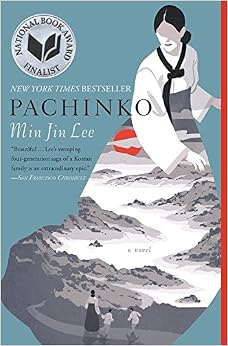
Pachinko - Min Jin Lee

Our March bookclub book was Pachinko, and WOW, it was fantastic!! The best book I've read in a long time. It tells the story of one Korean family across 4 generations, from their roots in Korea in 1883, to their lives in Japan up through 1989. 

Before reading this novel, I was ignorant of Japan's occupation of Korea, and the way Japan oppressed Korean expats after the war. (I had been aware of the shameful history of conscripted "comfort women," but not the broader context of colonization,  oppression, and forced assimilation). This ugly history is not exactly the center of this story, but it is its pervasive backdrop, and influences all of the major events in the family's lives.

The story is beautiful and heartfelt, and although parts are truly heartbreaking, it was a pleasure to read, because of the fascinating characters and their resiliency and even success, despite the many hard years of their lives. The author is clearly a brilliant observer of human nature, as her character studies read so true. The character Sunja is perhaps the central figure, as the story follows her life from young girl to septuagenarian grandmother, and her clear-eyed view of the world is deeply compelling. I would strongly recommend this book to all!

Sunday, February 7, 2021

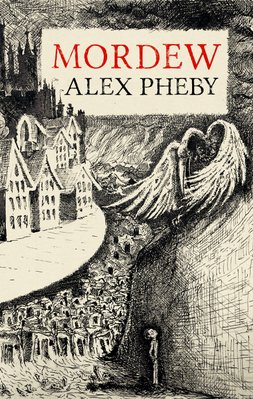
Mordew - Alex Pheby

As my contribution to our 2021 bookclub schedule, I nominated Mordew, by Alex Pheby. It appeared on a top books of 2020 list somewhere. I would describe it as grotesque fantasy, about the struggles of a slum boy named Nathan, in a city ruled by the magic of the Master. It was quite long at 617 pages, but I enjoyed it. The writing style is an interesting mix of snappy and florid, and the ideas are very creative. I love the fantasy genre, but don't often find new adult fantasy that I really enjoy. Ultimately, I did not find the plot wholly satisfying, and my attention waivered a bit toward the end, but there were lots of interesting ideas in this book. Would recommend.

Wednesday, August 24, 2016

Graphic Novel Round-Up: Marbles, Fun Home, Are You My Mother?

I have read 3 interesting graphic novels this summer, reviewed briefly below:

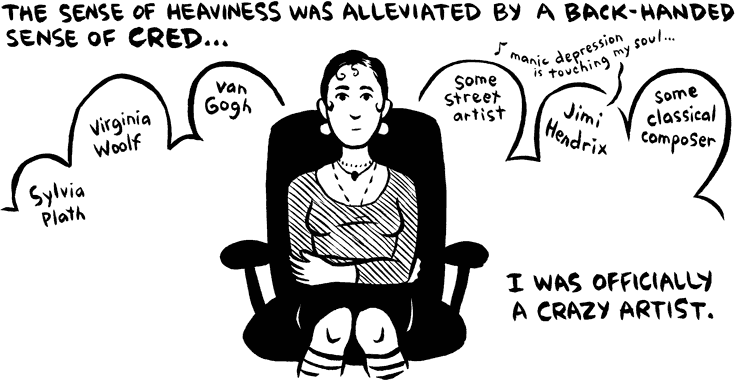
Marbles: Mania, Depression, Michelangelo, and Me - Ellen Forney

Marbles is Ellen Forney's exploration of her struggles living as an artist with Bipolar I disorder (the more severe of the forms, characterized by true mania, as opposed to hypomania, and potential psychosis). More particularly, she wrestles with the question of whether or not Bipolar symptomatology is an essential part of her identity as an artist, integral to her work, something special that she shares with other renowned artists (the "Van Gogh club," as she calls it), or whether it is an illness to be treated and managed. Her story had personal resonance for me to some degree, and it was an interesting read, although I am not a huge fan of her style of illustration.


Fun Home - Alison Bechdel

In Fun Home, Alison Bechdel explores her developing queer identity against the backdrop of her father's repressed homosexuality and turbulent childhood. I found this novel utterly fascinating, and the graphic style highly evocative. Would definitely recommend.


Are You My Mother? - Alison Bechdel

Bechdel's second graphic novel is much more philosophical than the first, and I did not enjoy it as much. Some of the material was quite interesting, and I was inspired to purchase a copy of one of her sources (Miller's The Drama of the Gifted Child). Overall, however, I lamented that the book strayed so far from the personal narrative, and ruminated so extensively on (what I found to be at times rather dubious) psychology. However, her analysis of her fraught relationship with her mother was compelling, even painfully so, and I would still recommend it.


Monday, February 1, 2016

Heap House - Edward Carey

My bookclub's first book of 2016 was Edward Carey's Heap House. Clod Iremonger is the 15.5-year-old protagonist of this delightful and deeply original young adult novel. Clod lives with hundreds of his relatives (both noble "Uppiremongers" like himself, and multitudes of more distantly-related servants), in a sprawling hodgepodge of a mansion. The family's estate is the focal image of the novel - built from relocated pieces of London homes, riveted together with steel girders, it spreads across an immense landfill ("the heaps"), basis of his family's garbage scavenging empire. Clod is driven to avoid his family members by the cacophonous voices he alone can hear emanating from their "birth objects," household items assigned at birth and carried upon one's person until death.  Thus, Clod spends much of his time wandering alone over the estate, until he one day meets a spunky serving girl, Lucy, and together they begin to uncover the grim foundation of his family's wealth.

An engaging tale with compelling characters that vividly explores the dangers of greed, xenophobia, and blind obedience to authority.

Sunday, June 15, 2014

Of Human Bondage - Maugham

After reading Dad's review, I decided to check out Maugham's Of Human Bondage. It was a very interesting tale of a neurotic young man afflicted with a clubfoot, and his coming of age in England and France during the late 18 and early 1900s. Although it starts off fairly slowly (the tale begins in Philip's youth), it builds powerfully and is a very captivating read.

I don't have much to add to Dad's review, except to say that it is filled with interesting bits of Philip's evolving philosophy, such as when he thinks:
Society had three arms in its contest with the individual: laws, public opinion, and conscience; the first two could be met by guile, guile is the only weapon of the weak against the strong... but conscience was the traitor within the gates; it fought in each heart the battle of society, and caused the individual to throw himself, a wanton sacrifice, to the prosperity of his enemy.

Sunday, January 19, 2014

The Teachings of Don Juan - Carlos Castaneda

Tonight I read Carlos Castaneda's "The Teachings of Don Juan" in a single sitting (I skipped part 2, his structural analysis of the teachings, which does not interest me). I became interested in this book in a sort of roundabout way - one part of Levack's Witch-Hunt that keenly aroused my interest was the offhand reference to the hallucinogenic "flying unguents" purportedly used by medieval witches, which may (in some cases) have inspired the visions of flying to the witches' sabbath. These ointments contained plants such as atropa belladona and datura, and in my online research into their effects, I came across the following passage from Castaneda:
"There was a question I wanted to ask him. I knew he was going to evade it, so I waited for him to mention the subject. I waited all day. Finally, before I left that evening, I had to ask him, "Did I really fly?," don Juan?"

"That is what you told me. Didn't you?"

"I know, don Juan. I mean, did my body fly? Did I take off like a bird?"

"You always ask me questions I cannot answer. You flew. That is what the second portion of the devil's weed is for. As you take more of it, you will learn how to fly perfectly. It is not a simple matter. A man flies with the help of the second portion of the devil's weed. That is all I can tell you. What you want to know makes no sense. Birds fly like birds and a man who has taken the devil's weed flies as such [el enyerbado vuela asi]."

"As birds do? [Asi como los pajaros?]."

"No, he flies as a man who has taken the weed [No, asi como los enyerbados]."

"Then I didn't really fly, don Juan. I flew in my imagination, in my mind alone. Where was my body?"

"In the bushes," he replied cuttingly, but immediately broke into laughter again. "The trouble with you is that you understand things in only one way. You don't think a man flies; and yet a brujo can move a thousand miles in one second to see what is going on. He can deliver a blow to his enemies long distances away. So, does he or doesn't he fly?"
Although I am disappointed that Don Juan the man appears to have been a fiction, I still find this passage very powerful, and am still intrigued by some of the arguments Castaneda attributes to him, such as his rejection of there being only one way to understand our physical relationship with the world.

Regardless of whether you want to take it or leave it as spiritually valid, certainly no one could deny that Castaneda is a powerful storyteller, and the concluding episode was so wild and gripping I forgot I was even reading a book until it was over. A powerful "state of nonordinary reality" induced by reading!

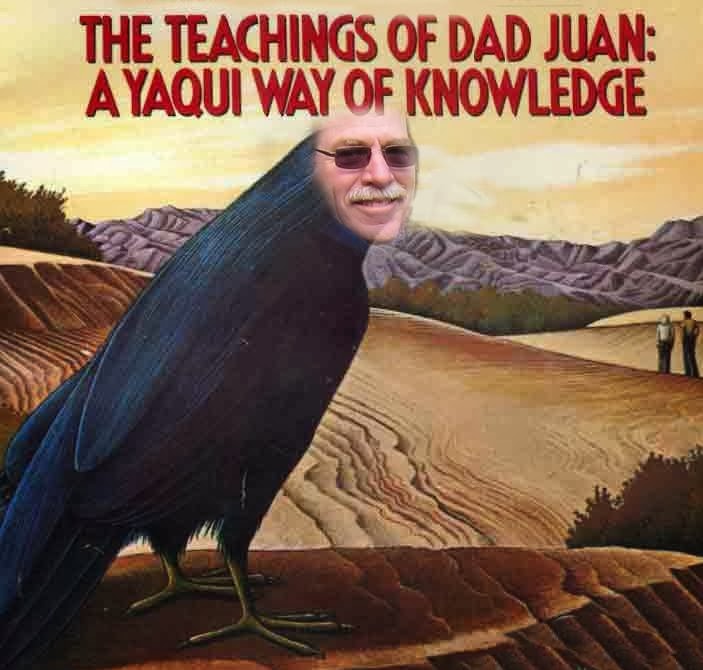
The wise Dad Juan

Thursday, January 9, 2014

Bloody Mary: The Life of Mary Tudor

I am a member of goodreads.com (check out my profile here) and was dismayed to realize I only read 13 books in 2013. I have set myself a slightly more ambitious goal of 65 books for 2014, and am happy to say that it's a week into the new year and I just finished my second!

Carolly Erickson's Bloody Mary is a history that reads like an action adventure. This book was thoroughly engaging and immensely interesting.

Adored and publicly admired by her father as a young child, Mary's peaceful home life was destroyed when her father, always flirtatious, suddenly decided to pursue his love affair with Anne Boleyn beyond the bedroom, and with cold indifference and evident scorn cast aside his former wife, daughter, and religion. Mary was stripped of the title "Princess" and of all her fine clothes and possessions, tormented by Anne and her courtiers, denied medical treatment when sick, and kept for years as a veritable prisoner in a run-down and drafty old house.

Although Mary rose above seemingly insurmountable obstacles to become Queen, and was an impressive scholar who spoke excellent Latin and ruled with wisdom and moderation, and even compassion and clemency (by the standards of the day), she was never accorded the respect she deserved while she was alive, due to the "imbecility of her sex," and was later condemned in the public memory as a bloody tyrant.

This book illustrates the flavor of life during the period very colorfully, and portrays Queen Mary with perhaps greater subtlety and nuance than has been accorded her in the past.

Highly recommend!

Monday, July 18, 2011

Moonfleet

This lovely Folio Society book is an adventure/treasure/coming-of-age story and, as such, has been compared favorably with Treasure Island. (e.g. VS Prichett says ‘In the class of Stevenson’s Kidnapped or Treasure Island’). I thought it was a very good story, although pretty sentimental and with some plot coincidences that strain credibility. Sentimentality doesn't slow me down much, but I would not really recommend it to others on that account. Paraphrasing Lloyd Bentsen: "Moonfleet, I have read Treasure Island, I know Treasure Island, Treasure Island is a favorite of mine. Moonfleet, you are no Treasure Island".