Showing posts with label espionage. Show all posts

Thursday, September 19, 2019

A Legacy of Spies

Written in 2017, this is an interesting sequel to The Spy Who Came in from the Cold, Le Carré's breakout novel published in 1963, at the height of the Cold War.  The Spy Who Came in from the Cold was a masterpiece,  a dark portrayal of the cynical ends-justify-the-means view of the espionage services on both sides of the Cold War.  A Legacy of Spies revisits the events of The Spy Who Came in from the Cold from the perspective of 50 years afterwards: the children of Alec Leamus and Liz Gold (the protagonists of Spy), now grown and deeply embittered, attempt to sue and/or extort the British Secret Service (and especially the very likable Peter Guillam, right-hand junior to George Smiley) for the wrongs done to their parents. 
This backward look is an interesting idea (see Le Carré's piece in The Guardian on how he came to write Spy), and it does effectively highlight some cultural changes in attitudes toward secret services, but the issues at stake are not as powerful as those in almost all of Le Carré's other books and, accordingly,  I did not find it as satisfying. 

Saturday, September 7, 2019

Update on A Delicate Truth by John Le Carré

Just re-read a 2013 Le Carré, which I had read and liked when it first came out, but had not been particularly struck by.  But this time, it hit me harder.  One of the prefatory quotes, from Oscar Wilde, was "If one tells the truth, one is sure, sooner or later, to be found out".  And without specific spoilers, the book deals with the aftermath of an operation gone very wrong and briskly covered up.  A key player, in both the operation and the cover up, is Jay Crispin, a trader in mercenaries. Here's an assessment of Crispin by our protagonist, Toby:
And for sure, wrestling with his disgust and anger, and determined as usual to reduce them to a manageable level, he gave due thought to Hannah Arendt's concept of the banality of evil, and launched into a debate with himself about where Crispin fitted into her scheme of things. Was Crispin, in his own perception, merely one of society's faithful servants, obeying market pressures?  Maybe that was how he saw himself, but Toby didn't.  As far as Toby was concerned, Jay Crispin was your normal, rootless, amoral, plausible, half-educated, nicely spoken frozen adolescent in a bespoke suit, with an unappeaseable craving for money, power and respect, regardless of where he got them from. So far, so good. He had met embryonic Crispins in every walk of life and every country where he had served: just never until now one who had made his mark as a trader in small wars.
In a half-hearted effort to find excuses for Crispin, Toby even wondered whether, deep down, the man was just plain stupid. How else to explain the cock-up that was Operation Wildlife? And from there, he wandered off into an argument with Friedrich Schiller's grandiose statement that human stupidity was what the gods fought in vain.  Not so, in Toby's opinion, and no excuse for anybody, whether god or man. What the gods and all reasonable humans fought in vain wasn't stupidity at all. It was sheer, wanton, bloody indifference to anybody's interests but their own.

Monday, January 23, 2017

A Memoir from John le Carré

The Pigeon Tunnel Stories from my Life is a memoir of sorts composed of short chapter-length anecdotes from le Carré’s life that are amusing, head-shaking, chilling, or thought-provoking.  Several explain the origin of particular characters that appear in his books, and some describe hair-raising experiences during his trips to war zones and other exotic locations to research different novels.  For The Night Manager, he visits Panama to see a camp where the CIA trained the Special Forces from several countries, and to meet 54 year old President Endara, atop a Spanish colonial staircase, with his 22 year old mistress, newly turned wife: 
A young woman is crouched at his feet, her shapely rump pressed into designer jeans as she wrestles with a Lego palace she is building with the President’s children.
‘Darling,’ Endara cries down to her, in English for my benefit. ‘See who is here!  You have heard of….’ Et cetera.
Still kneeling, the First Lady looks me cursorily up and down and resumes her building.
‘But darling, of course you have heard of him!’ the President implores her. ‘You have read his wonderful books! We both have!’
Belatedly, the former diplomat in me stirs.
‘Madame President. There is no reason on earth why you should have heard of me. But you have surely heard of Sean Connery, the actor, who was in my recent film?’
Long silence.
‘You are friend of Mr. Connery?’
‘Indeed I am,’ I reply, though I scarcely know him.
‘You are welcome in Panama,’ she says.
 The Pigeon Tunnel is of special interest to le Carré fans, but full of striking stories and insights for any reader!
-->

Saturday, July 16, 2016

A Spy Among Friends

This account of the Cambridge spies, focusing on Kim Philby, the infamous Third Man, is fascinating and highly readable.

Spy stories, both fictional and nonfictional, interest me, and I suppose many others, because they deal with treachery, deceit and betrayal.  And I believe this interest is intensified in people who in childhood have experienced or been exposed to powerful family secrets or deceptions.   A Perfect Spy, reputed to be LeCarrè's most autobiographical novel, deals explicitly with this topic.

So it's no surprise that many people are riveted by the story of Kim Philby's decades-long career as both a highly placed leader in Britain's MI6 and a double agent who passed thousands of secrets to the Soviets and cost the lives of hundreds of British agents.  This betrayal was especially shocking because of the close-knit and completely trusting relationships among the British upper classes who filled many of the MI6 positions.  Vetting often consisted simply of confirmation that the candidate came from "good people".  Philby survived so long as a double-agent not simply because he was a consummate actor, but also because he was so fully a member of the public school educated gentry. His friends and colleagues considered it to be simply impossible that "one of them" could be a traitor and they closed ranks to protect and defend him.  (This superior attitude and disregard of incriminating evidence infuriated members of the more working-class MI5 section, charged with investigating Philby).

MacIntyre's account of Philby's recruitment, advancement, betrayals, and eventual undoing is fascinating.  But what drove Philby to this extraordinary duplicity remains essentially unknown. After he was revealed as a double-agent and fled to Russia, his third wife Eleanor asked him if he had to choose between the Party and his family, which he would choose, and he unhesitatingly replied, "The Party, of course".  Eventually, he came to acknowledge the evils of Communism as practiced in Russia, but rationalized them as the errors of men, rather than flaws in the system.  Surprisingly, then, he had minimal interest in or knowledge of the theory of communism.  Such a life, which appears to derive satisfaction from betrayal alone rather than betrayal in the service of a cause, suggests, to this armchair psychiatrist, that Philby was almost certainly driven by powerful forces from his childhood rather than an intellectual conviction.  MacIntyre depicts Philby's father, a distinguished Arabist who was an advisor to King Ibn Saud, as an irascible iconoclast and an extremely demanding yet absent father.  After his father's sudden death, Philby, a heavy drinker at the best of times, immediately plunged into despondency and alcoholic stupor.   The origins of Philby's extraordinary duplicity must be more complex, intense and unusual than this, and it would be fascinating to understand the development of his personality but, of course, the master of keeping secrets from his friends offered no grist for speculation.

Friday, May 30, 2014

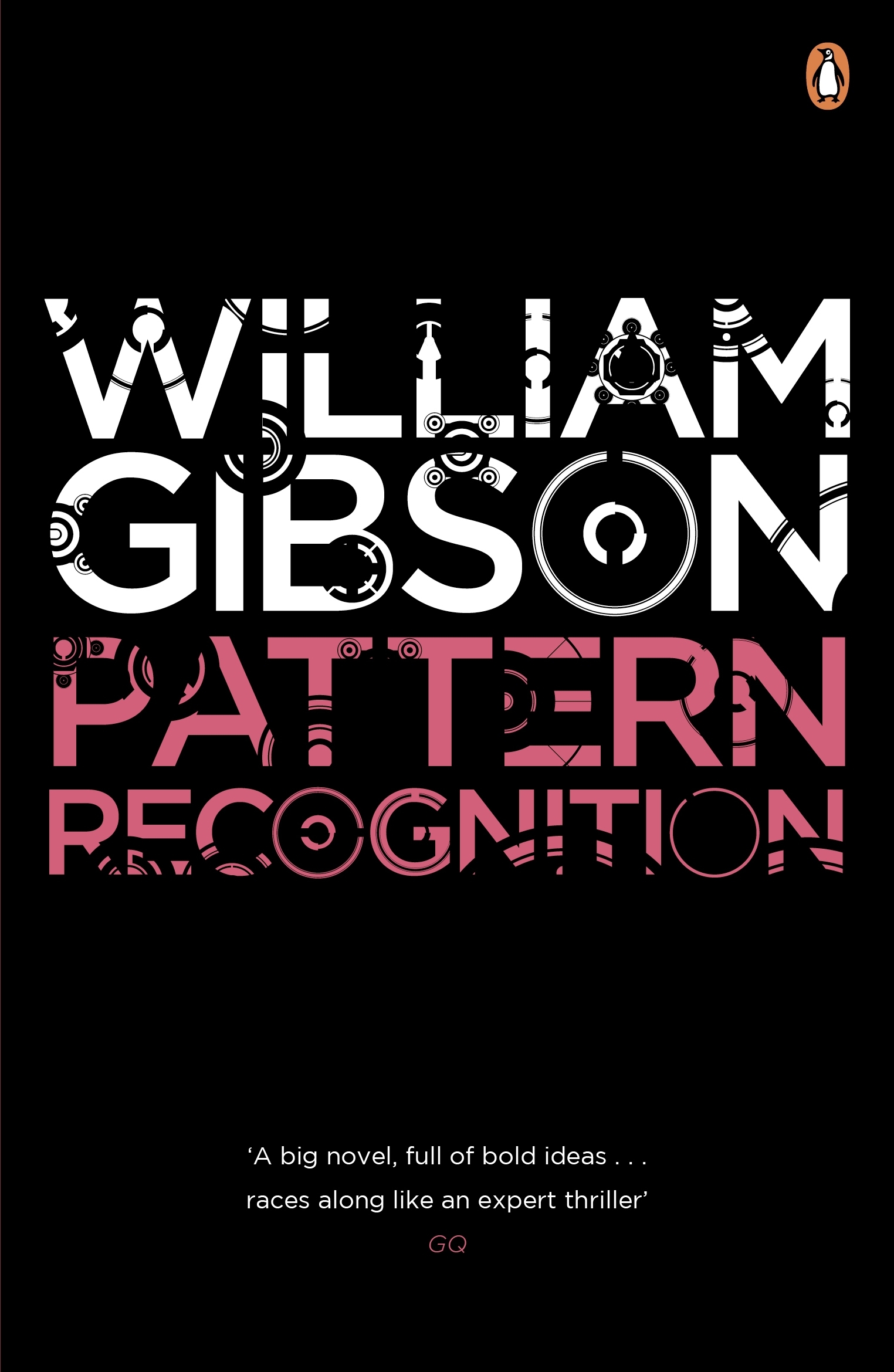
Pattern Recognition - William Gibson

Another brilliant book by Gibson, and the first in the Blue Ant/Hubertus Bigend trilogy. The likable but neurotic protgagonist, Cayce (pronounced "Case"), is a coolhunter - a precog who uses her sensitivity to brands and logos to serve as a consultant to major franchises, helping them make branding choices based on what she senses will become trendy or not. In her spare time, Cayce and her online otaku friends obsess over "the footage" - segments of breathtaking, unearthly films scattered across the net, discovered a fragment at a time. Cayce's life changes when an exceptionally powerful employer hires her for a special consulting job, and draws her into a web of intrigue, Soviet mafia, and mystery...

I also really identified with Cayce, and many of her reflections resonated with me, such as, "Does she feel liminal, now, or simply directionless?"

Gibson's 3 Trilogies:

The Sprawl Trilogy:
The Bridge Trilogy:
The Bigend Books:

Saturday, April 5, 2014

A Delicate Truth

This most recent book by John Le Carré continues his trend of indicting, by relating a gripping episode, new practices in the confluence of international relations, espionage, commerce and crime.  Le Carre's fury at these developments is barely contained and the books are generally tense with the burden of impending doom.  This one addresses undercover operations contracted to companies similar to the now defunct (or, more accurately, re-named) Blackwater Security Consulting.  Le Carré  knows this world like the back of his hand - or at least continues to have access to people who can provide insider information.  And his characters are vivid - very likable and attractive or the complete opposite.  Terrific reading!   And, surprisingly, this one ends on what is almost an up note. (Though it seems clear that an additional 50 or 100 pages would have destroyed this temporary relief!)

Friday, August 2, 2013

REAMDE by Neal Stephenson


Just finished reading Stephenson's 1000-something page novel, REAMDE, which was amazing. (Excellent overview by Colin here: http://blogenburyisreading.blogspot.com/2011/12/neal-stephenson-reamde.html?m=1).

Stephenson has the impressive ability to weave together a host of characters and circumstances which, in the hands of a lesser author, would feel they had been chosen by a random word generator: jihadists, MMORPG, computer virus, British spy, Russian mafia, ski resort, Wikipedia. Well, maybe they do have a theme: it sounds like a James Bond movie, but without the glamour, and set against the new realities of postmodernity: the digital age and the international War on Terror.

Stephenson is truly a great author: each section of the book is told from the perspective of one of a handful of key characters, and each has a distinctive and authentic tone. Although the book plays like an action movie and largely examines the meaning of life as experienced in the scopes of a rifle, the detailed attention to psychology and the richness of the world feel (almost) Tolstoyan. (Making the Acknowledgments page quite interesting, since he lists areas of expertise, such as guns, which are seamlessly integrated into the plot, yet evidently draw heavily upon the knowledge of others.)

Although set in the present (near future?) and so less earthshatteringly visionary than The Diamond Age, I preferred this to Snow Crash and definitely recommend.

Stephenson's Novels

Tuesday, January 1, 2013

Just finished The Mystery of Swordfish Reef and The Devil's Steps, two more Bony mysteries from Arthur Upfield. I enjoyed Swordfish Reef, but it was an indifferent mystery and was not so strong in the other elements that characterize the best Bony mysteries: delightful interactions between Bony and one or more women characters, and the presence of unusual, eccentric, or oddball "characters" that provide excellent seasoning to the main course. In this book, the main interest was several descriptions of swordfish fishing, which were fascinating and exciting.

The Devil's Steps, in contrast, was excellent! A tantalizing mystery, several interesting and unusual characters, a striking visual image (the Devil's Steps), and interesting interactions between Bony and the proprietress of Wideview Chalet. Bony is a guest at this luxury resort, investigating a man believed to be carrying secret German plans, when the man is killed. Bony must disentangle the efforts of three different groups seeking the same man and perhaps the same plans. Bony strikes up an alliance with Bisker, a rough, hard-drinking former bushman, working at the Chalet and also associates with a mysterious author who lives nearby - and whose feet are gigantic - and, possibly, responsible for the size-twelve Devil's Steps "burned into" the spacious lawn of the Chalet, but only revealed when the lawn is mowed! Lots of action, lots of suspense, amidst beautiful scenery and dangerous adversaries. Great read!