Showing posts with label China. Show all posts

Tuesday, July 3, 2018

The Three-Body Problem

The Three-Body Problem, the first volume of a science fiction trilogy by Liu Cixin, is both a strong sci-fi story and a provocative consideration of the nature of man. The books, published in 2006, were very popular in China, were translated into English in 2014 and, in 2015, the first volume won the very prestigious Hugo Award for best science fiction novel of the year.  (Thanks to Dan Lidral-Porter, via Lauren, for the recommendation!)


The book has a traditional sci-fi theme, communication and contact with an alien civilization,  but has several features that made it particularly fresh and interesting to me.   The story is set within the world of Chinese academics, especially physicists and materials scientists, starting during the Cultural Revolution and continuing into the years afterwards.  There’s a heavy dose of speculative physics, which I enjoyed, and some strong, memorable characters, including a savvy, outspoken and very funny cop.  The protagonist is Ye Wenjie, a very talented astrophysicist who sees her illustrious father beaten to death by Red Guards, and many years later happens to intercept a message from intelligent aliens, triggering much of the book’s action.  (Stephen Hawking:  “We only have to look at ourselves to see how intelligent life might develop into something we wouldn’t want to meet”).  For me, this was an intriguing, thought-provoking and lively read. 
-->
-->

UPDATE (Lauren's Additional Review):

I found The Three-Body Problem fascinating. It was recommended to me as being the most important sci-fi to come out in recent years, which seems a bit of a stretch perhaps, but it was certainly very original and thought-provoking. The theme that was most compelling to me was that of the people on Earth who had given up on their society and longed for an alien race to come take over and rule the planet instead. Some interesting connections to Childhood's End, in that respect. Like dad, I also really enjoyed the cop character, Shi Qiang (史强), nicknamed "Da Shi" (大史), ("Big Shi").

Monday, February 17, 2014

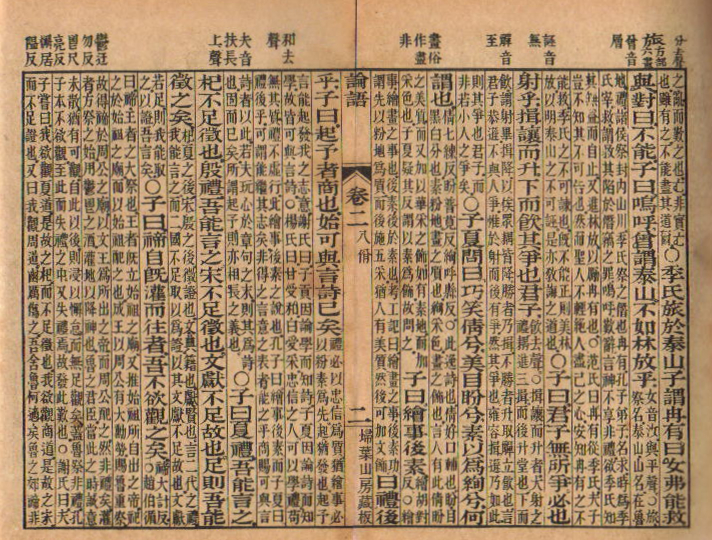
The Analects of Confucius - trans. by Legge


Picked up Legge's translation of The Analects of Confucius at a recent trip to Powell's in Portland (thanks, Colin, for the recommendation!). Nabokov said, "one cannot read a book; one can only reread it," and I think this clearly applies to the Analects. There were some quotes which seem clear enough at first reading:
The Master said, "Riches and honours are what men desire. If it cannot be obtained in the proper way, they should not be held. Poverty and meanness are what men dislike. If it cannot be avoided in the proper way, they should not be avoided."
Other quotes, while interesting or thought-provoking, were less clear to me. For example,
The Master said, "A cornered vessel without corners---A strange cornered vessel! A strange cornered vessel!"
I think this would be a good book to keep around to re-read and consider in small sections over a period of time.

Friday, February 17, 2012

Thomas Cleary - The Essential Confucius


This is the best book I have ever read.

Cleary's translation is extremely readable - his ordering is somewhat unorthodox but I don't understand what the details of that are.

As for the text itself, nothing has ever struck me so deeply.  I have read the Analects before, but I did not fully appreciate it.  I think everyone should study this book carefully and live their life by it.  I am not going to say anything else about it because it is very short and the master speaks for himself.

Friday, December 31, 2010

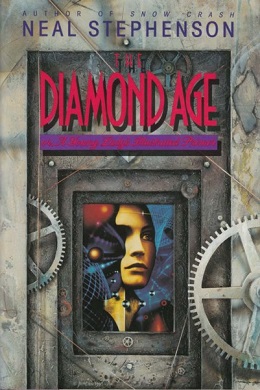
The Diamond Age or, a Young Lady's Illustrated Primer

Recently read Neal Stephenson's The Diamond Age, a novel set in a futuristic society (maybe ~100 years from now) in China. Whether this book presents a dystopian or utopian vision is unclear, maybe it shows both, although the dystopian aspects (callous brutality, pervasive misogyny) are more salient.

Background (no spoilers):

In this society, nanotechnology has become the dominant means of production. (Many buildings are built out of man-made diamond because it is hard and durable, hence the title). Stephenson's novel is Marxist in that he posits a world in which the social structure arises from the means of production. Matter Compilers, or MCs, create food, clothes, etc. using molecular blueprints downloaded from a central government server. This top-down means of production makes poor people dependent on the government for their existence.

Most people are divided into phyles (aka claves) which are essentially tribes which live together in different parts of the city. One prominent phyle is that of the "Vickys" - neo-Victorians who have consciously adopted Victorian dress, mannerisms and social codes, believing that this is preferable to the amoral degeneracy of prior centuries (i.e. our time). The poor are the exception to this structure; they have no phyles, and lead lives that are nasty, brutish and short.

Nanotechnology has also become a means of ugly warfare and supports a bizarre justice system which combines Confucian principles with nanotech-based methods of execution. Rogue nanotech experts develop their own micromachines in defiance of the government's prohibition, and use them to spy, track, and kill.

My take on it:

I really, really enjoyed the first half of this book. Stephenson's vision is brilliant: complex, detailed, strikingly creative and novel, and powerful. It is also very pleasurable to read. However, I found the second half of the book chaotic and the ending unrealistic and anticlimactic. I was also troubled by the book's at times graphic misogyny, which does not seem to serve any purpose beyond reinforcing the brutality of the world. However, I highly recommend it because it is truly novel and gripping and introduces many fascinating ideas.

Stephenson's Novels