Showing posts with label classic. Show all posts

Friday, February 5, 2016

The Picture of Dorian Gray (1890) - Oscar Wilde

The Faustian tale of Dorian Gray is my bookclub's pick for February 2016. In it, young, innocent, Adonis-like Dorian sits for a painting by his friend, the worshipful Basil Hallward. The painting is Basil's masterpiece, but this sitting is the occasion for a fateful encounter - Dorian meets and is corrupted by the glib hedonism of another of Basil's friends, Lord Henry. Utterly taken in by Lord Henry's poetical musings on the supreme value of youth and beauty, Dorian impetuously makes a wish that changes his life forever:

"How sad it is!" murmured Dorian Gray with his eyes still fixed upon his own portrait. "How sad it is! I shall grow old, and horrible, and dreadful. But this picture will remain always young. It will never be older than this particular day of June.... If it were only the other way! If it were I who was to be always young, and the picture that was to grow old! For that- for that- I would give everything! Yes, there is nothing in the whole world I would not give! I would give my soul for that!"

Although the plot is very simple, Wilde's prose is magnificent, and this short (213-page) novel is utterly captivating. It is also interesting how delicately Dorian's sins are portrayed - everything alluded to rather than shown, perhaps due to the publication in 1890, when the work was decried as obscene - amazing how standards for the depiction of sex and violence have changed in the past century.

Perhaps the most enjoyable part of the novel is Lord Henry's indulgence in cynical epigrams, such as, "the only way to get rid of a temptation is to yield to it." Although his wordplay is delicious, Lord Henry's amoral fascination with beauty, and his artistic interest in the destruction of Dorian's life, is frightening - he would have done well to learn from his contemporary, Tolstoy, who said “It is amazing how complete is the delusion that beauty is goodness.”

Monday, March 23, 2015

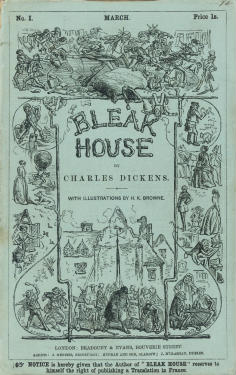
Bleak House - Charles Dickens

I find Dickens' novels to be delicious and satisfying like a nice Stilton, and Bleak House is no exception. The tale is told from the perspective of Esther, a schoolmarmish and self-effacing young woman who lives to nurture others. Characteristically, the novel weaves Esther's own story into a complex tapestry of interconnected narratives and broader themes.

Esther is raised by a severe old woman and haunted by a vague suggestion that she was born into shame (a mystery which is gradually explored over the course of the novel). After the old woman dies, Esther is rescued by a wealthy patron, John Jarndyce, who pays for her education and finishing and then sets her up as caretaker of his estate, Bleak House. In addition to managing the keys and accounts, Esther dedicates herself to the care of John's beautiful niece, Ada, and acts as a chaperone and confidant to Ada and her carefree beau, cousin Richard.

The novel's principal theme is revealed through the story of Ada and Richard - the wards of Jarndyce - as the destructive power of the sprawling and ineffective Chancery justice  system, which was ultimately reformed in part due to Dickens' powerful critique.

A poetic and very human look at the beauty and tragedy of the domestic sphere across multiple societal classes. Dickens captures the crude wisdom of impoverished women despite the ignorance, violence, and squalor of their existence, and through Esther's prim but compassionate eye, satirizes the conceits of those blustering do-gooders who would help the poor by giving them books they cannot read. He is also as adept at capturing the foibles and tragedies of the nobility as he is at portraying the life of the very poor. All in all, a very vibrant picture of the human condition.

Wednesday, April 16, 2014

The Grapes of Wrath - Steinbeck

For whatever reason, I was never required to read this book in high school, so I read it now for the first time as an adult. It's really a masterful work, very emotionally powerful and heartbreaking. The grotesque plight of the disenfranchised Oklahoma tenant farmers is told through the eyes of the Joad family. The story recounts their struggles as they are forced to leave their land and seek work in California, where they experience the cruelty of poverty and the futility of hard work and hope in the face of an oppressive system.  I am not surprised the book was so controversial in its day, the politics are very progressive and pro-labor. The book can be graphically disturbing but it is  an important story that remains very relevant today.

Monday, February 17, 2014

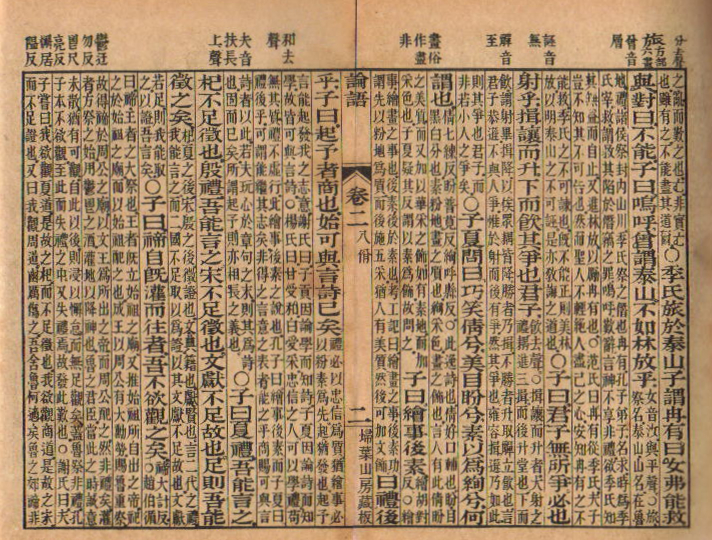
The Analects of Confucius - trans. by Legge


Picked up Legge's translation of The Analects of Confucius at a recent trip to Powell's in Portland (thanks, Colin, for the recommendation!). Nabokov said, "one cannot read a book; one can only reread it," and I think this clearly applies to the Analects. There were some quotes which seem clear enough at first reading:
The Master said, "Riches and honours are what men desire. If it cannot be obtained in the proper way, they should not be held. Poverty and meanness are what men dislike. If it cannot be avoided in the proper way, they should not be avoided."
Other quotes, while interesting or thought-provoking, were less clear to me. For example,
The Master said, "A cornered vessel without corners---A strange cornered vessel! A strange cornered vessel!"
I think this would be a good book to keep around to re-read and consider in small sections over a period of time.

Friday, September 6, 2013

Fathers and Children

Lauren has already reviewed this book by Turgenev , often published under the title Fathers and Sons, providing a nice summary of its depiction of two generations of Russians, the idealists of the 1840's (the Fathers) and the nihilists of the 1860's (the Children).

Turgenev's portrait of the self-proclaimed nihilist Bazarov provoked huge controversy: opponents of the utilitarian nihilists reviled Turgenev, denouncing Bazarov as a villain.  Most nihilists dismissed the portrait as a laughable caricature, though a few actually praised him as a "new man" of the type who would rejuvenate Russia.
 "Your sort, you gentry," Bazarov tells Arkady, when the two friends come to the parting of the ways, "can never get beyond refined submission or refined indignation, and that's a mere trifle.  You won't fight.....but we mean to fight.....we want to smash other people!"
Interestingly, one of the few people in Russia who seemed to accurately understand Turgenev's portrayal was Dostoevsky, who saw Bazarov as a tragic character, doomed to unhappiness by the contradiction between his sterile and brutal intellectual beliefs and his human needs and longings. Dostoevsky's praise and understanding helped forge a strong but brief friendship with Turgenev, which, however, was quickly dashed to pieces by their widely divergent views on religion and whether Russia's future lay in adopting western ideas (Turgenev) or seeking guidance from the true Russian character, which, in Dostoevsky's view, derived from a deep faith in Christ.

I really enjoyed the book, which is lyrically written, with great sensitivity to human love and loneliness. Though Bazarov is infuriating in his brutality, he is captivating in his passions and deep emotions.


Monday, August 5, 2013

Vanity Fair - Thackeray

I told my doc I was reading Vanity Fair, and she asked if a new one had come out. Well... Not since 1848!

Anyway, this gossipy novel follows the beautiful schemer Becky Sharp as she climbs from her lowly beginnings as a poor opera dancer's daughter to the height of English aristocratic wealth and influence. A gorgeous portrait of English and continental life during the Napoleanic war, which sounds utterly blissful (although of course filled with ridiculous intrigue).

Thackeray is a master of the language, and this lighthearted but keen examination of vanity is a delight to read.

Recommended if you liked The Scarlet Pimpernel, reviewed here: http://blogenburyisreading.blogspot.com/2012/01/scarlet-pimpernel-by-baroness-emmuska.html?m=0

Dad's VF review: http://blogenburyisreading.blogspot.com/2009/06/vanity-fair.html


Sunday, July 7, 2013

Umberto Eco’s The Name of the Rose


The first book I read with my Reedie bookclub was Umberto Ecos’s The Name of the Rose, a beautifully written murder mystery set in medieval Italy. In this thrilling tale, the young monk Adso follows his brilliantly perceptive but unorthodox master, William, to a Benedictine monastery in Northern Italy, to investigate a murder which has taken place in a small but ostentatiously wealthy monastery whose heart is a labyrinth library. More horrors and mysteries are unveiled the deeper William and Adso dig, and the more the two suspect that certain persons are working against them to keep the monastery’s secrets from ever being revealed.

This novel is a true page-turner, but also deals in depth with many interesting themes revolving around the nature of Truth – its complexity, mutability, and debatable impenetrability, the meaning of heresy, and whether knowledge should be shared freely with all, and if not, under what circumstances secret knowledge should be guarded, by whom, and through what means.

A truly fascinating book that I would recommend to all, and would definitely enjoy discussing at greater length!

Ernest Callenbach’s Ecotopia


A recent choice for my book club was Ecotopia. Written in 1975, Ecotopia depicts a vision of the United States in 1999, in which the Pacific Northwest has seceded from the union and been completely isolated from America for the past two decades. The motivation behind this split, led by the women-directed Survivalist Party, was the desire to entirely reform society on egalitarian and ecological grounds – achieving equality for all people, eliminating cars and other pollutants through strict regulation, and creating a “stable state,” sustainable society, which emphasizes recycling and a return to nature. In the (optimistically brief) period since its inception, the nation has largely achieved these goals, unbeknownst to America, which has continued on its wasteful decent into widespread pollution and overpopulation – alas, much like the America we know today.

The story of Ecotopia is from the perspective of William Weston, a journalist who becomes the first American emissary to visit the new country since its founding. Weston is a hard-nosed reporter, and the novel is divided into personal reflections written in his diary and his largely fact-based articles, which he posts back to America to be published. Fairly predictably, Weston’s initial prejudices are softened by the month+ he spends in the new country, and we see him open up to the nation’s “strange” and “barbaric” practices and “surprisingly” brilliant inventions.

Although at times a little heavy-handed, pat, and unrealistically utopian, I found the novel to be very well-imagined and articulated, and the tone believable. Moreover, I was happy to realize that Callenbach’s vision has in some ways been realized – Seattle recently instituted a ban on plastic bags, and all homes and apartments (and most businesses) are equipped with bins to divide “garbage” into recycling, compost, and (thus much reduced) waste. (Although I was horrified to see how inconsistently this is practiced in Ohio!)

It was depressing to finish the novel and remember that I cannot emigrate to Ecotopia, but even so I would definitely recommend this book.

Sunday, March 17, 2013

Heart of Darkness

This classic from Joseph Conrad is actually a really, really short read. So, if you've ever wanted to dip your toe into the novels you should have read in high school but never got around to, this one's a good one to start you off.

The story is rather straightforward, so much so that one might argue very little happens-- the true beauty of the novel, however, is in the atmosphere that Conrad creates throughout the book, bringing to life the struggles of the African people, and the darkness that is within everyone.

I thought this book was fantastic, and definitely worth the read. If you're willing to brave a couple of nightmares, pick this sucker up from your local library.

Monday, March 11, 2013

Walden

I know what you're thinking: you're remembering back to high school when you were forced to read this book cover to cover, and after you finished, you instantly shredded and burned your copy. While I can understand where these poor high school students are coming from, I think you might want to re-visit this old classic, especially in light of today's hectic lifestyle.

Since it is a collection of essays, Walden has no narrative, which makes the lengthier passages about as interesting as watching grass grow.This, however, is part of the book's charm. The very point of Walden is to force the reader to slow down, to read about a lazier and simpler lifestyle. If you're reading the book to just get through it, or to seem like an intellectual in front of your friends, you will have a miserable time.

If one reads the book simply for its own sake, however, the true beauty of it comes out. The book is an ode to the poetry and the philosophy in every day life that we constantly miss. Thoreau hopes, desperately hopes, that maybe somebody will pick up the book and realize what they've been missing all this time. They might hear the call of the loon out behind their house, and go out to watch the morning sun rise.

In short, if you want a thriller, or a heartrending tale of despair, or even just a book that you can read to the kids at bed time, this is most definitely not the one you want. But if you ever feel the need to just sit down and clear your mind, there will never be a book more suited to such a purpose than this one.

Saturday, August 18, 2012

The Mill on the Floss

George Eliot's books are highly intelligent and rewardingly insightful - the scope of setting and action is intentionally narrow, with a corresponding intensity of examination - like focusing sunlight with a magnifying glass so tightly that the spot bursts into flame. This book describes the Tulliver Family, centering on brother and sister Maggie and Tom, as they grow from childhood to young adults. The Tullivers have lived for generations as owners of a mill on the River Floss, near the larger city of St. Oggs (both fictional). The heart of the book is the troubled relationship between Maggie and Tom, made inevitable by the important difference in their characters. Tom has a strong moral sense and an unwavering confidence in the correctness of his judgments. Maggie is a sensitive and caring person, quick to empathize with others, but prone to impulsiveness that invariably leads her into troubles.
But if Tom had told his strongest feeling at that moment, he would have said, "I'd do just the same again." That was his usual mode of viewing his past actions; whereas Maggie was always wishing she had done something different.
Imprudent legal actions by Mr. Tulliver lead disastrously to bankruptcy and disgrace. Tom responds with courage and purpose, eventually paying the debts and restoring the family's honor. With the best of motives and honor, Maggie is nevertheless drawn into two conflicting romantic situations, causing a decisive break with Tom, who cuts her completely. Maggie remains devoted to Tom, however, and the book concludes with an emotional reconciliation between the two.

The preface of my edition (another beautiful Folio) states that this is Eliot's most autobiographical book - reflecting her estrangement from her own family and especially her brother, which resulted from her unconventional and socially unacceptable relationship with a married man. The book is deeply absorbing, with detailed and thoughtful exploration of relationships, with moving descriptions of powerful consequences resulting from small choices, and with a variety of strong characters - some good, some weak, some generous and some selfish - but every one convincingly and sympathetically rendered. Very highly recommended!

Monday, January 3, 2011

Anna Karenina

Another post on a book I read a year ago, so my thoughts are not as fresh. However, I have thought about the book a lot since then so have more broad-picture type comments.

Anna Karenina is one of the best books I have ever read. Tolstoy's writing is incredibly realistic, complex, deep, moving, and beautiful, and his thinking is prophetic. For me, the best things about this book are:

1. The complexity, coherence and realism of the world that Tolstoy invents. His writing comes as close to representing reality on paper as I can imagine is possible, and he does this in such a way that it feels completely natural. It is also fascinating: he knew such an immense about about so many things! Horse keeping, hunting, domestic life, business affairs, fashion, politics, relationships, gambling, agriculture, adultery, etc, etc. - all topics on which Tolstoy writes in depth and with ease.

2. The complexity, understanding and sympathy with which Tolstoy regards humanity: from the peasant to the nobleman and from the virtuous to the amoral, Tolstoy seems to understand everyone. The grace with which he is able to portray the inner life of various individuals is unparalleled. Anna Karenina is the greatest exception to this sweeping realism: for me she felt (at times) flat and under-explored, which was disappointing. Lyovin, on the contrary, is shockingly real, perhaps aided by the near-autobiographical nature of his character (by many accounts).

I cannot recommend this book highly enough.

Fathers and Sons


I realized I never made this post, even though I read the work last Christmas, so here goes: my thoughts on Turgenev's (1862) Fathers and Sons (Отцы и дети is actually Fathers and Children, although it's true that I don't recall any daughters in the novel).

This book is truly genius. I think of it often. The two generations under discussion are the Fathers (1840s) and Sons (1860s). The book describes (primarily male) family and friend relationships and the way that these interactions evolved during a time of major social change: the emancipation of the serfs occurred in 1861 and freed millions of people from serfdom, causing great upheaval in landed/aristocratic families and in society. The Fathers and Sons represent conflicting ideologies which are very interesting to consider, because their opposition foreshadows the 1917 revolution.

One of the two primary Sons in the book is Arkady Nikolaevich Kirsanov. He has recently graduated from St. Petersburg University where he became friends with a man named Bazarov. The Sons' values are boldly and at times offensively embodied by the larger-than-life Bazarov, a loud-mouthed, frog-dissecting, arrogant nihilist. These values include: egalitarianism, nihilism, and rejection of sentimentality and of bourgeois values.

The book begins with Arkady taking his friend Bazarov home to meet his father, the sensitive land-owner Nikolai Petrovich Kirsanov. Although Nikolai is one of the Fathers, he is liberal for his generation, and as an educated and thoughtful man is trying to make sense of and in some ways assimilate the liberal values of the youth while holding onto his appreciation of literature, the arts and the beauty of nature.

The conflicts in this book are fascinatingly timeless and really bear thought. Although I was not bowled over when I first read the book a year ago, it has been on my mind very frequently since and I have come to appreciate it very much.

Saturday, May 29, 2010

A Canticle for Leibowitz


A Canticle for Leibowitz is Walter Miller's classic science fiction novel about post-apocalyptic Catholic monks in the desert of Utah, preserving what scraps of ancient writing they have managed to gather together through a post-nuclear dark ages in which all scientific knowledge is seen as evil. The novel is composed of three sections, roughly analogous to the dark ages, the renaissance, and a new technological age. The Catholic church provides what little cultural stability exists in the period, and the story follows the history of the abbey of the Albertian Order of Leibowitz, founded by a scientist after the war who became a martyr in his attempts to save books from being burned by the barbaric remnants of human civilization.

This is one of the masterpieces of American science fiction. I'm glad to have finally filled this particular hole in my knowledge of the genre, and I really can't recommend this book highly enough.

Tuesday, July 28, 2009

Treasure Island- Will's review

Wow... I must say, this review seems a little outdated for many of those who have had the good sense to read Treasure Island in the golden years of their youth... Or at least, those who read it before I did. But, for those who have not read it yet, fear not! It is a book for those of any age, and (if I may say so myself) this is the reason that it has endured for so long.

The story focuses in on Jim, the son of the innkeepers of the "Admiral Benbow", a pleasant inn not unlike any other. The arrival of one particular sailor, who is rowdy and likes drink too much for his good, is the catalyst to the plot. The man, demanding to be called "Captain", has a past wrapped in secrecy, but deathly fears other seafaring men, and when one such a man comes to deliver a dire message, the captain dies from his weak heart. From there, it's all downhill as Jim finds in the man's trunk a most mysterious chart, which tells of the location of fabulous treasure, on a mysterious island far out to sea. He soon, with the respected Doctor Livesie and the bumbling Mr. Trelawney, sets out upon a voyage for this treasure, where he gets more than he bargained for.

The basic plot may seem trite to anyone familiar with Treasure Hunt stories, but, it should be remembered that this book is the one that spawned all the cheap imitations that have become so much more well known today, and may even claim to be inspiration for the popular series "Pirates of the Caribbean". The original is fantastic, and is a thousand times better than any knockoff you can find. It has my highest praise for its comedic scenes, its sorrowful scenes, and even all the confusing sailing terms in between.

In short, to any who have not read this wonderful book, READ IT! To those who have, I recommend that you re-read it, as it is the kind of book that cannot be fully enjoyed the first time through.


Saturday, July 25, 2009

Treasure Island


Just finished reading Treasure Island aloud to the boys. I've read it a half dozen times, and always with fresh pleasure. Stevenson is probably my favorite author - the best storyteller I have ever read, who seems to take immense delight in people, both good and bad. Long John Silver has my vote for most fascinating character in all literature! And the fact that it's all about the sea and sailing is icing on the cake for me!

Thursday, July 2, 2009

You are an ascetic!

The Brackenbury-Parysek Tribe is gearing up to read Dante's Inferno (in English, with some attention to the facing-page Italian original). But what are you waiting for? here's what Jorge Luis Borges says:
The Commedia is a book that everyone ought to read. Not to do so is to deprive oneself of the greatest gift that literature can give us; it is to submit to a strange asceticism. Why should we deny ourselves the joy of reading the Commedia?

Tuesday, June 9, 2009

Vanity Fair

There is a great quantity of eating and drinking, making love and jilting, laughing and the contrary, smoking, cheating, fighting, dancing, and fiddling: there are bullies pushing about, bucks ogling the women, knaves picking pockets, policemen on the look-out, quacks, (other quacks, plague take them!) bawling in front of their booths, and yokels looking up at the tinselled dancers and poor old rouged tumblers, while the light-fingered folk are operating upon their pockets behind. Yes, this is VANITY FAIR: not a moral place certainly; nor a merry one, though very noisy.
A lively and delicious read - rather like a practical and entertaining version of Machiavelli!

Sunday, June 7, 2009

Moby Dick

I have decided that I need to make mid-way posts, because I will rarely update if I wait until I finish the book.

So, I am about 1/5 through Moby Dick. Despite what Jesse would have you believe, this book rocks! The only fair complaint that could be lobbied is that it is a bit slow. However, the narrator, Ishmael, is very clever and humorous, and it is very interesting to read about Nantucket and whaling.

Definitely a worthwhile read!

Wednesday, January 7, 2009

Working backwards (II)

More mini-reviews, of books I read March - July 2008:

Middlesex - A rare homerun from the college book club. The immigrant experience of the American century. I prefer Philip Roth - perhaps because this is Greek instead of Jewish - but I'm splitting hairs. Read it.

A Black Englishman - More typical of the college book club: mediocre. The scent and feel of India lingers appealingly, though.

Day of Battle - Volume 2 of a as-yet-unfinished 3-volume history of America's involvement in WWII in Europe. This covers the invasion of Sicily and Italy, an intriguing contrast. Sicily is Patton, Monty, and a rip-roaring success. Italy, rarely the focus of pop historys of WWII, is a winter slog.

Winter's Tale - Grand and grandiose. A time-leaping paean to NYC.

Expectant Father - A useful alternative perspective, though less needed than its author thinks.

The Nine - A pop biography of the justices of the US Supreme Court. A very fast, fun, insightful read. But, damn, it makes you realize that the Conservatives have already won this battle.

Razor's Edge - The college book club goes for a classic, but still I'm not won over. First half of the book feels like Fitzgerald (yay!) but the second half feels like a very tentative inquiry into bohemianism (boo!).

Baby Whisperer - Another perspective on raising babies. Seems good - the compromise position between kids-first and Ferber - but the compromise is ambiguous and hard to execute on. Not recommended.