 Another tremendous biography by Ms. Erickson. Like Bloody Mary, Great Harry is a vibrant, engaging portrait of life in 1500s England, both the intrigue and lavish splendor of the court, and the violence, ignorance, and squalor of the poor. Ms. Erickson is a master storyteller - King Henry VIII is convincing portrayed as a highly intelligent and ambitious (though flawed) ruler, who is here shown in all his facets and stages - charismatic, handsome, idealistic and beloved in his youth, irascible, peevish, and self-important in his old age, always majestic and awe-inspiring. Hundreds upon hundreds of contemporary quotes are seamlessly woven into this tale, giving it a very rich and authentic flavor of the period and of "Great Harry," as he was called by his adoring subjects in the early years of his reign. A brilliant work, and I can't wait to read more Erickson!
Showing posts with label biography. Show all posts
Showing posts with label biography. Show all posts
Wednesday, April 9, 2014
Great Harry - Carrolly Erickson
Another tremendous biography by Ms. Erickson. Like Bloody Mary, Great Harry is a vibrant, engaging portrait of life in 1500s England, both the intrigue and lavish splendor of the court, and the violence, ignorance, and squalor of the poor. Ms. Erickson is a master storyteller - King Henry VIII is convincing portrayed as a highly intelligent and ambitious (though flawed) ruler, who is here shown in all his facets and stages - charismatic, handsome, idealistic and beloved in his youth, irascible, peevish, and self-important in his old age, always majestic and awe-inspiring. Hundreds upon hundreds of contemporary quotes are seamlessly woven into this tale, giving it a very rich and authentic flavor of the period and of "Great Harry," as he was called by his adoring subjects in the early years of his reign. A brilliant work, and I can't wait to read more Erickson!

Thursday, January 9, 2014
Bloody Mary: The Life of Mary Tudor

Carolly Erickson's Bloody Mary is a history that reads like an action adventure. This book was thoroughly engaging and immensely interesting.
Adored and publicly admired by her father as a young child, Mary's peaceful home life was destroyed when her father, always flirtatious, suddenly decided to pursue his love affair with Anne Boleyn beyond the bedroom, and with cold indifference and evident scorn cast aside his former wife, daughter, and religion. Mary was stripped of the title "Princess" and of all her fine clothes and possessions, tormented by Anne and her courtiers, denied medical treatment when sick, and kept for years as a veritable prisoner in a run-down and drafty old house.
Although Mary rose above seemingly insurmountable obstacles to become Queen, and was an impressive scholar who spoke excellent Latin and ruled with wisdom and moderation, and even compassion and clemency (by the standards of the day), she was never accorded the respect she deserved while she was alive, due to the "imbecility of her sex," and was later condemned in the public memory as a bloody tyrant.
This book illustrates the flavor of life during the period very colorfully, and portrays Queen Mary with perhaps greater subtlety and nuance than has been accorded her in the past.
Highly recommend!
Thursday, December 26, 2013
Surely you're joking, Mr. Feynman!

Sometimes his ingenious inventions created gigantic and very humorous consequences, as when he devised a rapid-fire string bean slicer and, enthusiastically demonstrating it for the head chef, cut his finger, releasing blood into an entire bowl of beans, dooming his invention! His adventures in drumming, safecracking, deciphering Mayan codices, art, and frequenting topless bars are all absorbing and very entertaining.
The book ends with a transcription of his commencement speech to graduating Caltech students, titled Cargo Cult Science. I have read this before and again found it interesting; he describes the difference between real science and "phony" science - but his concluding advice was dishearteningly relevant to much of today's academic research:
So I have just one wish for you - the good luck to be somewhere where you are free to maintain the kind of integrity I have described, and where you do not feel forced by a need to maintain your position in the organization, or financial support, or so on, to lose your integrity. May you have that freedom.This is really a very enjoyable read!
Saturday, August 18, 2012
The Years of Lyndon Johnson: The Passage of Power
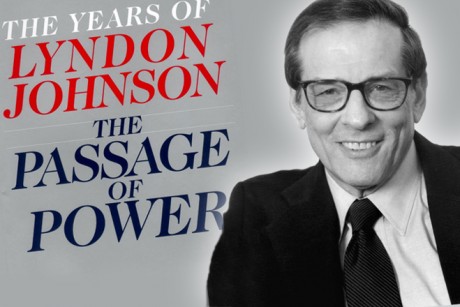
Caro originally conceived this biography as three books - now four are out, with numbers five or, even, six in the works. I used to say that I hoped Caro (now 77) would live long enough to finish the series. Now I say that I hope I live long enough to finish reading the series!
Caro's invariable subject is power. His first book, The Power Broker, about Robert Moses, was a detailed study of the most powerful man in New York State for several decades. And power is the explicit subject of the Johnson series. The third volume, Master of the Senate, spent ~150 pages describing the history of the US Senate, convincingly demonstrating how the dictates of the Constitution, the historical traditions of the Senate, and the powerful and monolithic Southern Bloc of Senators made it impossible for any single man to wield power in that body - all to set the stage for the astonishing consolidation, almost creation, of power by the junior Senator from Texas. Johnson himself is quoted saying,
I do understand power, whatever else may be said about me. I know where to look for it, and how to use it."The Passage of Power describes a new chapter in Johnson's search for power, describing how he failed to capture the Democratic Presidential nomination for the 1960 election and then decided to accept the Vice-Presidential nomination, strongly against the advice of his best friends and advisors, who argued forcefully that the Vice Presidency is a ludicrous, powerless office. Johnson believed he could alter that situation, telling one friend, "Power is where power goes." But he was wrong. He had misread and badly underestimated Jack Kennedy, who sidelined him completely. Johnson was regarded by the Kennedy inner circle ("the Harvards", as he called them) as a rube ("Uncle Cornpone" or "Rufus") and was personally snubbed and administratively excluded. In the absence of any meaningful role, with no opportunity to groom himself to replace Kennedy at the conclusion of his term, Johnson literally wasted away, physically and mentally.
The gripping part of this volume is the shocking assassination of Kennedy and the immediate transformation in Johnson; he came alive, overcoming enormous obstacles, to seize the reins of power and wield them with astonishing effectiveness. For example, the description of how he managed to steer a civil rights act through Congress is exceptionally impressive. Caro lauds Johnson's achievement in the highest terms:
The 1965 Act would be passed after another titanic struggle, in which, with men and women (and children, many children) being beaten in Selma on their way to the Edmund Pettus Bridge, singing "We Shall Overcome" as they marched into tear gas and billy clubs and bullwhips, Lyndon Johnson went before Congress and said, "We Shall Overcome," thereby adopting the cicil rights rallying cry as his own. (When Martin Luther King, watching the speech on television in Selma, heard Johnson say that, he began to cry - the first time his assistants had ever seen him cry). ..... To bring black Americans more fully into the political system, he had to break the power of the South in the Senate - and he broke it. It was Abraham Lincoln who "struck off the chains of black Americans," I have written, "but it was Lyndon Johnson who led them into voting booths, closed democracy's sacred curtain behind them, placed their hands upon the lever that gave them a hold on their owndestiny, made them, at last and forever, a true part of American political life." How true a part? Forty-three years later, a mere blink in history's eye, a black American, Barack Obama, was sitting behind the desk in the Oval Office.For me, this book provided new insight into Jack and Robert Kennedy, the incomparable speechwriter and Kennedy accolyte Ted Sorenson, and, through the masterful protrayal of the strengths and weaknesses of LBJ, new insights into the character of men.
Tuesday, October 25, 2011
Kay Thompson

Sunday, August 21, 2011
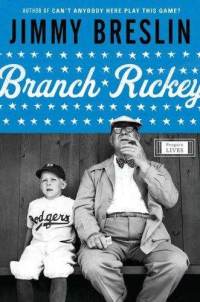
Branch Rickey by Jimmy Breslin
Sunday, June 5, 2011
The Old Man and the Swamp
 SO! Another souvenir from Portland.
The book, as it describes on the front cover, details, "The true story about my weird dad, a bunch of snakes, and one ridiculous road trip".
My response: meh.
The funniest parts of the book were when he described his dad, which he did quite well through various anecdotes and choice phrases. As for the road trip and snakes... that's a bit exaggerated. Honestly, most of the book was told in flash back, and so the whole book comes across as more of a biography of a dysfunctional father than it does about an event in the present.
The book lacked a bit of, "So what?", as my Latin teacher would say. Essentially, the book was almost over by the time Sellers had reached the part where I expected the story to pick up.
My verdict: Kinda funny, but not all that great.
Saturday, January 1, 2011
Tales Behind the Tombstones: The Deaths and Burials of the Old West's Most Nefarious Outlaws, Notorious Women, and Celebrated Lawmen

Tales Behind the Tombstones is a delightful collection of short biographies of colorful figures from the Old West, including desperadoes such as Billy the Kid and Jesse James, prostitutes (or "soiled doves") such as Julia Bulette, women's rights activists, sheriffs, and others. The language is lively and engaging and there are numerous black and white photos of these individuals and in many cases of their gravestones. It was fascinating to read about these individuals' very unusual and exciting lives. Definitely recommend!
Thursday, November 11, 2010
Personal Impressions
 This book consists of portraits of people whom Isaiah Berlin, in almost every case, knew personally. Some, such as Chaim Weizmann, Felix Frankfurter, and Aldous Huxley, are very well known. The portraits focus on personal characteristics rather than achievements and each is written in vivid, highly engaging language that conveys thoughtful impressions of the characteristics that make people interesting or compelling as friends, or statesmen, or contributors to the worlds of learning or the arts. Berlin has keen insights and a very appreciative view of others' personalities, whether they be congenial or prickly. His comments on Pasternak and other Russian writers of the 30's through the 50's show many individuals acting with tact and courage in the face of official intimidation up to and including liquidation. For me, his portraits of Churchill and Roosevelt (he knew neither personally) shed new and very interesting light on how these allies so powerfully affected events in Western society and World War II. (Berlin does not say this directly, but his portraits define Churchill and Roosevelt as quintessential hedgehog and fox, respectively). Just a couple delightful excerpts: Of the historian L.B. Namier:
 Hence those who met him were divided into some who looked on him as a man of genius and a dazzling talker and others who fled from him as an appalling bore. He was, in fact, both.Berlin judges Boris Pasternak to be a genius and explains his criteria:
I can only say this: the dancer Nijinski was once asked how he managed to jump so high. He is reported to have answered that he saw no great problem in this. Most people when they leapt in the air came down at once. "Why should you come down immediately? Stay in the air a little before you return, why not?" he is reported to have said. One of the criteria of genius seems to me to be the power to do something perfectly simple and visable which ordinary people cannot, and know that they cannot do - nor do they know how it is done, or why they cannot begin to do it. Pasternak at times spoke in great leaps; his use of words was the most imaginative I have ever known; it was wild and very moving.
Saturday, July 31, 2010
America in the King Years

Just finished the final volume of Taylor Branch's magisterial biography of Martin Luther King and his effect on America. King's astonishing oratory is on full display, but the books also reveal his extraordinary vision, humility, empathy, vitality and patience.
Although focusing on King, Branch details other powerful currents in American history: violent Southern racism and the revelation of equally vicious racism in the North; J. Edgar Hoover's paranoia, lawlessness, and relentless efforts to destroy King; the triumphs of Lyndon's Johnson's civil rights and anti-poverty initiatives and his ultimate inability to escape the pressures to escalate in Vietnam.
The final volume is tragic and overwhelmingly sad, telling the unfortunate story of how white backlash, black power and the Vietnam War combined to efface the power of nonviolence in America, and concluding with King's assassination.
A tremendous achievement and a rewarding read.
Monday, June 14, 2010
Buffett: The Making of An American Capitalist

This one wasn't exactly my usual cup of tea-- I usually stay away from biographies in general. I was not, however, disappointed with it in the least.
The book is a VERY complete picture of Warren Buffett's life and his various investments over the years. In fact, the book may have too much detail if you're just a casual reader who was interested in Buffett as a person. There is a good deal about his personal life, but it also deals in great part with the various statistics about his companies, profit margins for Berkshire Hathaway, etc.
I thought it was a really great read, and gave some awesome insight into Buffett that none of us would probably expect. I would recommend it to anyone who was interested in either Buffett or the realms of investment.
By the way, did you know that Buffett's investment company, Berkshire Hathaway, originally made lining for men's suits?
Thursday, May 20, 2010
An Actor Prepares

First of all, this isn't what it looks like.
One would expect this to be an annoying non-fiction book about how to act in theater.
Au contraire. The book is set as a novel that illustrates the journey of one actor, and shows how one could similarly learn to act.
The reason I post this up here is because non-actors, if they are enlightened, will find deeper meaning in this book. This book teaches a way of life.
Anyway, the book's a great read, and if you're into that whole self-help/self-improvement shtick, you'll find this to be quite the interesting book.
Also, please tell me if you like shorter reviews. I feel like I use 5 words for every one word of my fellow bloggers, so I tried to shorten this one up.
Wednesday, May 12, 2010
Getting to know Silence Dogood, Alice Addertongue and others

K2 recommends....
THE FIRST AMERICAN: THE LIFE AND TIMES OF BENJAMIN FRANKLIN, by H.W. Brands (a Pulitzer Prize finalist)
How well do you know Ben??? You might just be surprised…..
In truth, I was initially attracted to this book as a new Philadelphian, seeking a little more information about past events in my historic city. What I uncovered was an engaging, delightful biography that revealed a Ben Franklin I never knew!
Told where possible through letters, autobiographical pieces, and historical record, Ben’s thoughts and adventures unfold. Young Ben was quite a rascal, and his path to Philadelphia was by no means a simple one. In particular, I enjoyed Ben’s deft, recurring use of literary alter-egos (eg Silence Dogood, Alice Addertongue, Caelia Shortface, etc) as a means to sway public opinion, scold, or scandalize. Another manifestation of Ben’s wit (Polly Baker) proved to be an early advocate of women’s rights. Go Ben!!!
Of course, in the later “Founding Father” years, much of the information was not new to me, but I still I found it to be cleverly written and an excellent read. All said, I can strongly recommend this book.
THE FIRST AMERICAN: THE LIFE AND TIMES OF BENJAMIN FRANKLIN, by H.W. Brands (a Pulitzer Prize finalist)
How well do you know Ben??? You might just be surprised…..
In truth, I was initially attracted to this book as a new Philadelphian, seeking a little more information about past events in my historic city. What I uncovered was an engaging, delightful biography that revealed a Ben Franklin I never knew!
Told where possible through letters, autobiographical pieces, and historical record, Ben’s thoughts and adventures unfold. Young Ben was quite a rascal, and his path to Philadelphia was by no means a simple one. In particular, I enjoyed Ben’s deft, recurring use of literary alter-egos (eg Silence Dogood, Alice Addertongue, Caelia Shortface, etc) as a means to sway public opinion, scold, or scandalize. Another manifestation of Ben’s wit (Polly Baker) proved to be an early advocate of women’s rights. Go Ben!!!
Of course, in the later “Founding Father” years, much of the information was not new to me, but I still I found it to be cleverly written and an excellent read. All said, I can strongly recommend this book.
Sunday, September 20, 2009
The Protest Singer: An Intimate Portrait of Pete Seeger
Alec Wilkerson, a writer for the New Yorker, has truly given us an intimate portrait of Seeger - not in the sense of "revealing all" but of sketching the feel of Seeger as a person, framed by some of the major events of Seeger's life. A very striking incident is a concert-turned-riot that featured Paul Robeson - later, the description of the primitive house on a cliff above the Hudson that Seeger built by hand reveals that the stonework contains two grapefruit-sized rocks that had been thrown forcefully through the windows of Seeger's car while he was driving away from the concert.
Wilkerson describes Seeger's experiences singing with the Weavers, who at one point had a regular, nationally-broadcast television show. Seeger was personally uncomfortable with this level of fame, and believed the attention given to prominent people slighted the more significant achievements of "ordinary" people. The book describes Seeger's testimony to the House Un-American Activities Committee, an amazing display of idealism and integrity. Seeger was blacklisted and took his family on an extended "world tour" to escape the lack of work and hostile political climate in the US.
I particularly enjoyed this book because of the connections with events I had experienced (at a distance) when I was growing up, but also because it depicted Seeger in real life - rather than larger-then-life terms. A very likable, interesting, and unusual man portrayed in a quick (199 small pages) and very enjoyable read.
Wilkerson describes Seeger's experiences singing with the Weavers, who at one point had a regular, nationally-broadcast television show. Seeger was personally uncomfortable with this level of fame, and believed the attention given to prominent people slighted the more significant achievements of "ordinary" people. The book describes Seeger's testimony to the House Un-American Activities Committee, an amazing display of idealism and integrity. Seeger was blacklisted and took his family on an extended "world tour" to escape the lack of work and hostile political climate in the US.
I particularly enjoyed this book because of the connections with events I had experienced (at a distance) when I was growing up, but also because it depicted Seeger in real life - rather than larger-then-life terms. A very likable, interesting, and unusual man portrayed in a quick (199 small pages) and very enjoyable read.
Thursday, July 2, 2009
Morewell
 Finished Why Orwell Matters by Christopher Hitchens - some parts were lively and interesting: For example, Hitchens observes that Orwell was an early and influential commentator on popular culture! Hitchens devotes a large portion of the book to defending Orwell against attacks by prominent leftists, deliciously skewering some, but this part went on too long for me.
Better is reading Orwell himself. Orwell's essay Lear, Tolstoy, and the Fool is very interesting, and Reflections on Gandhi has this very thoughtful observation:
The essence of being human is that one does not seek perfection, that one is sometimes willing to commit sins for the sake of loyalty, that one does not push asceticism to the point where it makes friendly intercourse impossible, and that one is prepared in the end to be defeated and broken up by life, which is the inevitable price of fastening one's love upon other human individuals. No doubt alcohol, tobacco, and so forth are things that a saint must avoid, but sainthood is also a thing that human beings must avoid.
Wednesday, January 7, 2009
Working backwards (II)
More mini-reviews, of books I read March - July 2008:
Middlesex - A rare homerun from the college book club. The immigrant experience of the American century. I prefer Philip Roth - perhaps because this is Greek instead of Jewish - but I'm splitting hairs. Read it.
A Black Englishman - More typical of the college book club: mediocre. The scent and feel of India lingers appealingly, though.
Day of Battle - Volume 2 of a as-yet-unfinished 3-volume history of America's involvement in WWII in Europe. This covers the invasion of Sicily and Italy, an intriguing contrast. Sicily is Patton, Monty, and a rip-roaring success. Italy, rarely the focus of pop historys of WWII, is a winter slog.
Winter's Tale - Grand and grandiose. A time-leaping paean to NYC.
Expectant Father - A useful alternative perspective, though less needed than its author thinks.
The Nine - A pop biography of the justices of the US Supreme Court. A very fast, fun, insightful read. But, damn, it makes you realize that the Conservatives have already won this battle.
Razor's Edge - The college book club goes for a classic, but still I'm not won over. First half of the book feels like Fitzgerald (yay!) but the second half feels like a very tentative inquiry into bohemianism (boo!).
Baby Whisperer - Another perspective on raising babies. Seems good - the compromise position between kids-first and Ferber - but the compromise is ambiguous and hard to execute on. Not recommended.
Middlesex - A rare homerun from the college book club. The immigrant experience of the American century. I prefer Philip Roth - perhaps because this is Greek instead of Jewish - but I'm splitting hairs. Read it.
A Black Englishman - More typical of the college book club: mediocre. The scent and feel of India lingers appealingly, though.
Day of Battle - Volume 2 of a as-yet-unfinished 3-volume history of America's involvement in WWII in Europe. This covers the invasion of Sicily and Italy, an intriguing contrast. Sicily is Patton, Monty, and a rip-roaring success. Italy, rarely the focus of pop historys of WWII, is a winter slog.
Winter's Tale - Grand and grandiose. A time-leaping paean to NYC.
Expectant Father - A useful alternative perspective, though less needed than its author thinks.
The Nine - A pop biography of the justices of the US Supreme Court. A very fast, fun, insightful read. But, damn, it makes you realize that the Conservatives have already won this battle.
Razor's Edge - The college book club goes for a classic, but still I'm not won over. First half of the book feels like Fitzgerald (yay!) but the second half feels like a very tentative inquiry into bohemianism (boo!).
Baby Whisperer - Another perspective on raising babies. Seems good - the compromise position between kids-first and Ferber - but the compromise is ambiguous and hard to execute on. Not recommended.
Saturday, December 27, 2008
Working backwards
With Henry, the holidays, and Rome, my reading has slowed. So I thought I could work backwards and offer some mini-reviews of books I've read pre-blog.
Since August 2008:
Good Good Pig - Non-fiction selection from my friends' book club. Life lessons from a pig. Not great, so I'll summarize: savor life.
Happiest Baby on the Block - This is the most-recommended newborn book among our friends - because the 5-S technique (swaddling, shushing, sucking, swinging, side) works.
Stumbling on Happiness - A Harvard psych prof on how the human mind makes decisions and and how these processes can lead to happy/unhappy outcomes. Fascinating. The kids-make-you-unhappy section makes for interesting conversation.
Team of Rivals - DKG's biography of Lincoln and his cabinet. Much in the news these days since Obama has cited its influence. One of the best biographies I've ever read.
Handmaid's Tale - While this feels somewhat dated to its early 80s influences (Iranian Revolution, abortion wars, rise of the religious right), it is a good read. Thought the post-script didn't fit at all.
Killer Angels - The classic fictionalized version of the Gettysburg battle. (E & I visited Gettysburg a couple years ago when we attended a friend's nearby wedding, and I got into the Civil War.) This is book is a page-turner that really involves you in the battle. Team of Rivals provided some of the larger historical/political/military context that is lacking from this.
(Then The Sparrow, etc.)
Since August 2008:
Good Good Pig - Non-fiction selection from my friends' book club. Life lessons from a pig. Not great, so I'll summarize: savor life.
Happiest Baby on the Block - This is the most-recommended newborn book among our friends - because the 5-S technique (swaddling, shushing, sucking, swinging, side) works.
Stumbling on Happiness - A Harvard psych prof on how the human mind makes decisions and and how these processes can lead to happy/unhappy outcomes. Fascinating. The kids-make-you-unhappy section makes for interesting conversation.
Team of Rivals - DKG's biography of Lincoln and his cabinet. Much in the news these days since Obama has cited its influence. One of the best biographies I've ever read.
Handmaid's Tale - While this feels somewhat dated to its early 80s influences (Iranian Revolution, abortion wars, rise of the religious right), it is a good read. Thought the post-script didn't fit at all.
Killer Angels - The classic fictionalized version of the Gettysburg battle. (E & I visited Gettysburg a couple years ago when we attended a friend's nearby wedding, and I got into the Civil War.) This is book is a page-turner that really involves you in the battle. Team of Rivals provided some of the larger historical/political/military context that is lacking from this.
(Then The Sparrow, etc.)
Subscribe to:
Comments (Atom)