Showing posts with label light reading. Show all posts

Wednesday, January 13, 2021

To Be Taught if Fortunate - Becky Chambers


With the pandemic, I have barely been reading, so it's been a long time since I've contributed to our book blog! But I'm hoping to get back on track in 2021. My first read of 2021 is this novel by Becky Chambers, for my bookclub. I love space exploration sci-fi, and this was fresh and evocative light reading. Spunky like The Martian, thoughtful like (but not nearly as dark as) The Sparrow (also by a woman, Mary Doria Russell).

Besides Ursula K. LeGuin, Octavia Butler, and Madeline L'engle, I don't know that I've read many female science fiction authors, which is too bad, since it's one of my favorite genres. I don't know that I would say the author's gender was really relevant to this book, though I did find it interesting that in one passage the main character (who is also a woman) muses that 
"We astronauts are taught to compartmentalize the realities of flight. [And the fact that everyone you know will be dead when you return.] ...You wonder if you're a bad daughter, a bad friend, a selfish asshole placing her own intellectual wankery above the living, breathing people who poured everything they could ever give into her, and were rewarded with the sight of her walking away forever." 
I don't think I've heard this sentiment much in the male-centered space exploration stuff I've read, and it struck me the extra pressures women explorers face, since we are usually expected to be caregivers for elder family, etc. -- more guilt and conflict there. So I found that interesting.

Anyway, all in all, a good book for the new year.

Monday, April 18, 2016

Red Rising - Pierce Brown

My bookclub's April pick is Pierce Brown's Red Rising (see our full calendar here). When I first picked up this book, I was turned off by the clunky, dialect-heavy feel of the dystopian Mars mining colony - it reminded me a bit of the feral children's irritating ramblings in Mad Max Beyond Thunderdome about "tomorrow-morrow land."

"I's looking behind us now, into history back."
However, the book's scope explodes beyond this point, and I became very engrossed in its exploration of the themes of social control, exploitation, and revolution.

Personally, I thought the movie Hunger Games was insipid, but I would recommend this book to HG fans, and any other survival enthusiasts.

Tuesday, March 15, 2016

The Call of Cthulhu - H.P. Lovecraft

My friend Terra is a huge Lovecraft enthusiast, and so at her suggestion (her Lovecraftian primer shared below), I have begun my exploration of the genre with The Call of Cthulhu, a very short novel which I greatly enjoyed. The protagonist of the novel is a Man of Science, who is deeply skeptical about his scholarly uncle's mysterious writings on a horrific beast known as Cthulhu. Full of atmosphere and delicious prose - a vivid and enjoyable tale that has definitely sparked my interest in reading more.

Lovecraftian Primer for the Novice Scholar

Books & Stories
Works by H.P. Lovecraft
(The following short stories are where I would recommend any budding cultist or bold investigator begin their journey. Many of HPL’s short stories can be found online here: http://www.dagonbytes.com/thelibrary/lovecraft/)
The Call of Cthulhu (Gives a good sense of the atmosphere and style in many HPL stories. The central source of the famed Cthulhu mythos.)
The Shadow over Innsmouth (A tale of intrigue and dread in a small town. Introduces some of Cthulhu’sfishier relatives.)
The Whisperer in Darkness (Dread terrors from above. While not explicitly about the King in Yellow, this is the only HPL story that contributes to his mythos.)

Lovecraft’s Inspiratons
Ambrose Bierce (I’ve never read any Bierce, but I hear that HPL was enamoured of his stories.)
Robert Chambers (He wrote a collection of short stories entitled “The King in Yellow” which alternates between stories of the pallid king and tales of daily life in revolutionary Paris, for some reason. I would highly recommend the story “The Repairer of Reputations” from this collection.)


Inspired by H.P. Lovecraft
(This list could go on forever – so much current fiction makes at least reference to Cthulhu or unspeakable horrors lurking beneath the waves or beyond the stars… here are a few examples I have enjoyed.)
A Study in Emerald by Neil Gaiman (Short story in Fragile Things, also available in a beautiful format here http://neilgaiman.com/mediafiles/exclusive/shortstories/emerald.pdf)
Rehearsals for Oblivion (Various short stories which all have something to say about the King in Yellow mythos. Highly recommended if the tattered king strikes your fancy.)
The Hastur Cycle (A more scholarly approach to the King in Yellow mythos. Each story is accompanied byan editor’s note explaining its literary/historical context. This collection includes “The Repairer of Reputations” as well as “The Whisperer in Darkness”.
New Cthulhu 2 (This is a short story collection by various authors that I happened across at the library. These stories take HPL themes and legends and address them in a modern setting. I found most of them to be quite enjoyable.)
Locke and Key (Graphic novel which draws from some HPL mythos, also includes a lot of magic that is not from HPL.)


Films, Shorts, & Audio
Feature Films:
The Whisperer in Darkness (Adaptation by the H.P. Lovecraft Historical Society (2011))
Die Farbe (Adaptation of HPL’s “The Color Out of Space” (2010). Filmed in Austria; subtitled)
Dagon (Inspired by “The Shadow over Innsmouth(2001). I have not seen this one yet but it is supposed to be quite good)
Re-Animator (Adaptation of HPL’s “Herbert West – Reanimator” (1985). A classic gore-fest.)
The Burrowers (Info here: http://hplfilmfestival.com/films/burrowers)


Short Films:
(While most of these are not strictly Lovecraft, they are definitely Lovecraftian and worth a viewing. If you enjoy any of these, consider coming to the H.P.Lovecraft film festival in Portland in October!)

Fat Rabbit 
Frank DanCoolo, Paranormal Drug Dealer
(Full 8 minute film is somewhere on the internet if you look hard enough. Clip can be found here: https://www.youtube.com/watch?v=NZmASfMOpxw)
Flesh and Bone (Music video.https://www.youtube.com/watch?v=BzJYFGx2pQ4)
The Mill at Calder’s End (I don’t know if you’ll be able to find the full film online, but here is a trailer https://vimeo.com/ondemand/themillatcaldersend)
The Call of Farqunglu (Lego spoof of the genre, very well done. https://youtu.be/n7o6ERhuEN4)

Dark Adventure Radio Theater
product of the H.P. Lovecraft Historical Society, these radio programmes never fail to provide an evening’s entertainment. More info here: http://www.cthulhulives.org/radio/DART/index.html


Monday, February 1, 2016

Heap House - Edward Carey

My bookclub's first book of 2016 was Edward Carey's Heap House. Clod Iremonger is the 15.5-year-old protagonist of this delightful and deeply original young adult novel. Clod lives with hundreds of his relatives (both noble "Uppiremongers" like himself, and multitudes of more distantly-related servants), in a sprawling hodgepodge of a mansion. The family's estate is the focal image of the novel - built from relocated pieces of London homes, riveted together with steel girders, it spreads across an immense landfill ("the heaps"), basis of his family's garbage scavenging empire. Clod is driven to avoid his family members by the cacophonous voices he alone can hear emanating from their "birth objects," household items assigned at birth and carried upon one's person until death.  Thus, Clod spends much of his time wandering alone over the estate, until he one day meets a spunky serving girl, Lucy, and together they begin to uncover the grim foundation of his family's wealth.

An engaging tale with compelling characters that vividly explores the dangers of greed, xenophobia, and blind obedience to authority.

Monday, January 11, 2016

One Weird Trick (Sex Criminals Volume 1)

When Mark and I visited Arizona over the holiday break, we hung out with his friend Jordan, who works at a comic book store in Tempe. He recommended this smart, fresh, graphic novel to me. One Weird Trick is about a young woman who wants to save her library from foreclosure, her unusual superpower, and her sexcapades with a likeminded young man she meets at a party. A fun and flirty caper with nice illustrations, this is my bookclub's February pick (along with The Picture of Dorian Gray), if anyone wants to read along!

The Dirt on Clean: An Unsanitized History - Katherine Ashenburg

The Dirt on Clean is a delightful account of hygiene throughout history, from the sumptuous baths and strigil of the Romans, to the hydrophobia of the Dark Ages, to today's neurotic obsession with sterility, and everything in between. The course of humanity's love/hate relationship with cleanliness is surprising, fascinating, and sometimes repellent. Packed with diverting factoids, quotes, and anecdotes, this book makes for very pleasurable light reading.

Wednesday, October 7, 2015

The Daughter of Time - Josephine Tey


The Daughter of Time was the first required reading for my medieval history course (HSTAM 235: Medieval Mysteries), and I found it completely delightful. The protagonist of this work is an English police officer who was injured on the job and is laid up resting at a small hospital. A highly perceptive detective with a wry wit, Scotland Yard Inspector Alan Grant is unused to boredom and inactivity, and struggles immensely with the tedium of convalescence. That is, until his vivacious actress friend brings him a folio of paintings of faces. Grant's intuitive ability to read criminals' faces snags on one mysterious portrait - a suffering, noble face Grant is dismayed to learn is that of the barbaric Richard III. His curiosity deeply piqued, Grant teams up with a charmingly oafish young history buff to unravel the mystery of the murder of the princes in the tower. Fascinating analysis with a surprising conclusion. (And a bonus reference to our illustrious ancestor, Sir Robert Brackenbury.) Delicious language enhances this very enjoyable thriller.

Monday, July 20, 2015

Game of Thrones: A Song of Ice and Fire - George R.R. Martin

For the past several years, Mark and I have enjoyed watching the HBO series Game of Thrones. Mark had read all of Martin's books up to the time of the TV series premiere, but I never had. Everyone says how great the books are, so I finally decided to give the first book a try. I loved it so much I tore through all 800 pages and am already a third of the way through book 2!

Martin's prose is relatively simple and straightforward, but his world is vividly portrayed in all 5 senses and his realistic character depictions make the courtly intrigues and ancient mysteries come alive brilliantly. One of my favorite characters is Lord Tyrion, a little person and son of the powerful house of Lannister. In a world where warriors rule and a disabled man is worth less than a woman, Tyrion uses his wits and humor to remain relevant and preserve his dignity in a society that has derisively termed him "the Imp." Fond of drink and whores, Tyrion is nevertheless the source of many of the book's words of wisdom. He gives several valuable pieces of advice to Jon Snow, the bastard son of powerful Lord Stark, who holds a similarly low place in their world's hierarchy. One such quote is when Tyrion explains his love of reading by saying that "a mind needs books as a sword needs a whetstone, if it is to keep its edge.”

Martin famously kills off nearly every major character (and many minor ones), and it is a strong storyteller indeed who can hold the reader's interest in the events of the world, not just in specific people.

Very exciting and more food for thought than in your usual "light reading."

Saturday, January 17, 2015

Red Planet - Robert Heinlein

Really enjoyed Heinlein's short novel about two boys, Jim and Frank, and their exploits at a boarding school on Mars. The plot unfolds amidst a political conflict between the freedom-loving people of Mars and their greedy and callous Earth overlords, and centers around Jim's relationship with the Martian "bouncer" Willis, a small, furry, tentacled creature with remarkable powers of imitation.

Written in 1949, the novel is reminiscent of a Hardy Boys style adventure, but the ideas are refreshingly modern (with the exception of the frequent sexism, which tends to mar the quaint tone). Still, a charming book with an interesting conception of alien life.

Also, Willis was so cute!
Some artist's conception of Willis

Sunday, August 24, 2014

Predictably Irrational - Dan Ariely

Predictably Irrational is a selection of short essays on the ways in which people are influenced by context and cognitive shortcuts (heuristics) to repeatedly make suboptimal choices. This field of economics, called behavioral economics, appears to be just catching up to what cognitive psychologists have been studying for decades. It was nonetheless an interesting book written in an engaging, chatty tone, and cited various studies by Ariely which provide new examples of these "predictably irrational" behaviors from an economic standpoint.

Friday, August 8, 2014

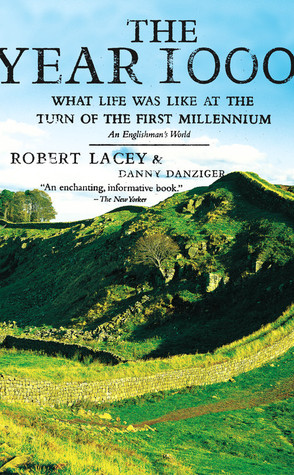
The Year 1000

This extremely charming book about life in the year 1000 is organized around the 12 months of the year, and the activities that were typical of that month. It is densely packed with fascinating information, and is extremely readable. Many fascinating facts in this book and I highly recommend it to everyone!

The first page of every chapter bears that month's illustration from the Julius Work Calendar, such as these:

Saturday, August 2, 2014

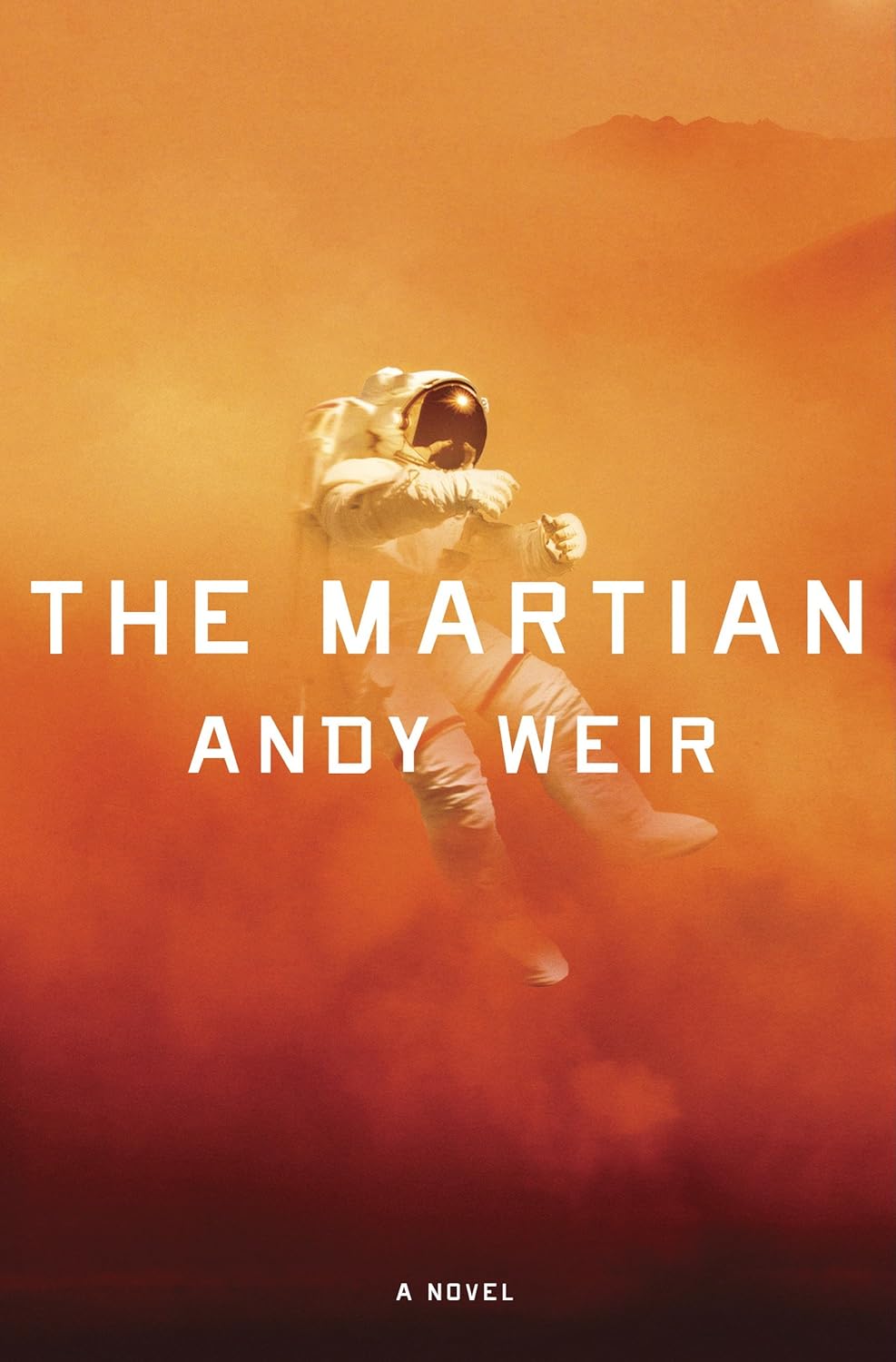
The Martian - Andy Weir

"Robinson Crusoe in space" is how our bookclub organizer described The Martian, and this is a pretty apt description. Our intrepid astronaut hero Mark Watney is left stranded on Mars when his crew takes him for dead following a terrible accident. Using his botany and mechanical engineering skills, Mark must survive and find a way to let Earth know that he's still alive!

This fast-paced action thriller is written in a highly loose and conversational style, with entries styled as Mark's log. Recommended for fans of Kim Stanley Robinson, though this is much less literary and more of a beach read. Still fun and thought-provoking!

Also, here's a (kind of) relevant clip from Total Recall:

Tuesday, May 27, 2014

Zodiac - Neal Stephenson

Finished reading Stephenson's (1988) Zodiac this weekend. It was weird, to say the least, and definitely seemed less mature than other works of his that I've read (not surprising, it's his 2nd book, written before Snow Crash). It's the tale of S.T., a nonviolent ecoterrorist who brings polluting companies to justice by zipping around on his Zodiac (high-powered motored raft) plugging up waste pipes in the Boston Harbor and exposing the offenders to media ridicule. A quick and easy read, not one I'd necessarily recommend.

Book Challenge 2014 stats: 15/65 (23%), 11 books behind schedule. (Although I've now read 2 more books thus far in 2014 than I did in all of 2013!)

Stephenson's Novels

Sunday, May 4, 2014

A Fine and Private Place - Peter S. Beagle

My bookclub's most recent book is A Fine and Private Place, which was a quick read but did not move me very much. It was sort of a modern take on "Our Place," which I always hated:
 full of the soliloquies of the dead watching the living and trying to make sense of the meaning of life. Parts were touching and I was drawn to the character of Rebeck, a kindly old man who lives in a cemetery and can see and speak to the dead, but I would not necessarily recommend this book to others, as parts were a bit maudlin and overwrought.

Friday, February 21, 2014

The London Monster: A Sanguinary Tale - Jan Bondeson

Bondeson's tale is a stranger-than-fiction account of the "Monster," a savage serial stabber in 1790s London, who preyed upon unaccompanied young women by with a "tremulous eagerness," accompanying his attacks with shockingly foul and indecent language. Although the Monster (or perhaps, Monsters) employed a variety of sinister stratagems of assault, including stabbing unsuspecting maidens in the face using a knife hidden inside a bouquet of artificial nosegays, and tearing at women's exposed arms with some sort of metal claw, his preferred method of attack was to slash at his victims' thighs and buttocks, inspiring fearful aristocratic women to wear copper petticoats, and lower class women to hide frying pans under their skirts.

All told, the Monster attacked somewhere between 15-30 women, causing mass hysteria and vigilante mob action, before a local pervert and malcontent, artificial flower-maker Rhynwick Williams, was brought to trial and ultimately convicted (although both then and now, doubts remain about his guilt), essentially ending the slew of attacks and putting an end to the witch-hunt.

The book is largely an exploration of the panic caused by these stabbings, as well as the popularity of the subject in the media (the book contains ribald poetry, bawdy newspaper cartoons, and descriptions of various Monster plays from the period), as well as the bizarre circumstances of the two trials.

Pretty odd, but interesting!

Sunday, January 26, 2014

An Edible History of Humanity - Tom Standage

An Edible History of Humanity was sort of entertaining, as it contains lots of colorful anecdotes, but much of it felt like a less substantive (and very derivative) version of Pollan's Omnivore's Dilemna (cf the discussion of corn). Moreover, I came away feeling like behind his pseudo-intellectualism, Standage is either really ignorant, or sort of a schmuck. His political beliefs, when they show through, are disturbing.

For example, Standage describes several instances of famines in which the native community starved, while exporting their food for consumption by wealthy foreigners.* However, evidently without realizing the irony in his position, Standage remains shockingly, unabashedly colonialist - he explains the danger of the current popularity of "local food" by stating that, "an exclusive focus on local foods would harm the prospects of farmers in developing countries who grow high-value crops for export to foreign markets. To argue that they should concentrate on growing staple foods for themselves, rather than more valuable crops for wealthy farmers, is tantamount to denying them the opportunity for economic development." I was dumbfounded when I read this... Below I have excerpted only 2 of several passages where Standage plainly describes the misery that results when poor farmers grow crops for wealthy foreigners, but this does not seem to have shaken his ideology.

He also extensively lauds the virtues of nitrogen farming while devoting exactly 1 paragraph to its dangers, trivializes the organic movement, and is a bit over-the-top in his rah-rah Capitalist, anti-Communist jingoism ("Is it a coincidence that the worst famine in history occurred in a Communist state?"). He's the business editor at the Economist, so maybe that explains it?

Anyway, I wish he would take some time out from copying Pollan's rhetoric to read a little Chomsky.

Sigh!

* On p.135, he states that "by the early 1840s, imports from Ireland were supplying one sixth of England's food. This food was produced by men who worked on the best, most easily cultivated land and were typically given small patches of inferior land on which they grew potatoes to support themselves and their families. The English could only keep eating bread, in short, because the Irish were eating potatoes." He later describes, on p.188, how under Mao in China, "the main cause of the famine was not inadequate food production so much as the farmers' lack of entitlement to it. The food they produced went to feed people in the cities, Party officials, and foreigners."

Friday, October 18, 2013

Women & murder


Over the summer I read five great page-turners. Although I picked each out for different reasons, they all coincidentally fit a grisly theme:

NOS4A2 - Our teen heroine, who rides her bike across a bridge/portal to "find things," goes looking for trouble. She finds a mass-murder who kidnaps children away to "Christmasland." She escapes but doesn't really get away.  Recommended in a NYT article by Janet Maslin.

The Shining Girls - Our young heroine escapes a mass-murder who finds his victims across time using a house/portal. She has to track him down and thwart him. For my office book club.

The 5th Wave - Our teen heroine has survived the first four waves of an alien invasion that murders 99% of humanity. She has to stay alive and rescue a kidnapped kid. Recommended in a NYT article by Janet Maslin.

The Rook - Our heroine wakes up with no memory, surrounding by the bodies of people who were trying to kill her. She has to figure out who was trying to kill her while running an intelligence agency that combats supernatural foes. Recommended by a friend.

The Cuckoo's Calling - A famous model is murdered. Our hero, a down-on-his-luck PI, tries to crack the case. The new book by JK Rowling.

I'd highly recommend all of them - they're fun and fast.

Friday, August 2, 2013

REAMDE by Neal Stephenson


Just finished reading Stephenson's 1000-something page novel, REAMDE, which was amazing. (Excellent overview by Colin here: http://blogenburyisreading.blogspot.com/2011/12/neal-stephenson-reamde.html?m=1).

Stephenson has the impressive ability to weave together a host of characters and circumstances which, in the hands of a lesser author, would feel they had been chosen by a random word generator: jihadists, MMORPG, computer virus, British spy, Russian mafia, ski resort, Wikipedia. Well, maybe they do have a theme: it sounds like a James Bond movie, but without the glamour, and set against the new realities of postmodernity: the digital age and the international War on Terror.

Stephenson is truly a great author: each section of the book is told from the perspective of one of a handful of key characters, and each has a distinctive and authentic tone. Although the book plays like an action movie and largely examines the meaning of life as experienced in the scopes of a rifle, the detailed attention to psychology and the richness of the world feel (almost) Tolstoyan. (Making the Acknowledgments page quite interesting, since he lists areas of expertise, such as guns, which are seamlessly integrated into the plot, yet evidently draw heavily upon the knowledge of others.)

Although set in the present (near future?) and so less earthshatteringly visionary than The Diamond Age, I preferred this to Snow Crash and definitely recommend.

Stephenson's Novels

Tuesday, July 2, 2013

The 5th Wave

Janet Maslin recently wrote a piece for the New York Times about quality beach reads, and The 5th Wave is the first I've tackled from her list. It is a post-apocalyptic young adult novel about an alien invasion - War of the Worlds plus The Hunger Games plus The Stand. A great page turner - or wait for the movie, as it's already been optioned by Somy.

Wednesday, February 27, 2013

Breakfast at Tiffany's: A Short Novel and Three Stories

Breakfast at Tiffany's, featuring Capote's most memorable character, Holly Golightly, is a breezy and captivating story with a perfect concoction of wit, dramatic confrontations, breathless innocence, and lost youth.  Lovely writing - I plan never to spoil it by seeing the movie!  The short stories in this volume were also quite wonderful....very evocative, often funny, and very touching.