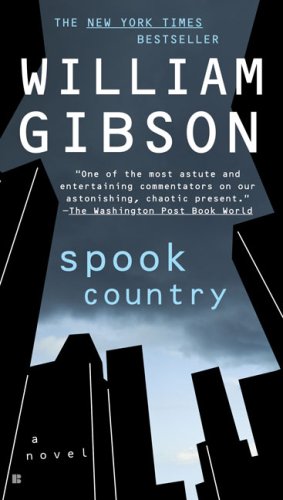
Gibson's 3 Trilogies:
The Sprawl Trilogy:
- Neuromancer
- Count Zero
- Mona Lisa Overdrive
- Virtual Light
- Idoru
- All Tomorrow's Parties
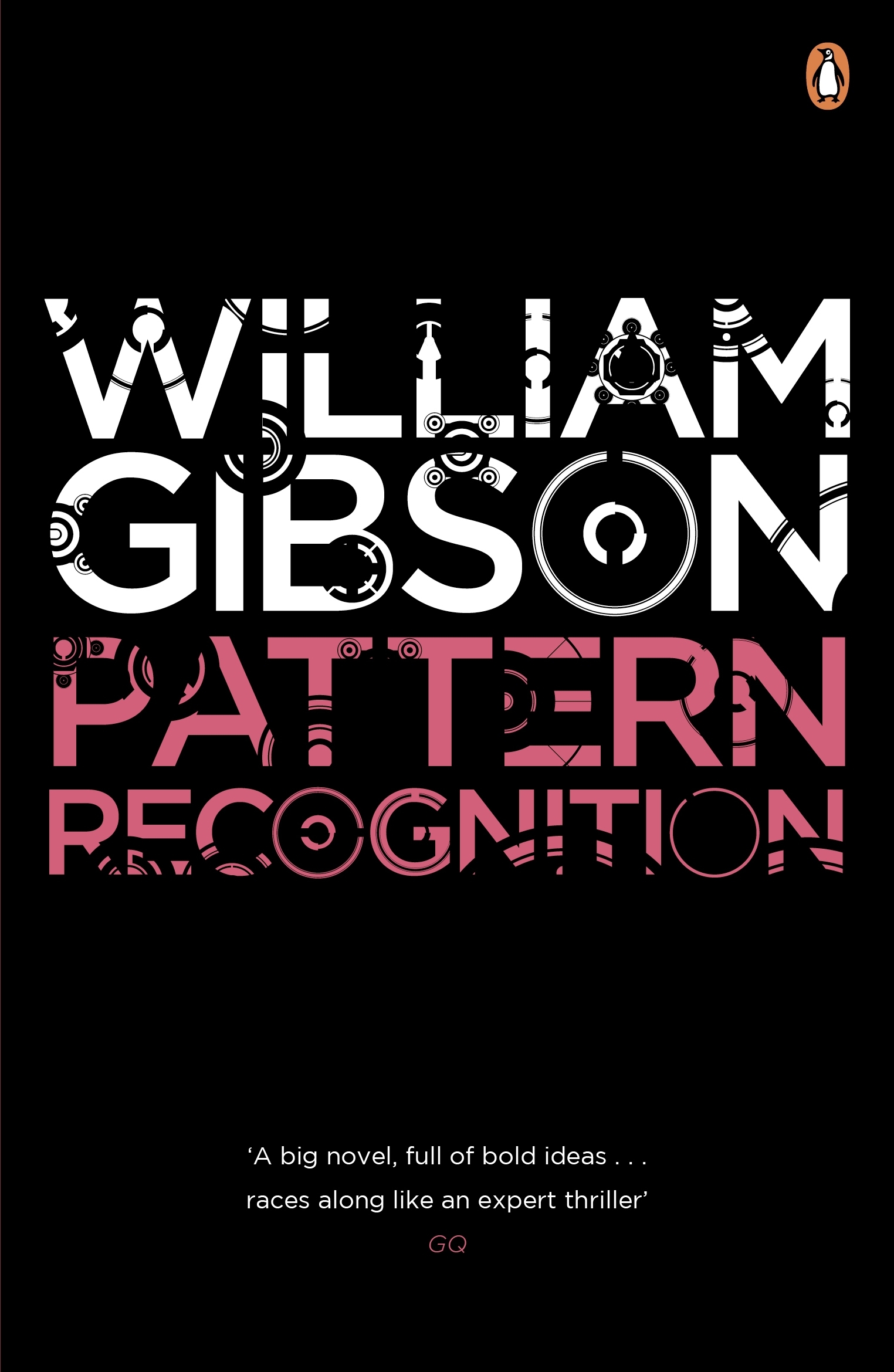 Another brilliant book by Gibson, and the first in the Blue Ant/Hubertus Bigend trilogy. The likable but neurotic protgagonist, Cayce (pronounced "Case"), is a coolhunter - a precog who uses her sensitivity to brands and logos to serve as a consultant to major franchises, helping them make branding choices based on what she senses will become trendy or not. In her spare time, Cayce and her online otaku friends obsess over "the footage" - segments of breathtaking, unearthly films scattered across the net, discovered a fragment at a time. Cayce's life changes when an exceptionally powerful employer hires her for a special consulting job, and draws her into a web of intrigue, Soviet mafia, and mystery...
 I have been consuming Gibson in a strange and disjointed fashion over the past 3 years, picking up random books in his trilogies and reading them out of order. Maybe because I never stop thinking about Gibson's universe (!), this has not reduced my enjoyment of them in the slightest.
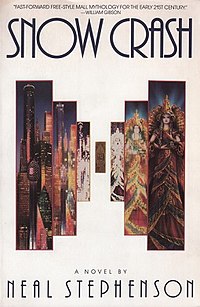
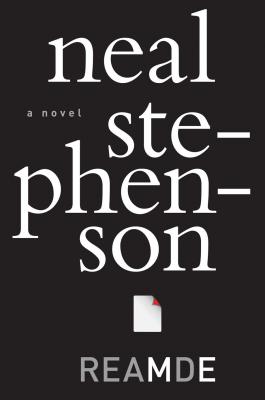 The novel's cyberpunk elements center around the computer game T'Rain (the fictional successor to the online hegemony of World of Warcraft), whose most salient characteristic its elaborate economy, based on a virtual-gold standard whose integrity is ensured by an elaborate geological simulation which determines the location of deposits of ore within the game world. The game is designed to exploit, rather than be exploited by, the existence of "gold-farmers," or kids in China who perform repetitive in-game actions (or grinding) in order to harvest virtual items and currency that they can then sell to rich Westerners - a real phenomenon in games like WoW. Stephenson's picture of how this all works is really quite ingenious, and somehow constitutes both a more sophisticated version and elaborate parody of early cyberpunk depictions of the function of virtual spaces in the global economy, like Stephenson's own depiction of the "Metaverse" in Snow Crash.
 Count Zero, although at times confusing, is another Gibson masterpiece. The world he envisions is Tolstoyan in its richness, fullness, and complexity. He is strikingly creative and his vision of the near (although technologically distant) future is dark, grimy, and dangerous without being oppressingly alarmist. Gibson's characters ring true and his literary grasp is impressive, and far improved from Neuromancer - he convincingly weaves together multiple narratives to reveal a complex and fascinating picture of cyberspace and its potential. In this work, Bobby, aka Count Zero, is an aspiring cyber cowboy (or "hotdogger") who gets swept up in the veiled machinations of an incomprehensibly wealthy entity named Virek. ("Entity" because Virek's body is a pool of molecules in an enormous vat, and he "lives" in the matrix.) The story follows Virek's attempts to locate the maker of mysteriously haunting collage boxes through various hitmen and an art collector. The book's themes, largely introduced in Neuromancer, include AI, systems theory, the synthesis of man and machine, and the spatial nature of cyberspace. The religious potential of the matrix is also fruitfully explored. A real page-turner and a must-read!
 In this utterly wild and brilliant book by William Gibson, two characters' narratives intersect to reveal the story of a famous rockstar - Rez of the band Lo/Rez - who is determined to marry an idoru, or virtual celebrity, despite the objections of his P.R. team and devoted, massive, scarred bodyguard Blackwell. Set in the near (but technologically greatly advanced) future, the intersecting narratives are from the perspectives of Chia, a fourteen-year-old Lo/Rez fan and skilled hacker from Seattle, and Laney, a hacker with an uncanny ability to detect "nodal points" in data. The theme of emergence is evidenced at the meta- as well as macro-level, wherein the individual stories interact to create a totality which far exceeds the sum of its parts. The tale is a true page-turner, and rife with crazy characters and novel ideas. Definitely worth reading!!