Showing posts with label religion. Show all posts

Thursday, August 22, 2019

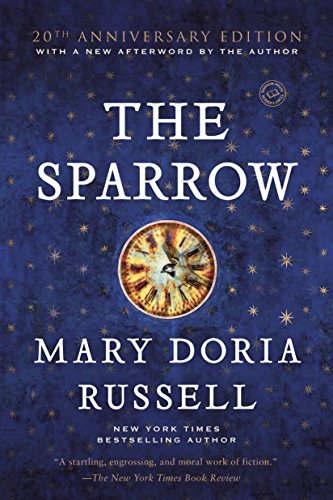
The Sparrow - Mary Doria Russell

I read The Sparrow on a recommendation from Mark's sister, Kelly, who said it is her favorite book. WOW! It is a masterpiece. Totally brutal without being vulgar, and wholly fresh and unexpected.

The story is told from both ends - an idealistic Jesuit monk bonding with his close-knit group of friends, and this same monk, broken almost beyond recognition, after his return from a first-contact mission gone horribly awry.

I don't want to say too much lest I spoil anything, but this is definitely a first-rate book, which I highly recommend! It is rough but very powerful and poignant.

Jesse's review here
Dad's review here

Wednesday, January 16, 2019

The Case of the Man Who Died Laughing AND The Case of the Missing Servant

Tarquin Hall's mystery is light, comical and very entertaining.  Distinguished scientist and Guru Buster, Dr. Suresh Jha, receives a very specific death threat. The next morning, the committed rationalist attends his regular exercise/self-improvement group, the Rajpath Laughing Group, at a public park.

Suddenly, while Professor Pandey is telling a knock-knock joke that convulses the group members, a mist begins to form around their ankles and rises to their shins, and then higher.  The sky darkens, dogs bark, and then, appearing out of the mist, high above the ground, is the hideous face of Kali, the Indian goddess of time, creation, destruction and power, the destroyer of evil forces.  Facing Dr. Jha, she screams "You who have dared to insult me! You who have dared to mock my power!You will taste blood!", and thrusts a sword deep into his chest.
Kali

A video, taken by a passing French tourist, is broadcast on the all major news stations and the impossibility of any material explanation for these startling events convinces millions that Kali has miraculously appeared and wreaked vengeance on Dr. Jha.

Later that day, Most Private Investigator Vish Puri is visited by Inspector Singh, who asks for his help in investigating the circumstances of Dr. Jha's death.  Most Private Investigator Puri kicks into action, with frequent food breaks for his favorite Punjabi dishes; thanks to a glossary at the end of the book, this provides a valuable catalog of Indian snacks.

A very entertaining mystery, with a couple amusing side-plots, lots of colorful characters, and whimsical commentary on life in India - a quick and diverting read!

Just ran across another Vish Puri mystery on our library's Staff Picks shelf...once again, I thought the story was lively and very amusing - and I enjoyed The Case of the Missing Servant even more than the first one I read.  These are wonderful, light reads - highly recommended!
Friday, August 8, 2014

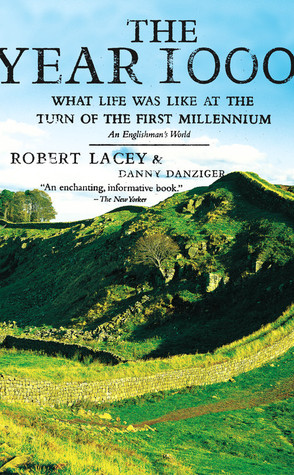
The Year 1000

This extremely charming book about life in the year 1000 is organized around the 12 months of the year, and the activities that were typical of that month. It is densely packed with fascinating information, and is extremely readable. Many fascinating facts in this book and I highly recommend it to everyone!

The first page of every chapter bears that month's illustration from the Julius Work Calendar, such as these:

Saturday, August 2, 2014

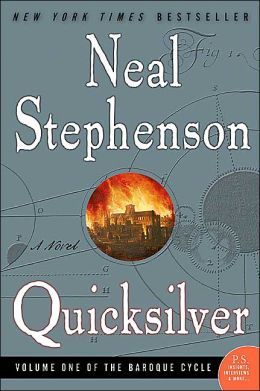
Quicksilver (The Baroque Cycle, #1) - Neal Stephenson

The first novel in the Baroque cycle is an engaging picture of life in 1600s and 1700s England and America, where former Puritan Daniel Waterhouse is mixing it up with the greatest minds of his day, including Isaac Newton and the young Benjamin Franklin, among others. I don't have much to say about the plot (such as it is), but it is full of interesting philosophical discussions, such as this:
“And yet viewing several depictions of even an imaginary city, is enlightening in a way," Leibniz said. "Each painter can view the city from only one standpoint at a time, so he will move about the place, and paint it from a hilltop on one side, then a tower on the other, then from a grand intersection in the middle--all in the same canvas. When we look at the canvas, then, we glimpse in a small way how God understands the universe--for he sees it from every point of view at once. By populating the world with so many different minds, each with its own point of view, God gives us a suggestion of what it means to be omniscient.”
An interesting book. I've set down The Confusion, which has a different cast of characters and didn't grab me as much, but I may return to it.

Stephenson's Novels

Sunday, June 15, 2014

1Q84 - Murakami

At my suggestion, our bookclub's most recent selection is Murakami's 1Q84. An interesting factoid from Wikipedia: "The title is a play on the Japanese pronunciation of the year 1984 and a reference to George Orwell's Nineteen Eighty-Four. The letter Q and the Japanese number 9 (typically romanized as "kyū", but as "kew" on the book's Japanese cover) are homophones, which are often used in Japanese wordplay."

It has been a while since I've read Murakami (previously: Kafka on the Shore; The Windup Bird Chronicle), and as always, I was struck by the believability of his characters, whose inner monologues are powerfully, resonantly realistic, and the vividness of his imagery despite his relatively sparse prose (at least in the translation!). This one was a little surreal and overly sentimental for my taste at times, but I still really enjoyed it for the reasons previously mentioned. I also LOVED the Town of Cats story told within the novel:

In the story, a young man is travelling alone with no particular destination in mind. He rides the train and gets off at any stop that arouses his interest. He takes a room, sees the sights, and stays for as long as he likes. When he has had enough, he boards another train. He spends every vacation this way. 
One day, he sees a lovely river from the train window. Gentle green hills line the meandering stream, and below them lies a pretty little town with an old stone bridge. The train stops at the town’s station, and the young man steps down with his bag. No one else gets off, and, as soon as he alights, the train departs. 
No workers man the station, which must see very little activity. The young man crosses the bridge and walks into the town. All the shops are shuttered, the town hall deserted. No one occupies the desk at the town’s only hotel. The place seems totally uninhabited. Perhaps all the people are off napping somewhere. But it is only ten-thirty in the morning, far too early for that. Perhaps something has caused all the people to abandon the town. In any case, the next train will not come until the following morning, so he has no choice but to spend the night here. He wanders around the town to kill time. 
In fact, this is a town of cats. When the sun starts to go down, many cats come trooping across the bridge—cats of all different kinds and colors. They are much larger than ordinary cats, but they are still cats. The young man is shocked by this sight. He rushes into the bell tower in the center of town and climbs to the top to hide. The cats go about their business, raising the shop shutters or seating themselves at their desks to start their day’s work. Soon, more cats come, crossing the bridge into town like the others. They enter the shops to buy things or go to the town hall to handle administrative matters or eat a meal at the hotel restaurant or drink beer at the tavern and sing lively cat songs. Because cats can see in the dark, they need almost no lights, but that particular night the glow of the full moon floods the town, enabling the young man to see every detail from his perch in the bell tower. When dawn approaches, the cats finish their work, close up the shops, and swarm back across the bridge. 
By the time the sun comes up, the cats are gone, and the town is deserted again. The young man climbs down, picks one of the hotel beds for himself, and goes to sleep. When he gets hungry, he eats some bread and fish that have been left in the hotel kitchen. When darkness approaches, he hides in the bell tower again and observes the cats’ activities until dawn. Trains stop at the station before noon and in the late afternoon. No passengers alight, and no one boards, either. Still, the trains stop at the station for exactly one minute, then pull out again. He could take one of these trains and leave the creepy cat town behind. But he doesn’t. Being young, he has a lively curiosity and is ready for adventure. He wants to see more of this strange spectacle. If possible, he wants to find out when and how this place became a town of cats. 
On his third night, a hubbub breaks out in the square below the bell tower. “Hey, do you smell something human?” one of the cats says. “Now that you mention it, I thought there was a funny smell the past few days,” another chimes in, twitching his nose. “Me, too,” yet another cat says. “That’s weird. There shouldn’t be any humans here,” someone adds. “No, of course not. There’s no way a human could get into this town of cats.” “But that smell is definitely here.” 
The cats form groups and begin to search the town like bands of vigilantes. It takes them very little time to discover that the bell tower is the source of the smell. The young man hears their soft paws padding up the stairs. That’s it, they’ve got me! he thinks. His smell seems to have roused the cats to anger. Humans are not supposed to set foot in this town. The cats have big, sharp claws and white fangs. He has no idea what terrible fate awaits him if he is discovered, but he is sure that they will not let him leave the town alive. 
Three cats climb to the top of the bell tower and sniff the air. “Strange,” one cat says, twitching his whiskers, “I smell a human, but there’s no one here.” 
“It is strange,” a second cat says. “But there really isn’t anyone here. Let’s go and look somewhere else.” 
The cats cock their heads, puzzled, then retreat down the stairs. The young man hears their footsteps fading into the dark of night. He breathes a sigh of relief, but he doesn’t understand what just happened. There was no way they could have missed him. But for some reason they didn’t see him. In any case, he decides that when morning comes he will go to the station and take the train out of this town. His luck can’t last forever. 
The next morning, however, the train does not stop at the station. He watches it pass by without slowing down. The afternoon train does the same. He can see the engineer seated at the controls. But the train shows no sign of stopping. It is as though no one can see the young man waiting for a train—or even see the station itself. Once the afternoon train disappears down the track, the place grows quieter than ever. The sun begins to sink. It is time for the cats to come. The young man knows that he is irretrievably lost. This is no town of cats, he finally realizes. It is the place where he is meant to be lost. It is another world, which has been prepared especially for him. And never again, for all eternity, will the train stop at this station to take him back to the world he came from.

It sort of reminds me of what happens to the girl's parents in Spirited Away, except that there is no possibility for redemption in this world.

Of Human Bondage - Maugham

After reading Dad's review, I decided to check out Maugham's Of Human Bondage. It was a very interesting tale of a neurotic young man afflicted with a clubfoot, and his coming of age in England and France during the late 18 and early 1900s. Although it starts off fairly slowly (the tale begins in Philip's youth), it builds powerfully and is a very captivating read.

I don't have much to add to Dad's review, except to say that it is filled with interesting bits of Philip's evolving philosophy, such as when he thinks:
Society had three arms in its contest with the individual: laws, public opinion, and conscience; the first two could be met by guile, guile is the only weapon of the weak against the strong... but conscience was the traitor within the gates; it fought in each heart the battle of society, and caused the individual to throw himself, a wanton sacrifice, to the prosperity of his enemy.

Saturday, May 17, 2014

The Medieval Underworld - Andrew McCall

This book was interesting, but very painful to read because McCall tortures all of his sentences. In McCall's hands, for example, the previous sentence might read: "The sentences of this book, being tortured by McCall, were very painful to read, yet interesting did I find the book."Or some such nonsense.

Anyway, the content was engaging - the book opens with the context of the Middle Ages, the theory behind Church, State, and sin, then the nature of medieval punishment (cruel and unusual), following by a closer treatment of several strains of deviants in the Middle Ages:
    • bandits, freebooters and outlaws
    • richman, poorman, beggarman, thieves
    • prostitutes
    • homosexuals
    • heretics
    • sorcerers and witches
    • Jews
The book ends with an analysis of the medieval conception of hell.

Again, interesting, but perhaps not worth the effort.

Monday, February 17, 2014

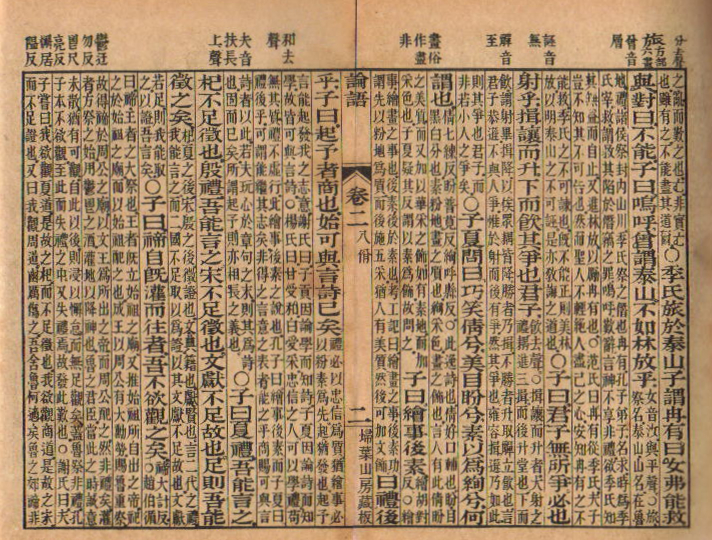
The Analects of Confucius - trans. by Legge


Picked up Legge's translation of The Analects of Confucius at a recent trip to Powell's in Portland (thanks, Colin, for the recommendation!). Nabokov said, "one cannot read a book; one can only reread it," and I think this clearly applies to the Analects. There were some quotes which seem clear enough at first reading:
The Master said, "Riches and honours are what men desire. If it cannot be obtained in the proper way, they should not be held. Poverty and meanness are what men dislike. If it cannot be avoided in the proper way, they should not be avoided."
Other quotes, while interesting or thought-provoking, were less clear to me. For example,
The Master said, "A cornered vessel without corners---A strange cornered vessel! A strange cornered vessel!"
I think this would be a good book to keep around to re-read and consider in small sections over a period of time.

Sunday, January 19, 2014

The Teachings of Don Juan - Carlos Castaneda

Tonight I read Carlos Castaneda's "The Teachings of Don Juan" in a single sitting (I skipped part 2, his structural analysis of the teachings, which does not interest me). I became interested in this book in a sort of roundabout way - one part of Levack's Witch-Hunt that keenly aroused my interest was the offhand reference to the hallucinogenic "flying unguents" purportedly used by medieval witches, which may (in some cases) have inspired the visions of flying to the witches' sabbath. These ointments contained plants such as atropa belladona and datura, and in my online research into their effects, I came across the following passage from Castaneda:
"There was a question I wanted to ask him. I knew he was going to evade it, so I waited for him to mention the subject. I waited all day. Finally, before I left that evening, I had to ask him, "Did I really fly?," don Juan?"

"That is what you told me. Didn't you?"

"I know, don Juan. I mean, did my body fly? Did I take off like a bird?"

"You always ask me questions I cannot answer. You flew. That is what the second portion of the devil's weed is for. As you take more of it, you will learn how to fly perfectly. It is not a simple matter. A man flies with the help of the second portion of the devil's weed. That is all I can tell you. What you want to know makes no sense. Birds fly like birds and a man who has taken the devil's weed flies as such [el enyerbado vuela asi]."

"As birds do? [Asi como los pajaros?]."

"No, he flies as a man who has taken the weed [No, asi como los enyerbados]."

"Then I didn't really fly, don Juan. I flew in my imagination, in my mind alone. Where was my body?"

"In the bushes," he replied cuttingly, but immediately broke into laughter again. "The trouble with you is that you understand things in only one way. You don't think a man flies; and yet a brujo can move a thousand miles in one second to see what is going on. He can deliver a blow to his enemies long distances away. So, does he or doesn't he fly?"
Although I am disappointed that Don Juan the man appears to have been a fiction, I still find this passage very powerful, and am still intrigued by some of the arguments Castaneda attributes to him, such as his rejection of there being only one way to understand our physical relationship with the world.

Regardless of whether you want to take it or leave it as spiritually valid, certainly no one could deny that Castaneda is a powerful storyteller, and the concluding episode was so wild and gripping I forgot I was even reading a book until it was over. A powerful "state of nonordinary reality" induced by reading!

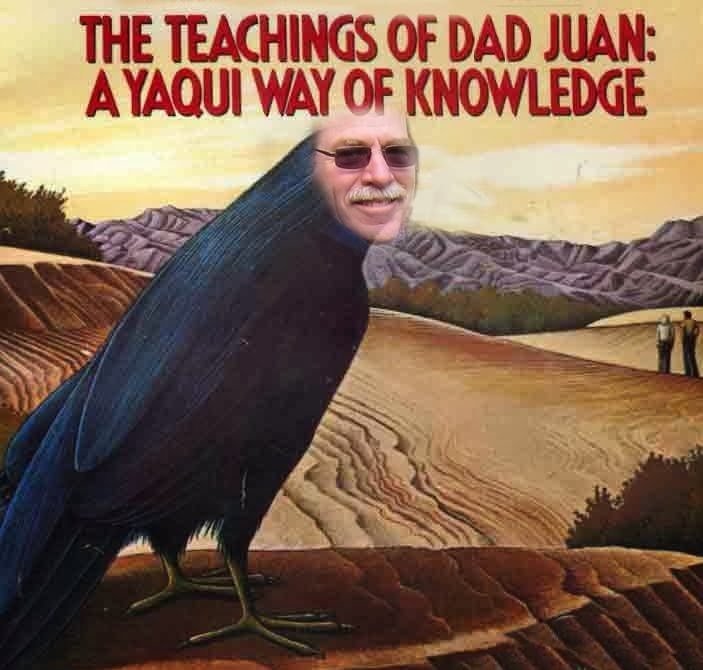
The wise Dad Juan

The Witch-Hunt in Early Modern Europe - Brian P. Levack

Levack's work is a overview of the legal, political, economic, religious, and epidemic circumstances which he argues enabled the great witch-hunts of early modern Europe. Although witches have been a lifelong interest for me, and I was eagerly anticipating reading this book, I found it kind of disappointing, to be honest.

The scope feels too broad - Levack seldom dives deeply into the particulars of any given hunt, preferring to treat the issue in very general terms. The book is surprisingly dry and even boring, which seems nearly impossible, treating as it does the lurid topics of torture, naked dancing, and burning at the stake, which in this book are described in the most clinical, repetitious passages. Levack also almost never includes direct quotes from contemporaries, which would have spiced it up considerably.

I did learn a few things, but the book could have been a third as long and 10 times more exciting. Especially on the heals of Erickson's riveting historical drama about Mary Tudor, this was pretty dull. Would not recommend.

Thursday, January 9, 2014

Bloody Mary: The Life of Mary Tudor

I am a member of goodreads.com (check out my profile here) and was dismayed to realize I only read 13 books in 2013. I have set myself a slightly more ambitious goal of 65 books for 2014, and am happy to say that it's a week into the new year and I just finished my second!

Carolly Erickson's Bloody Mary is a history that reads like an action adventure. This book was thoroughly engaging and immensely interesting.

Adored and publicly admired by her father as a young child, Mary's peaceful home life was destroyed when her father, always flirtatious, suddenly decided to pursue his love affair with Anne Boleyn beyond the bedroom, and with cold indifference and evident scorn cast aside his former wife, daughter, and religion. Mary was stripped of the title "Princess" and of all her fine clothes and possessions, tormented by Anne and her courtiers, denied medical treatment when sick, and kept for years as a veritable prisoner in a run-down and drafty old house.

Although Mary rose above seemingly insurmountable obstacles to become Queen, and was an impressive scholar who spoke excellent Latin and ruled with wisdom and moderation, and even compassion and clemency (by the standards of the day), she was never accorded the respect she deserved while she was alive, due to the "imbecility of her sex," and was later condemned in the public memory as a bloody tyrant.

This book illustrates the flavor of life during the period very colorfully, and portrays Queen Mary with perhaps greater subtlety and nuance than has been accorded her in the past.

Highly recommend!

Sunday, July 7, 2013

Umberto Eco’s The Name of the Rose


The first book I read with my Reedie bookclub was Umberto Ecos’s The Name of the Rose, a beautifully written murder mystery set in medieval Italy. In this thrilling tale, the young monk Adso follows his brilliantly perceptive but unorthodox master, William, to a Benedictine monastery in Northern Italy, to investigate a murder which has taken place in a small but ostentatiously wealthy monastery whose heart is a labyrinth library. More horrors and mysteries are unveiled the deeper William and Adso dig, and the more the two suspect that certain persons are working against them to keep the monastery’s secrets from ever being revealed.

This novel is a true page-turner, but also deals in depth with many interesting themes revolving around the nature of Truth – its complexity, mutability, and debatable impenetrability, the meaning of heresy, and whether knowledge should be shared freely with all, and if not, under what circumstances secret knowledge should be guarded, by whom, and through what means.

A truly fascinating book that I would recommend to all, and would definitely enjoy discussing at greater length!

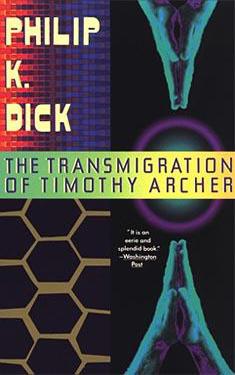
The Transmigration of Timothy Archer - Philip K. Dick


Just finished reading Philip K. Dick's The Transmigration of Timothy Archer (1982), published posthumously. (For those who may not know, transmigration is "the religious or philosophical concept that the soul or spirit, after biological death, begins a new life in a new body that may be human, animal or spiritual depending on the moral quality of the previous life's actions.")

The novel is set in the 1960s and 1970s, and follows the descent into drug addiction, radical religion, and madness of a deeply entwined but unhappy circle of five friends - intelligent but lonely Angel Archer, "professional student" at Cal Berkeley and poetic grass fiend, her disaffected husband, Jeff, whose maniacally intensive study of Wallenstein and Hitler becomes a pointless bid for his father's attention, Jeff's father, the dreamy but brilliant Bishop Timothy Archer, who unwittingly destroys himself and his friends, the Bishop's secret lover, the spiteful barbiturate addict Kirsten, and Kirsten's angelic son, the schizophrenic Bill.

The action begins on the day of John Lennon's death, with Angel's attempts to make sense of the "retributive fate" which has enveloped her life and destroyed those closest to her. For all this darkness, the book is a fairly light read, with some good humorous bits. For Philip K. Dick enthusiasts, it is also an interesting window into his thoughts in later years, and perhaps his most mature piece of writing. Although the repetitive nature of some of the lines was at times tedious for me, I believe it was a deliberate stylistic choice to evoke the obsessive nature of Angel's thoughts, and was effective for that purpose.

Bishop Archer's darkly comic misadventures are in fact based on the doings of the unfortunate Bishop James Pike - definitely worth reading a bit about that man, although save it for after you've read the novel - spoiler alert!

Monday, February 27, 2012

Ryu Mitsuse - 10 Billion Days & 100 Billion Nights


This book is utterly insane, and operates under the principle that sufficiently advanced technology is indistinguishable from magic, mystical experience, or a really incredible psychedelic voyage.

At one point, Jesus of Nazareth and Siddhartha Guatama the Buddha, who are cyborgs, fight a laser battle amidst the fortieth-century ruins of Tokyo.  I feel like that should be recommendation enough.  If dream narratives aren't your thing, though, you might find the book frustrating.

The story is a sort of metaphysical space-opera with Dickian gnostic overtones, featuring Plato, Jesus, Buddha, and the goddess Asura.  The translation is excellent and highly poetic; the original Japanese must be pretty amazing.  

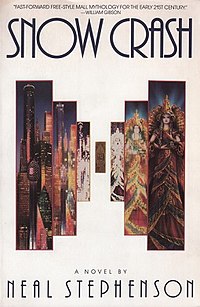
Neal Stephenson's Snow Crash


Stephenson has rapidly become one of my very favorite, if not all time favorite, authors. Snow Crash is so incredible - Stephenson's vision of the future is a rarity in its clarity, depth, and originality. The overpopulated earth has become a trashy wasteland, and the technological/economic elite have essentially moved to a digital existence, most often "goggled in" to the virtual reality of the Metaverse, where your avatar can move around and conduct business in the same way as on earth. Hackers, especially the samurai-sword wielding protagonist (named Hiro Protagonist), have the upper hand in a landscape they can control. However, the intersection between man and machine, embodied particularly in the hackers' binary-acccomodating neural pathways, has led to the dangerous potential for computer viruses to infect the user's mind. This unique vision has even more resonance given Google's recent announcement that they are developing glasses which will project a virtual reality and other information over the real world. This novel's astounding scope encompasses the exploration of memes, Glossolalia, drugs, viruses, and religion, which are depicted as being basically synonymous. A wonderful page-turner!

Friday, February 17, 2012

Thomas Cleary - The Essential Confucius


This is the best book I have ever read.

Cleary's translation is extremely readable - his ordering is somewhat unorthodox but I don't understand what the details of that are.

As for the text itself, nothing has ever struck me so deeply.  I have read the Analects before, but I did not fully appreciate it.  I think everyone should study this book carefully and live their life by it.  I am not going to say anything else about it because it is very short and the master speaks for himself.

Saturday, May 29, 2010

A Canticle for Leibowitz


A Canticle for Leibowitz is Walter Miller's classic science fiction novel about post-apocalyptic Catholic monks in the desert of Utah, preserving what scraps of ancient writing they have managed to gather together through a post-nuclear dark ages in which all scientific knowledge is seen as evil. The novel is composed of three sections, roughly analogous to the dark ages, the renaissance, and a new technological age. The Catholic church provides what little cultural stability exists in the period, and the story follows the history of the abbey of the Albertian Order of Leibowitz, founded by a scientist after the war who became a martyr in his attempts to save books from being burned by the barbaric remnants of human civilization.

This is one of the masterpieces of American science fiction. I'm glad to have finally filled this particular hole in my knowledge of the genre, and I really can't recommend this book highly enough.

Tuesday, November 17, 2009

Measure for Measure

In my Shakespeare class we recently read the "problem comedy" Measure for Measure. The action of Measure for Measure commences with the Duke’s reflection that due to lax law enforcement in the city of Vienna, “liberty plucks justice by the nose/…and quite athwart/ Goes all decorum” (I. iii. 29-31). Believing himself to blame, the Duke decides that he cannot be the one to discipline the citizens, and thus decides to temporarily leave Vienna and appoint the austere Lord Angelo as deputy in his place, to restore order to the city through strict punishment. In fact, the Duke only pretends to leave the city, but remains behind disguised as a Friar. Angelo’s first act is to sentence a young man, Claudio, to death for fornication. When Claudio’s sister, a young postulant nun named Isabella, comes to Angelo to plead for his release, Angelo becomes passionately enraptured by her. I won’t give away more, but suffice to say, this play is full of surprises, including a “bed trick” and a “head trick.” The play is dark and disturbing but excellent, and I had the pleasure of watching it performed by the Reed theatre. I highly recommend it.

Saturday, September 26, 2009

The Life of Archpriest Avvakum by Himself


Autobiography of Avvakum (1621-1682), "a Russian protopope of Kazan Cathedral on Red Square who led the opposition to Patriarch Nikon's reforms of the Russian Orthodox Church. His autobiography and letters to the tsar, Boyarynya Morozova and other Old Believers are considered masterpieces of 17th-century Russian literature." (excerpted from the Wikipedia article).

(The painting is The Burning of Avvakum (1897), by Grigoriy Myasoyedov.)

This autobiography is short and truly delightful to read. It is unique among old Russian literature for the "vigorous, clear, and laconic style." Avvakum's opposition to the reforms of Nikon is incredibly strong, and at one point he refers to Nikon as the "anti-Christ." This probably doesn't sound that appealing to most people, but I really highly recommend it to all!!

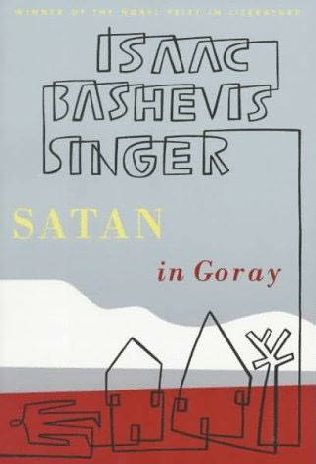
Satan in Goray

Just finished reading Isaac Bashevis Singer's "Satan in Goray" for my Russian lit class, Literature of Destruction. The novel was written in Yiddish in 1955.

This apocalyptic novel takes place in 1648 in Goray, Poland. Goray is a small Jewish town "at the end of the world" (a deliberately ambiguous phrase, it can mean either temporally or spatially or both). Many of the Orthodox residents become convinced that the end of the world is at hand after hearing news of Sabbatai Zevi, a rabbi who has proclaimed himself the Messiah. Zeal for the end of days leads Goray into depravity and madness.

This book is fantastic, I highly recommend it! I particularly recommend it if you liked:

-- "Everything is Illuminated," (2002) by Jonathon Safran Foer, which clearly took a lot from this work.
-- "One Hundred Years of Solitude," (1967) by Gabriel García Márquez. (Jesse, don't be deterred.)