
Showing posts with label crime. Show all posts
Showing posts with label crime. Show all posts
Monday, February 17, 2020
Postmortem

Sunday, August 18, 2019
The Neapolitan Novels

Like millions of others, I found Elena Ferrante’s Neapolitan
novels (My Brilliant Friend, The Story of a New Name, Those Who Leave and and
Those Who Stay, The Story of the Lost Child) to be fully absorbing and
addicting – I don’t say riveting, as many times I alternated between can’t put
it down and can’t keep reading. The four books comprise a single, long story of
the lifelong, deep and conflicted relationship between two girls, Elena (or
Lenù), the narrator, and Rafaella (Lila).
The girls grow up in a poor and violent neighborhood of Naples, from the
1950’s to 2014 – the pervasive violence
is not always due to the activities of the camorra, the “secret” crime
syndicate that was widespread in Campania, but is embedded in the families and neighborhoods,
and especially in the relationships between men and women.
I was angry. I said, “You want to use me to con them?”She understood that she had offended me. She squeezed my hand hard. “I didn’t intend to say something unkind. I meant only that you are good at making yourself liked. The difference between you and me, always, has been that people are afraid of me and not of you.”“Maybe because you’re mean,” I said, even angrier.“Maybe,” she said, and I saw that I had hurt her as she had hurt me. Then, repenting, I added immediately, to make up: “Antonio would get himself killed for you: he said to thank you for giving his sister a job.”“It’s Stefano who gave the job to Ada,” she replied. “I’m mean.”
The relationship between Lenù and Lila is synergistic – on
her own, Lenù is book-smart, but a striver, who says she is only fully alive
and most creative when working with, or stimulated by Lila. In contrast, Lila is strong, exceptionally creative
and fiercely independent, but seems to seek and need the validation of her
accomplished friend. And their lives and
friendship are framed in the books within the larger currents of Italian
political and social life, which are fully and grippingly explored. Still, there are key events in the books whose
meaning and significance I cannot quite grasp but which remain in my mind long
after closing the books. Fascinating
books!
-->
Tuesday, May 28, 2019
The Blessing Way and Dance Hall of the Dead - Tony Hillerman
Over Memorial Day weekend, my friends and I went camping, and I finally had some time to relax and read. Inspired by dad, I decided to give Tony Hillerman a try, and I'm glad I did! I read the first two of his Navajo country murder mysteries, The Blessing Way (1970) and Dance Hall of the Dead (1973).
I really enjoyed these novels, particularly the worldview conveyed by the protagonist, Navajo sheriff Joe Leaphorn:
When I read this passage, I was strongly reminded of a quote by Hercules Poirot in the film version of the Murder on the Orient Express -
I'm not sure if this characterization reflects a shared reality among talented detectives, or whether it is a purely literary conceit, but I thought this parallel was interesting.
The books also treat fairly extensively on Navajo culture and religion, its beliefs, and its rituals. My experience with Native American culture, and Navajo culture in particular, is fairly limited, so I was very interested in the insights from these works. (Although Hillerman is White, it seems he was was considered a true friend of the Navajo people and an excellent student of their culture, and his books, although works of fiction, are evidently praised for their accuracy in this regard.)
Finally, I really enjoyed the depictions of nature, and especially the scenes where Leaphorn applies his skilled tracking abilities to locate missing persons. The books are very successful in conveying a sense of the rich beauty and detail of nature, which I appreciated.
I will definitely be reading more Hillerman!
I really enjoyed these novels, particularly the worldview conveyed by the protagonist, Navajo sheriff Joe Leaphorn:
"Leaphorn never counted on luck. Instead he expected order—the natural sequence of behavior, the cause producing the natural effect, the human behaving in the way it was natural for him to behave. He counted on that and upon his own ability to sort out the chaos of observed facts and find in them this natural order. Leaphorn knew from experience that he was unusually adept at this. As a policeman, he found it to be a talent which saved him a great deal of labor. It was a talent which, when it worked unusually well, caused him a faint subconscious uneasiness, grating on his ingrained Navajo conviction that any emergence from the human norm was unnatural and—therefore—unhealthy. And it was a talent which caused him, when the facts refused to fall into the pattern demanded by nature and the Navajo Way, acute mental discomfort."
When I read this passage, I was strongly reminded of a quote by Hercules Poirot in the film version of the Murder on the Orient Express -
"I can only see the world as it should be. And when it is not, the imperfection stands out like the nose in the middle of a face. It makes most of life unbearable. But it is useful in the detection of crime."
I'm not sure if this characterization reflects a shared reality among talented detectives, or whether it is a purely literary conceit, but I thought this parallel was interesting.
The books also treat fairly extensively on Navajo culture and religion, its beliefs, and its rituals. My experience with Native American culture, and Navajo culture in particular, is fairly limited, so I was very interested in the insights from these works. (Although Hillerman is White, it seems he was was considered a true friend of the Navajo people and an excellent student of their culture, and his books, although works of fiction, are evidently praised for their accuracy in this regard.)
Finally, I really enjoyed the depictions of nature, and especially the scenes where Leaphorn applies his skilled tracking abilities to locate missing persons. The books are very successful in conveying a sense of the rich beauty and detail of nature, which I appreciated.
I will definitely be reading more Hillerman!
Saturday, February 2, 2019
The Cold Dish

Happily, on my recent flight back to Cincinnati from a Seattle visit, I chatted with a seatmate from Logan, Utah, who recommended the Walt Longmire series written by Craig Johnson! As its title suggests, the book is about revenge ("a dish best served cold" -Les Liaisons Dangereuses) - Here I will omit spoilers and demi-spoilers, skipping all plot description, and just say that the story features the rugged landscape and weather of Wyoming, its tough and independent citizens, including the Cheyenne....and a generous dose of laugh-out-loud humor. I loved it. On to to Death Without Company, book #2 of more than a dozen in the series.
Friday, June 15, 2018
Bric-a-Brack
Darkness Visible – A memoir of madness by William Styron. This is a frank and painful account of Styron’s sudden descent into depression. He provides powerful insight into the depth of hopelessness experienced by those suffering from severe depression. On one hand, he explains that those who have not suffered these ravages simply cannot comprehend how devastating they are…for example, he says that it is wrong and cruel to blame those, such as Camus, who are overwhelmed by depression and take their own lives. In one very hopeful note, Styron does say that it’s possible to escape depression and actually become cured.
THINKS…. by David Lodge.
Set in a small university, Lodge tells the story of the interactions
and, eventually, relationship between a visiting professor of creative writing and
a well-established cognitive neuroscientist who heads an impressive research center. This was entertaining. But I enjoyed some of
Lodge’s previous works in the same vein (see Changing Places!) much more.
Deruta by Elizabeth Minchilli. This beautiful book celebrates the glorious
ceramics produced in Deruta, Italy, which
are featured in gorgeous photographs by Susie Cushner and David Hamilton - just to look at these pictures is to be transported to a sunny day in Italy! Minchilli describes the history and some of
the methodology of ceramics production – this sounds as if it would be a little
dry, but Manchilli’s writing is lively and absorbing.
I recently found Venom House by Arthur Upfield, a Napoleon Bonaparte story I had never read. Odd and intriguing characters and some unusual action. I enjoyed it, but it's not among the better Bony mysteries.
I recently received Classic Westerns, a lovely present from Jarek. I had been wanting to read some Zane Grey (from Zanesville, Ohio!) and enjoyed The Lone Star Ranger and, especially, The Mysterious Rider. These were strong stories and the descriptions of life on the trail were wonderful. In reading these books, I was once again struck by a powerful impression I first had many years ago when I read Huckleberry Finn, which is how amazingly abundant wildlife was in America in the 1800's. Hungry? Drop a line in the Mississippi and catch your dinner in minutes. Or shoot rabbits, deer or elk. It is a pleasure to read of that country of abundance and opportunity - and of the men and women who could not only survive, but flourish in the wilderness.
Monday, April 18, 2016
Altered Carbon - Richard K. Morgan

I read Rudy Rucker's Software not long ago, so Morgan's elaboration of the consciousness-divorced-from-physicality concept was a nice "sequel." I was especially intrigued by his portrayal of the ugly consequences of wealth inequality, in a world where the technology of immortality is largely limited to the economic elite. (Kim Stanley Robinson's Mars trilogy also fruitfully explores this issue.)
I will definitely be checking out the other Takeshi Kovacs novels!
Monday, January 11, 2016
One Weird Trick (Sex Criminals Volume 1)

Wednesday, October 7, 2015
The Daughter of Time - Josephine Tey

The Daughter of Time was the first required reading for my medieval history course (HSTAM 235: Medieval Mysteries), and I found it completely delightful. The protagonist of this work is an English police officer who was injured on the job and is laid up resting at a small hospital. A highly perceptive detective with a wry wit, Scotland Yard Inspector Alan Grant is unused to boredom and inactivity, and struggles immensely with the tedium of convalescence. That is, until his vivacious actress friend brings him a folio of paintings of faces. Grant's intuitive ability to read criminals' faces snags on one mysterious portrait - a suffering, noble face Grant is dismayed to learn is that of the barbaric Richard III. His curiosity deeply piqued, Grant teams up with a charmingly oafish young history buff to unravel the mystery of the murder of the princes in the tower. Fascinating analysis with a surprising conclusion. (And a bonus reference to our illustrious ancestor, Sir Robert Brackenbury.) Delicious language enhances this very enjoyable thriller.
Sunday, January 18, 2015
The Werewolf of Paris - Guy Endore

The novel begins with a frame story in which a young, penniless scholar discovers a manuscript documenting the trial of the young army officer, Bertrand Caillet, who has been charged with violently attacking a fellow officer. The manuscript is the work of Bertrand's uncle, Aymar, who tries desperately to convince the Court that Bertrand, a werewolf, ought to be burned at the stake for the greater good. This assertion, of course, is anathema in the age of reason.
Aymar is a compelling character: a former revolutionary skeptic whose experiences with the boy have convinced him that there is more to the world than modern science would lead us to believe. In making his case for the existence of the supernatural, Aymar argues: "Let us beware of judging hastily. The Catholic Church is said to have burned 300,000 witches, until the world exclaimed in horror: 'What gross superstition! There are no witches.' And truly there were none. At any rate there were no more."
Tuesday, January 13, 2015
Devil in the White City - Erik Larson
My bookclub's most recent book is Larson's Devil in the White City, a thrilling historical drama about the construction of the 1892 World's Fair and the serial killer who preyed upon its visitors, H.H. Holmes.

Holmes is only one among several intriguing players in the tale, including ambitious lead architect Burnham and cantankerous but brilliant landscape architect Olmsted.
The work is very engaging and colorful and powerfully recreates the atmosphere of bustling, squalid Chicago at the turn of the century, and the otherworldly transformation it underwent to become the White City during the Fair. It was also fun to realize how many inventions we consider commonplace had their origins in this fair. I would recommend this book to everyone.
Holmes is only one among several intriguing players in the tale, including ambitious lead architect Burnham and cantankerous but brilliant landscape architect Olmsted.
The work is very engaging and colorful and powerfully recreates the atmosphere of bustling, squalid Chicago at the turn of the century, and the otherworldly transformation it underwent to become the White City during the Fair. It was also fun to realize how many inventions we consider commonplace had their origins in this fair. I would recommend this book to everyone.
 |
| The White City |
Tangentially related, Nikolai Tesla won the contract to provide electricity at the World's Fair, so here is a hilarious video.
Thursday, July 17, 2014
Spook Country - William Gibson
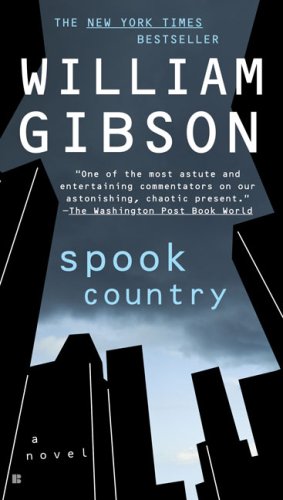
Gibson's 3 Trilogies:
The Sprawl Trilogy:
- Neuromancer
- Count Zero
- Mona Lisa Overdrive
- Virtual Light
- Idoru
- All Tomorrow's Parties
Saturday, May 17, 2014
The Medieval Underworld - Andrew McCall

Anyway, the content was engaging - the book opens with the context of the Middle Ages, the theory behind Church, State, and sin, then the nature of medieval punishment (cruel and unusual), following by a closer treatment of several strains of deviants in the Middle Ages:
- bandits, freebooters and outlaws
- richman, poorman, beggarman, thieves
- prostitutes
- homosexuals
- heretics
- sorcerers and witches
- Jews
Again, interesting, but perhaps not worth the effort.
Friday, February 21, 2014
The London Monster: A Sanguinary Tale - Jan Bondeson
 Bondeson's tale is a stranger-than-fiction account of the "Monster," a savage serial stabber in 1790s London, who preyed upon unaccompanied young women by with a "tremulous eagerness," accompanying his attacks with shockingly foul and indecent language. Although the Monster (or perhaps, Monsters) employed a variety of sinister stratagems of assault, including stabbing unsuspecting maidens in the face using a knife hidden inside a bouquet of artificial nosegays, and tearing at women's exposed arms with some sort of metal claw, his preferred method of attack was to slash at his victims' thighs and buttocks, inspiring fearful aristocratic women to wear copper petticoats, and lower class women to hide frying pans under their skirts.
All told, the Monster attacked somewhere between 15-30 women, causing mass hysteria and vigilante mob action, before a local pervert and malcontent, artificial flower-maker Rhynwick Williams, was brought to trial and ultimately convicted (although both then and now, doubts remain about his guilt), essentially ending the slew of attacks and putting an end to the witch-hunt.
The book is largely an exploration of the panic caused by these stabbings, as well as the popularity of the subject in the media (the book contains ribald poetry, bawdy newspaper cartoons, and descriptions of various Monster plays from the period), as well as the bizarre circumstances of the two trials.
Pretty odd, but interesting!
Friday, October 18, 2013
Women & murder
Over the summer I read five great page-turners. Although I picked each out for different reasons, they all coincidentally fit a grisly theme:
NOS4A2 - Our teen heroine, who rides her bike across a bridge/portal to "find things," goes looking for trouble. She finds a mass-murder who kidnaps children away to "Christmasland." She escapes but doesn't really get away. Recommended in a NYT article by Janet Maslin.
The Shining Girls - Our young heroine escapes a mass-murder who finds his victims across time using a house/portal. She has to track him down and thwart him. For my office book club.
The 5th Wave - Our teen heroine has survived the first four waves of an alien invasion that murders 99% of humanity. She has to stay alive and rescue a kidnapped kid. Recommended in a NYT article by Janet Maslin.
The Rook - Our heroine wakes up with no memory, surrounding by the bodies of people who were trying to kill her. She has to figure out who was trying to kill her while running an intelligence agency that combats supernatural foes. Recommended by a friend.
The Cuckoo's Calling - A famous model is murdered. Our hero, a down-on-his-luck PI, tries to crack the case. The new book by JK Rowling.
I'd highly recommend all of them - they're fun and fast.
Friday, August 2, 2013
REAMDE by Neal Stephenson
 Just finished reading Stephenson's 1000-something page novel, REAMDE, which was amazing. (Excellent overview by Colin here: http://blogenburyisreading.blogspot.com/2011/12/neal-stephenson-reamde.html?m=1).
Stephenson has the impressive ability to weave together a host of characters and circumstances which, in the hands of a lesser author, would feel they had been chosen by a random word generator: jihadists, MMORPG, computer virus, British spy, Russian mafia, ski resort, Wikipedia. Well, maybe they do have a theme: it sounds like a James Bond movie, but without the glamour, and set against the new realities of postmodernity: the digital age and the international War on Terror.
Stephenson is truly a great author: each section of the book is told from the perspective of one of a handful of key characters, and each has a distinctive and authentic tone. Although the book plays like an action movie and largely examines the meaning of life as experienced in the scopes of a rifle, the detailed attention to psychology and the richness of the world feel (almost) Tolstoyan. (Making the Acknowledgments page quite interesting, since he lists areas of expertise, such as guns, which are seamlessly integrated into the plot, yet evidently draw heavily upon the knowledge of others.)
Although set in the present (near future?) and so less earthshatteringly visionary than The Diamond Age, I preferred this to Snow Crash and definitely recommend.
Stephenson's Novels
- The Big U (1984)
- Zodiac (1988)
- Snow Crash (1992)
- Interface (1994)
- The Diamond Age: or A Young Lady's Illustrated Primer (1995)
- The Cobweb (1996)
- Cryptonomicon (1999)
- The Baroque Cycle
- Quicksilver (2003), volume I
- The Confusion (2004), volume II
- The System of the World (2004), volume III
- Anathem (2008)
- The Mongoliad (2010–2012)
- Reamde + Colin's review (2011)
Sunday, July 7, 2013
Umberto Eco’s The Name of the Rose

The first book I read with my
Reedie bookclub was Umberto Ecos’s The Name of the
Rose, a beautifully written murder mystery set in medieval Italy. In this
thrilling tale, the young monk Adso follows his brilliantly perceptive but
unorthodox master, William, to a Benedictine monastery in Northern Italy, to investigate a murder which has taken
place in a small but ostentatiously wealthy monastery whose heart is a
labyrinth library. More horrors and mysteries are unveiled the deeper William
and Adso dig, and the more the two suspect that certain persons are working
against them to keep the monastery’s secrets from ever being revealed.
This novel is a true page-turner,
but also deals in depth with many interesting themes revolving around the
nature of Truth – its complexity, mutability, and debatable impenetrability,
the meaning of heresy, and whether knowledge should be shared freely with all,
and if not, under what circumstances secret knowledge should be guarded, by whom,
and through what means.
A truly fascinating book that I would recommend to all, and
would definitely enjoy discussing at greater length!
Wednesday, June 12, 2013
Spiderman and The Vulture

Thursday, November 1, 2012
Bony Mysteries by Arthur Upfield

Niece: "What makes the world go round?"Wonderful story!
"Money."
"No."
"Love?"
"No. I'll tell you. It's loyalty. Only the basest of us are not actuated by loyalty: loyalty to one's class, to one's people, to one's ideals."
Then I read Mr. Jelly's Business - even better than Bushranger! After quite a bit of drinking, a farmer jumps in his car to head home, passes his correct turn and runs up to the Number 1 Rabbit Fence, requiring him to back the car up to make a right turn...but he veers off into a ditch containing a large pipe, which traps the car. He is not hurt, so gets out of the car and.......vanishes. Days and then weeks go by. Has he "taken a bunk?" Or been murdered? The open country provides little cover for hiding a body. Bony takes a job working on the Rabbit Fence and systematically examines the ground, meets the man's wife and neighbors, and initiates investigations into the man's recent travels and financial situation. One neighbor is the very mysterious Mr. Jelly, who intermittently goes away for a few days, returning haggard but wealthier, and his charming and sensible daughter Lucy and her younger sister, the delightful Sunflower. This is an excellent mystery, and a compelling story with very emotional scenes between Bony and these daughters, and an extremely tense search that must be completed before the homeowners return. Outstanding!
Thursday, October 18, 2012
Busman's Honeymoon

Wednesday, August 22, 2012
Cake in the Hatbox

Subscribe to:
Comments (Atom)