Showing posts with label space exploration. Show all posts

Wednesday, January 13, 2021

To Be Taught if Fortunate - Becky Chambers


With the pandemic, I have barely been reading, so it's been a long time since I've contributed to our book blog! But I'm hoping to get back on track in 2021. My first read of 2021 is this novel by Becky Chambers, for my bookclub. I love space exploration sci-fi, and this was fresh and evocative light reading. Spunky like The Martian, thoughtful like (but not nearly as dark as) The Sparrow (also by a woman, Mary Doria Russell).

Besides Ursula K. LeGuin, Octavia Butler, and Madeline L'engle, I don't know that I've read many female science fiction authors, which is too bad, since it's one of my favorite genres. I don't know that I would say the author's gender was really relevant to this book, though I did find it interesting that in one passage the main character (who is also a woman) muses that 
"We astronauts are taught to compartmentalize the realities of flight. [And the fact that everyone you know will be dead when you return.] ...You wonder if you're a bad daughter, a bad friend, a selfish asshole placing her own intellectual wankery above the living, breathing people who poured everything they could ever give into her, and were rewarded with the sight of her walking away forever." 
I don't think I've heard this sentiment much in the male-centered space exploration stuff I've read, and it struck me the extra pressures women explorers face, since we are usually expected to be caregivers for elder family, etc. -- more guilt and conflict there. So I found that interesting.

Anyway, all in all, a good book for the new year.

Thursday, August 22, 2019

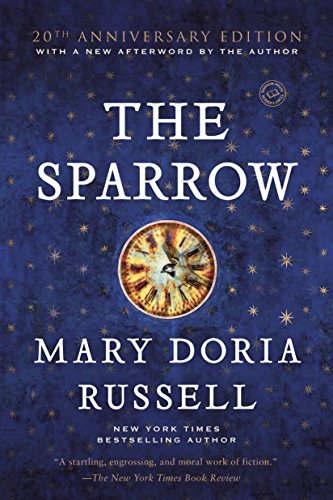
The Sparrow - Mary Doria Russell

I read The Sparrow on a recommendation from Mark's sister, Kelly, who said it is her favorite book. WOW! It is a masterpiece. Totally brutal without being vulgar, and wholly fresh and unexpected.

The story is told from both ends - an idealistic Jesuit monk bonding with his close-knit group of friends, and this same monk, broken almost beyond recognition, after his return from a first-contact mission gone horribly awry.

I don't want to say too much lest I spoil anything, but this is definitely a first-rate book, which I highly recommend! It is rough but very powerful and poignant.

Jesse's review here
Dad's review here

Wednesday, April 26, 2017

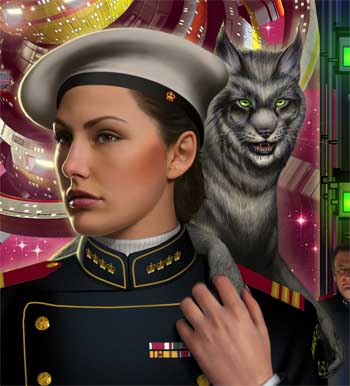
On Basilisk Station - David Weber

Our bookclub's theme for our 2 books this month is military sci-fi with strong female protagonists. In this novel, Commander Honor Harrington is finally awarded command of her own ship, only to be banished to a remote duty station after humiliating her incompetent superior officer. Worse, she is placed under the authority of a spoiled slimeball who once tried to sexually assault her. Beset by challenges, Honor relies on her pluck and determination to achieve her near-impossible assignment. A bit clunkily written, but packs a punch. I also enjoyed her relationship with her six-legged empathic pet treecat. :)

Cordelia's Honor - Lois McMaster Bujold

I absolutely loved our bookclub's most recent pick, Cordelia's Honor. It is the story of Captain Cordelia Naismith, a scientist/explorer in the mold of Star Trek's Captain Janeway - kind, strong, resourceful, compassionate, and with a powerful moral compass. Cordelia is enjoying a routine survey mission to an unclaimed planet when she and her crew are attacked by a squad of Barrayans, a militant race with a revered warrior caste, the Vor. She is taken prisoner by their honorable commander, Aral Vorkosigan, and the two unexpectedly fall in love. Eventually, Cordelia returns with him to Barrayar as Lady Vorkosigan, where the two are swept up in intergalactic politics and domestic revolution. Powerfully written, with interesting reflections on war, love, gender dynamics, and the stigma of disability. Not your typical romance novel.

Sunday, February 19, 2017

The Dispossessed - Ursula K. LeGuin

For Bookclub this month, we are reading two sci-fi novels by female authors: The Dispossessed (1974), by Ursula K. LeGuin, and Kindred (1979), by Octavia Butler. Both are tremendous!

The Dispossessed is the story of Shevek, a brilliant physicist and revolutionary from Anarres, a moon isolated from its homeworld, Urras, since its settlement by anarchist colonists 179 years ago. Although Anarresti society still largely lives by the teachings of its founder, Odo, Shevek and his friends progressively observe how their freedom has become cramped by bureaucracy and social constraints. Shevek ultimately determines that the only way to achieve his physics masterwork and heal his society is to make an unprecedented journey to Urras, to share his science and reunite the two worlds. 

I really enjoyed Shevek's character, and his zeal for the Odonian way of thinking. Many of Odo's quotes have great attraction for me, as well. For example:

"A child free from the guilt of ownership and the burden of economic competition will grow up with the will to do what needs doing and the capacity for joy in doing it. It is useless work that darkens the heart. The delight of the nursing mother, of the scholar, of the successful hunter, of the good cook, of the skilful maker, of anyone doing needed work and doing it well, - this durable joy is perhaps the deepest source of human affection and of sociality as a whole."

All in all, a fascinating, surprising, and gripping tale. 

Wednesday, August 24, 2016

Aurora - Kim Stanley Robinson

Aurora is KSR's latest novel, published in summer 2015, and the only other book of his that I have read, other than the genius Mars trilogy. Aurora is just as delightful, and satisfyingly familiar in tone, with its hyper-detailed yet highly readable descriptions of technology, and the incisive and compelling character depictions, which elevate the book from tech porn to high literature.

Aurora is the story of a generation of families born on a spaceship in the middle of a 159+ year colonizing trip to Tau Ceti, led at this point in their journey by brilliant yet troubled scientist Devi, who keeps their aging vessel in working order through hundreds of daily repairs. Unlike Mars, with its numerous protagonists, this novel focuses primarily on Devi and her daughter, Freya. In a unique and engaging narrative twist, the tale's chronicler is the ship itself, an AI called simply "ship."

The action begins in Freya's youth and young adulthood, in the final years of the journey to Tau Ceti. A deeply interesting and moving tale, which I highly recommend to all sci-fi enthusiasts!

Monday, April 18, 2016

Red Rising - Pierce Brown

My bookclub's April pick is Pierce Brown's Red Rising (see our full calendar here). When I first picked up this book, I was turned off by the clunky, dialect-heavy feel of the dystopian Mars mining colony - it reminded me a bit of the feral children's irritating ramblings in Mad Max Beyond Thunderdome about "tomorrow-morrow land."

"I's looking behind us now, into history back."
However, the book's scope explodes beyond this point, and I became very engrossed in its exploration of the themes of social control, exploitation, and revolution.

Personally, I thought the movie Hunger Games was insipid, but I would recommend this book to HG fans, and any other survival enthusiasts.

Old Man's War - John Scalzi

I was somewhat underwhelmed by Hugo Award nominee Old Man's War - although the book has some interesting nuggets, and nicely rounds out the treatment of the consciousness-divorced-from-physicality concept explored by works such as Rudy Rucker's Software and Morgan's Altered Carbon, I did not find that it has much staying power.

Wednesday, July 8, 2015

Seveneves - Neal Stephenson

Stephenson's fascinating new sci-fi novel, Seveneves, reads much like Kim Stanley Robinson's Mars trilogy in its realistic and highly-detailed portrayal of space exploration technology. The novel opens when an unknown force - the Agent - causes our Moon to explode. After a period of global bafflement, American scientist and media personality Doc Dubois realizes that the moon's fragmentation will continue exponentially, ultimately causing a Hard Rain of meteorites to obliterate the earth's service in a terrible holocaust lasting thousands of years. Scientists all over earth come to the same conclusion within a matter of weeks, and the entire world's resources are dedicated to preparing to save as many humans as possible by getting them onto a space station, along with earth's genetic data. If this feels like a spoiler, it's not, this merely sets the stage for all the action that unfolds from there! About the latter third of the book is dedicated to even more radical extrapolation from these initial conditions... Very unique and thought-provoking.

Stephenson is a brilliant social critic, and his book is rich with insights and neologisms like "amistics" -
"choices that different cultures made as to which technologies they would, and would not, make part of their lives. The word went all the way back to the Amish... who had chosen to use certain modern technologies, such as roller skates, but not others, such as internal combustion engines. All cultures did this, frequently without being consciously aware that they had made collective choices."
Highly recommend!

Saturday, January 17, 2015

Red Planet - Robert Heinlein

Really enjoyed Heinlein's short novel about two boys, Jim and Frank, and their exploits at a boarding school on Mars. The plot unfolds amidst a political conflict between the freedom-loving people of Mars and their greedy and callous Earth overlords, and centers around Jim's relationship with the Martian "bouncer" Willis, a small, furry, tentacled creature with remarkable powers of imitation.

Written in 1949, the novel is reminiscent of a Hardy Boys style adventure, but the ideas are refreshingly modern (with the exception of the frequent sexism, which tends to mar the quaint tone). Still, a charming book with an interesting conception of alien life.

Also, Willis was so cute!
Some artist's conception of Willis

Saturday, August 2, 2014

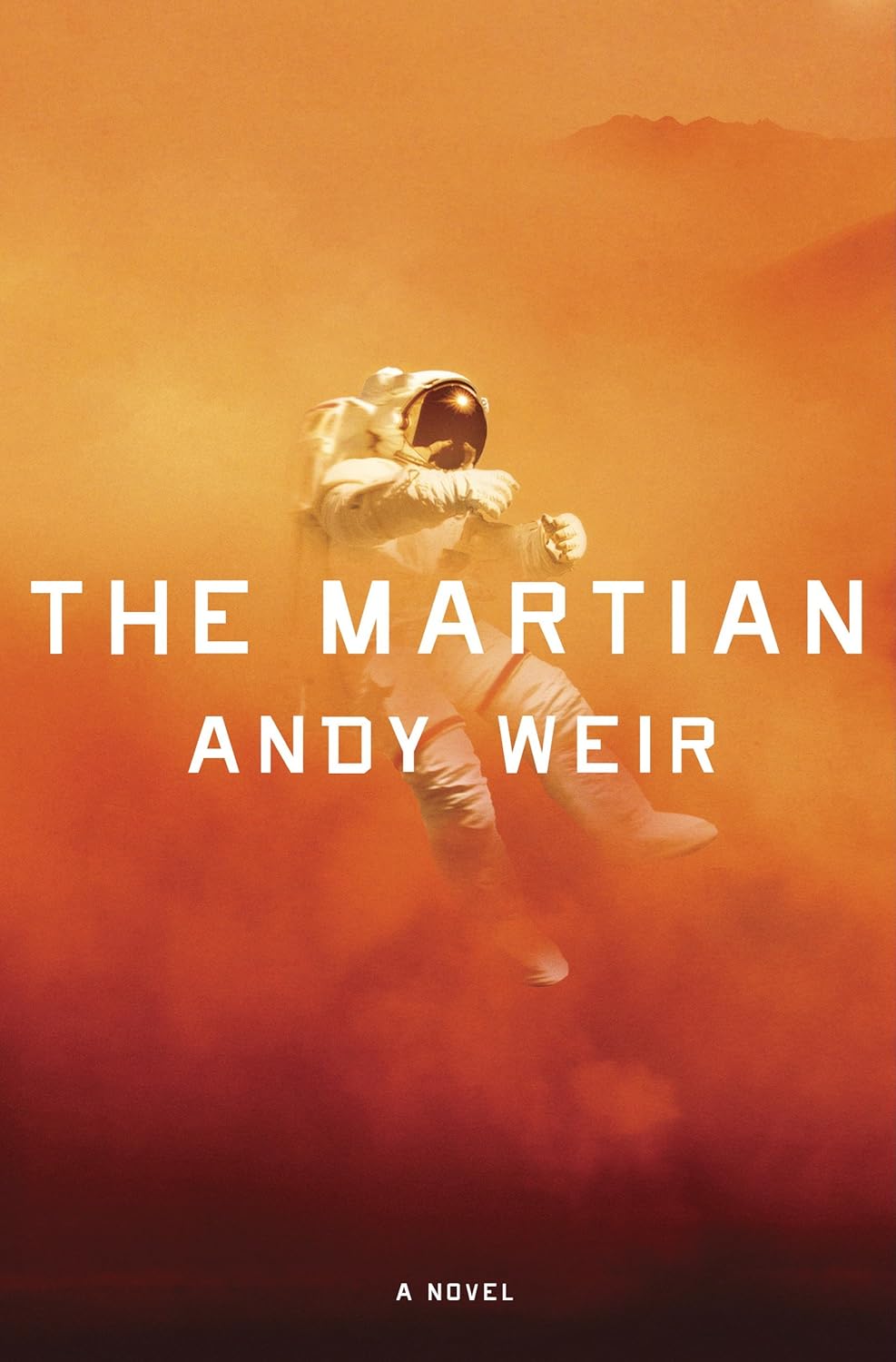
The Martian - Andy Weir

"Robinson Crusoe in space" is how our bookclub organizer described The Martian, and this is a pretty apt description. Our intrepid astronaut hero Mark Watney is left stranded on Mars when his crew takes him for dead following a terrible accident. Using his botany and mechanical engineering skills, Mark must survive and find a way to let Earth know that he's still alive!

This fast-paced action thriller is written in a highly loose and conversational style, with entries styled as Mark's log. Recommended for fans of Kim Stanley Robinson, though this is much less literary and more of a beach read. Still fun and thought-provoking!

Also, here's a (kind of) relevant clip from Total Recall:

Sunday, February 9, 2014

Anathem - Neal Stephenson

Today I finished my 6th book of 2014, Stephenson's Anathem. WOW!

The book is set on the planet Arbre, quite similar to our own, but divided in the present time (and for the past several thousand years) into the Saecular and Mathic worlds. Inside the "maths", or cloisters, live the Avout, non-religious men (fraas) and women (suurs) who have devoted their lives to intense scholarship and medieval asceticism, almost wholly without advanced praxis (technology). They live secluded from the outside world, except for a 10-day holiday called Apert during which the gates are opened, when the "extras" are free to come into the math, and the Avout are free to leave and explore extramuros. Depending on whether an Avout is a Unitarian, Tenner, Hundreder, or Thousander, his or her order will have the chance to celebrate Apert only once a year, decade, century, or millenium. In the mean time, all knowledge of the Saecular world is strictly avoided.

The book opens as Fraa Erasmas, a Tenner, is about to celebrate his first Apert since joining his math, the Concent of Saunt Edhar, as a young boy. Over the course of this holiday, however, he and his fraas and suurs discover that something very serious and shocking has been happening extramuros. Dun dun dun!

Of course I won't give away more, but suffice to say, this book is pure Stephenson genius. A beautifully rich world filled with highly likable characters (especially Fraa Jad!) engaged in a gripping and meaningful quest.

Recommended if you enjoyed: The Name of the Rose, Reamde

Stephenson's Novels

Monday, June 27, 2011

Douglas Adams' The Hitchhiker's Guide to the Galaxy

A(n uninspiring) milestone in my literary career: finally read The Hitchhiker's Guide to the Galaxy, which I read in 2.5 hours. Up til page 41 I found the book juvenile, boring, and silly, and felt that this was probably because I am not a prepubescent boy (no offense to you males). The first line that changed my opinion somewhat was "The robot camera honed in for a close-up on the more popular of [Zaphod's] two heads and he waved again." I suspect my satisfaction with this line is because it is atypically Philip K. Dick-esque (c.f. The Three Stigmata of Palmer Eldritch). I found the rest of this book a mix of mediocre and mildly amusing. I really don't understand the enthusiasm people feel for this work, and this is coming from a blogger who ends most posts with "Highly recommend!" The only intriguing character for me was Zaphod, although he could not redeem this book for me. Would not recommend.

Monday, November 1, 2010

Kim Stanley Robinson's Mars Trilogy


Wow! Many thanks to Colin for recommending this fascinating, compelling science fiction novel (the first of a trilogy) describing the colonization of Mars.
Many significant Earth-bound themes are thrown into sharp relief, accentuated by the open possibilities for establishing a new (?) world order on Mars. Some of these issues are represented by key members of the First Hundred to settle on the planet: Idealism (John Boone) versus political manipulation (Frank Chalmers), eco-preservation (Ann Clayborne) versus aggressive terraforming (Sax Russell), and revolutionary democratic forms of government (Arkady Bogdanov) vs. control by transnational corporations (Phylis Boyle). The characters are interesting individuals and Mars is depicted in astonishing and deeply-researched detail as hostile, extraordinarily strange, and awe-inspiringly beautiful.

Friday, June 4, 2010

How To Build Your Own Spaceship


Guess I've been on the same wavelength as Colin, reading about space, fiction or non! This short book by Piers Bizony is very interesting. He discusses the basic science behind propulsion and orbits, some history of space travel, and a great deal about past and future commercial opportunities. Bizony has a dry sense of humor and overall the book is informative and entertaining. (Famous dancer Buzz Aldrin recommends it).

Saturday, May 22, 2010

Where is Everybody?

This book presents a set of 50 possible solutions to the Fermi Paradox ("where is everybody," i.e. if the universe is so big why haven't we met any other technological civilizations?). The solutions come in three main categories: they're already here, they exist but haven't communicated, and they don't exist. The book is not at all rigorous but serves as a broad-ranging introduction that includes more speculative material than the textbook below. My only quibble with this book concerns his chapters on evolutionary biology, where I don't feel he's fully acquainted with the complexity of the issue, but in fairness there isn't space to even begin to address those questions here. Overall this was a entertaining and good broad overview to a wide selection of factors to consider on the subject, from the physics of interstellar travel to von-Neumann probes and Dyson spheres, although a lot of the science is glossed over and I found a couple of his mathematical models a bit suspicious (or at least poorly defended).

Friday, August 21, 2009

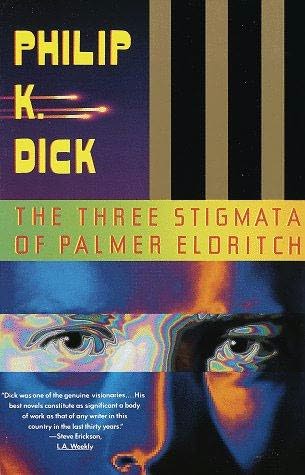
The Three Stigmata of Palmer Eldritch

"The Three Stigmata of Palmer Eldritch" (1965) was the last Philip K. Dick novel I read this summer, and I liked it the most.

I will paraphrase excerpts from the wikipedia page's "Plot introduction":

The setting is some time in the 21st century. Global climatic disruption has rendered Earth inhabitable and to cope with this humans have colonized throughout the solar system. No one wants to be a colonist since it's hard and boring so the UN has to draft people to become colonists. Colonists entertain themselves by playing with "Perky Pat" dolls and accessories manufactured by P.P. Layouts. The real attraction of Perky Pat is using the layouts with Can-D, an illegal hallucinogen that allows the user to "translate" into Perky Pat (if the user is female) or her boyfriend Walt (if male), allowing colonists to experience an idealized version of life on Earth in a collective unconscious hallucination. P.P. Layouts employs several "precogs" to determine if new Perky Pat accessories will be popular. Barney Mayerson, a precog, is the protagonist of this novel.

The plot gets a bit bizarre towards the end of the book, and a few parts are unconvincing, but on the whole I really enjoyed this book.

Thursday, December 18, 2008

The Sparrow - 2

I finished reading The Sparrow, which Jesse wrote up a couple months ago. I figured I better make a new post rather than a comment, since the original Sparrow post rolled off the first page of the Blog into some semi-lost archive!

I liked this book better than Jesse seemed to - he described the plot very nicely, referring to the parallel stories told pro- and retrospectively, leading up to the reveal. Unlike Jesse, I was not disappointed in the reveal - rather, I was disappointed in the conclusion to the reveal! Without serious spoilers, it's sufficient to say that the main character, the Jesuit priest Emilio Sandoz, and his friends all experience the events leading up to their expedition to meet the alien species on a relatively nearby planetary system as a series of extraordinary "coincidences" that seem clearly to represent the will of God. These events nurture Sandoz' tentative faith, but his horrible experiences on the alien planet shatter it. After his return, some really likable members of The Society of Jesuits nurse him to some physical and emotional health, seeing his plight summarized in Matthew 10:29
Not one sparrow can fall to the ground without your Father knowing it.
I guess this says more about me than the book, but I found the shattering of Sandoz' faith more powerful and convincing than his semi-redemption. Still, I felt this book was very interesting and I liked grappling with this age-old question of why bad things happen to good people.

Jesse's review here
Lauren's review here

Saturday, November 8, 2008

Sparrow


When I was a kid I really liked the sci-fi classics: Asimov, Herbert, Bradbury. I don't read much of it now, though I did love Orson Scott Card's Ender's Game. But Ryan and Eunice listed Mary Doria Russell's The Sparrow as a favorite on their website, so I thought I'd give it a try.

It's the story of a the discovery of alien life and an expedition to the nearby planet. It is a Jesuit party and it goes horribly awry. The stories of the discovery and the post-mortem investigation are told simultaneously, building toward the same climax. It is an effective storytelling device and the hero is a compelling figure. Ultimately, though, I was disappointed in the "reveal."

So, all in all, I'd say a pretty good quick read - maybe a 7 out of 10.

Dad's review here
Lauren's review here